
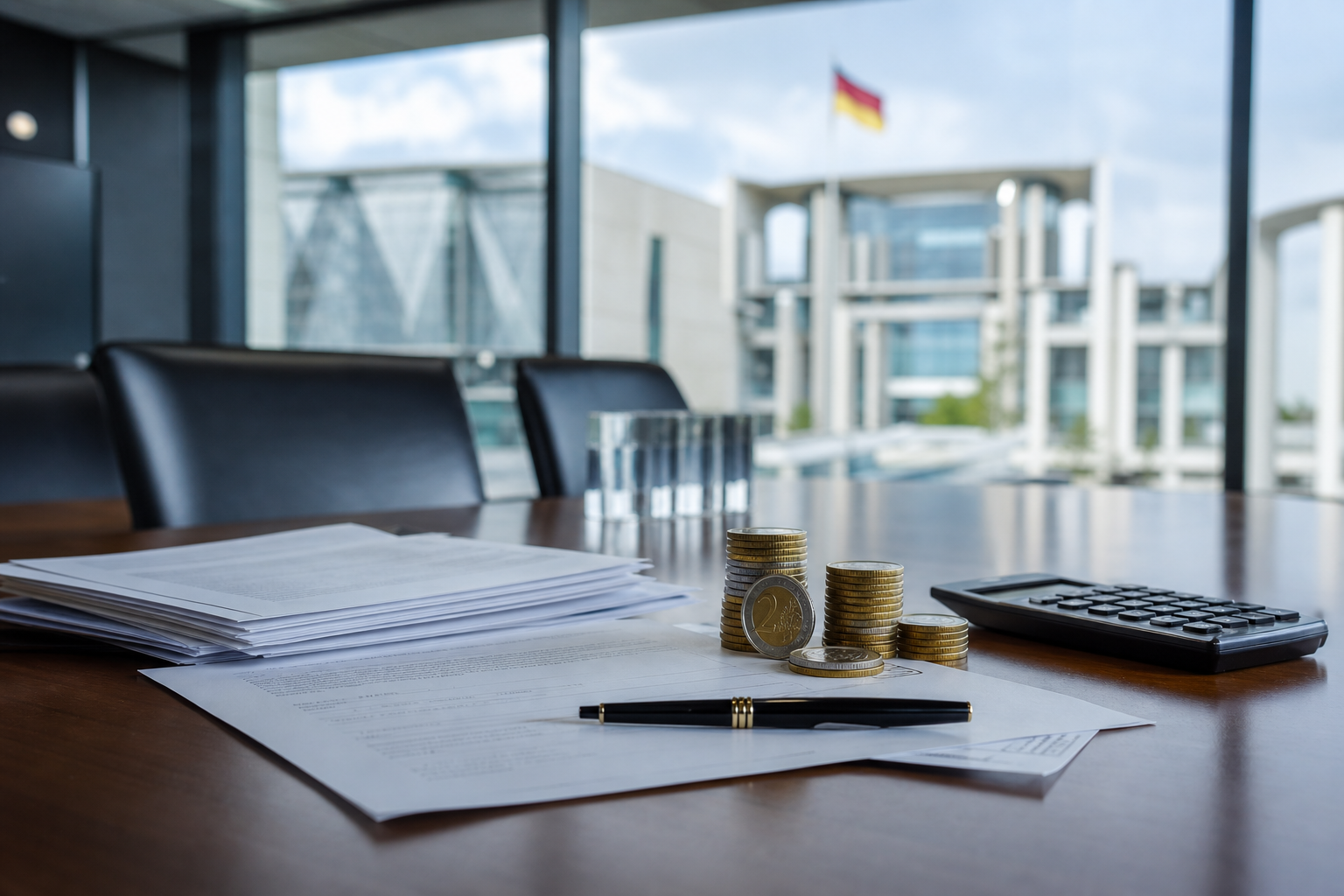
Tax debate and labor market
Kretschmer considers higher taxes for the rich
Saxony's Minister President Michael Kretschmer (CDU) is pushing for more full-time work – and links this demand to a tax policy debate: In his view, those who work more and thus enable greater value creation should encounter reliable framework conditions, which also include stable state revenues and relief for lower incomes. At the same time, he is open to examining higher taxes on large fortunes and inheritances – but explicitly not as an isolated step, rather embedded in a larger reform package.
Kretschmer links working hours, relief, and state finances
In an interview with the "Neue Osnabrücker Zeitung," Kretschmer argues that, in the end, solutions must be found "that benefit everyone." He mentions, among other things, job security and secure tax revenues. His message thus targets not only the labor market and the need for skilled workers, but also the question of how a state can create room for relief without endangering the financing of public tasks.
Kretschmer thus presents the debate as a triad: more gainful employment, noticeable relief for low and middle incomes, and a financial architecture that is reliably sustainable. Within this framework, he also places the question of whether very large fortunes and inheritances should be taxed more heavily.
Higher wealth and inheritance taxes: possible, but "last building block"
The Minister President clearly defines the political priority. Tax increases for the rich are, for him, "only the last building block" of a comprehensive reform package that is intended to relieve lower incomes. This order is central to his argument: First, structural changes and modernization steps should take effect; only then – if necessary – would an additional burden on the very wealthy be considered.
Thus, his openness toward higher wealth and inheritance taxes remains deliberately conditional. It is not an announcement of a concrete tax reform with fixed rates or schedules, but a signal that Kretschmer also wants to consider redistribution instruments within a larger modernization concept.
Economic slowdown increases reform pressure
The debate is gaining additional urgency due to subdued economic expectations. According to Helena Melnikov, Chief Executive of the German Chamber of Industry and Commerce (DIHK), in "Welt am Sonntag," only 0.3 percent growth is expected for the current year – after 1.0 percent had still been expected at the beginning of the year. Melnikov attributes the setback mainly to the Iran war; as a result, energy and raw material prices have risen sharply, which burdens companies.
Especially in a phase of weaker growth, goal conflicts become more visible: Relief for employees and lower incomes must be financed, companies point to cost and competitive pressure, and at the same time, expectations of state capacity to act are rising. Kretschmer's approach addresses exactly this interface – with the attempt to bring together labor market, tax, and revenue issues in a political logic. Whether this will become more than just an opening of the debate will likely also depend on how the economy and cost pressures develop in the coming months.
Frequently Asked Questions
Sources
- https://www.mdr.de/nachrichten/nachrichten100.html, 23.05.262026
- https://www.sueddeutsche.de/wirtschaft/finanzdebatte-kretschmer-offen-fuer-hoehere-steuern-fuer-vermoegende-dpa.urn-newsml-dpa-com-20090101-260522-930-119008, 23.05.2026
- https://www.dihk.de/de/newsroom/nahost-konflikt-bedroht-wirtschaftlichen-aufschwung-in-deutschland-176518, (22.04.2026)