
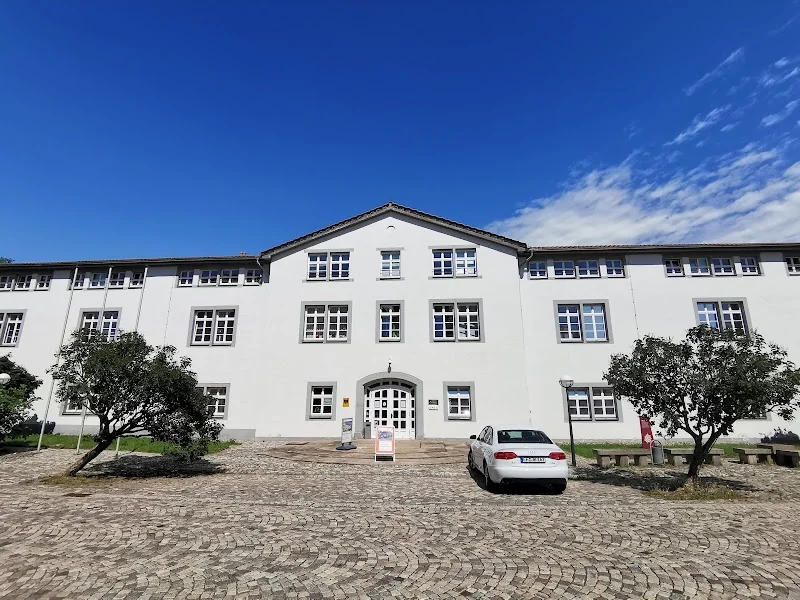
Haus 19, Petersberg Haus 19, Erfurt
Petersberg Haus 19, 99084 Erfurt, Germany
Stasi Documents Archive Erfurt | Opening Hours & File Access
The Stasi Documents Archive Erfurt on Petersberg is much more than a classic administrative location. It combines archival work, historical education, and public learning in a place closely linked to the GDR history of Thuringia. In Petersberg House 19, documents from the former district administration of Erfurt and the associated district offices are preserved, processed, and made accessible for research, personal file access, and educational work. Those interested in file access, guided tours, the exhibition Secure Area GDR, or practical questions like opening hours, directions, and parking will find one of the most important memorial sites in Erfurt here. The archive comprises about 4,500 linear meters of files, approximately 1.7 million index cards, as well as numerous photos, films, slides, and pre-destroyed material. This density of original sources makes the location so special: it is a place for inquiry, classification, and understanding. At the same time, it is prominently located on Petersberg, one of the most distinctive points above the Erfurt old town, making it a place with strong symbolic significance. ([bundesarchiv.de](https://www.bundesarchiv.de/das-bundesarchiv/standorte/erfurt/))
Opening Hours and Service Times at the Stasi Documents Archive Erfurt
When planning a visit, the current opening hours are particularly important, as the Stasi Documents Archive Erfurt operates with different time slots for the branch office, information and documentation center, and citizen consultation. The branch office is open Monday to Thursday from 08:00 to 17:00 and Friday from 08:00 to 14:00. The information and documentation center can be visited daily from 9:00 to 18:00. Those wishing to receive personal consultation on-site can use the citizen consultation service Monday to Thursday from 08:00 to 16:00 and Friday from 08:00 to 14:00. For telephone inquiries, the citizen consultation for the Erfurt region can be reached at 030 18665-4700. This structure is practical as it considers different user groups: people with personal file references, school classes, researchers, and visitors who want to explore the exhibition. This is also relevant for search queries regarding stasi documents archive erfurt opening hours, as the actual archive use, the exhibition, and the consultation times are not entirely identical. Therefore, anyone coming specifically for file access or a guided tour should keep an eye on the respective service times and not simply confuse the visit with the opening hours of a museum. ([bundesarchiv.de](https://www.bundesarchiv.de/das-bundesarchiv/standorte/erfurt/))
Additionally, the archive responds to current conditions. The location page explicitly points out that access to the branch office may be restricted due to construction work by the state capital Erfurt. This is an important point for practical planning, as the location is on Petersberg and access may not always be as convenient as at a typical city center address. At the same time, the location remains easily identifiable for visitors, as the address is clearly stated and the public areas such as the information and documentation center and the citizen consultation are clearly separated from each other. For those considering a visit, this transparency is helpful: one can specifically choose the appropriate time slot, for example, for a guided tour, for a question regarding a personal file, or for a walk through the exhibition. Thus, opening hours become not just a formal piece of information but a real planning topic for a meaningful and relaxed visit. ([bundesarchiv.de](https://www.bundesarchiv.de/das-bundesarchiv/standorte/erfurt/))
The location also fits an open visiting logic in terms of content. The information and documentation center is accessible daily and is deliberately designed to be low-threshold. Therefore, anyone wanting to understand historical contexts outside of a specific archive consultation can perceive the location as an educational site. For families, school groups, or individual visitors, this creates flexible access: not only by appointment but also as a spontaneous stop on Petersberg. The combination of a daily exhibition, fixed consultation times, and planable guided tours makes the location in Erfurt particularly user-friendly. For this reason, the topic of opening hours is among the most frequently searched questions regarding the archive. ([bundesarchiv.de](https://www.bundesarchiv.de/das-bundesarchiv/standorte/erfurt/))
Viewing Stasi Files: File Access and Citizen Consultation
A central search motive regarding the Stasi Documents Archive Erfurt is the question of file access. Those wishing to view their own Stasi file or obtain information about documents will find a direct point of contact at the Erfurt location. According to the Federal Archive, applications for personal file access can be submitted on-site. A valid identification document should be brought for identity verification. Additionally, there is the option to prepare the application online, print it, and submit it signed. This makes the path to file access easier, as visitors can familiarize themselves with the necessary information in advance. It is important to note that the citizen consultation does not only answer questions about personal files but also about repeat applications, copies, redactions, applications by close relatives of deceased persons, and the decryption of IM cover names. The consultation thus addresses very different concerns and is much more than just a counter for formalities. ([bundesarchiv.de](https://www.bundesarchiv.de/themen-entdecken/vor-ort-entdecken/veranstaltungen/termin/wie-kann-ich-meine-stasi-akte-einsehen-thueringen-02-06-2026/?utm_source=openai))
Particularly helpful is that the Erfurt location embeds file access in an understandable framework. The citizen consultation does not operate in isolation but is closely linked to the information and documentation center. Thus, visitors can not only submit their specific application but also better understand the historical and institutional context of the documents. This is important because the Stasi documents do not merely form a bureaucratic stock but represent a large, emotionally charged historical archive for many people. This is precisely why the consulting service is so sensitive and valuable. The opportunity to receive personal advice is for many the first step to gaining clarity about the process. Those searching for stasi documents viewing erfurt usually need not only a form but also orientation: What is possible? Who is allowed to apply for which documents? What evidence is required? What rights apply to those affected and their relatives? The Erfurt location answers these questions in a structured framework while adhering closely to the federal archival guidelines. ([bundesarchiv.de](https://www.bundesarchiv.de/themen-entdecken/vor-ort-entdecken/veranstaltungen/termin/wie-kann-ich-meine-stasi-akte-einsehen-thueringen-02-06-2026/?utm_source=openai))
Particularly in Erfurt, this work has special significance because the regional holdings are closely linked to the district administration of Erfurt and its district offices. The documents not only document the functioning of a repressive apparatus but also specific local contexts. This makes file access in Erfurt relevant for many people: it is not about abstract history but often about personal biographies, family histories, and locally anchored experiences. The fact that the location also offers consultation for research and media further emphasizes how broad the access is intended to be. Thus, file access in Erfurt becomes an offer for those affected, relatives, historians, and journalists alike. ([bundesarchiv.de](https://www.bundesarchiv.de/im-archiv-recherchieren/stasi-unterlagen-einsehen/forschung-und-medien/?utm_source=openai))
Directions to Petersberg and Free Parking
The route to the Stasi Documents Archive Erfurt is closely linked to its location on Petersberg. The official address is Petersberg House 19, 99084 Erfurt. Those arriving by car will be directed via the Biereyestraße entrance to the bollard system, which is opened manually via an intercom system. After that, the location is reached via Petersberg. This access is more unusual than at many other addresses in a large city, but it is well described and therefore easy to plan. Currently, free parking is available for visitors on the north and south sides of the building. This is a significant advantage as it allows the visit to be organized without additional parking searches. For search queries like stasi documents archive erfurt parking or stasi documents archive erfurt directions, these details are crucial as they relate to the practical process on-site. ([bundesarchiv.de](https://www.bundesarchiv.de/das-bundesarchiv/standorte/erfurt/))
The location is also well accessible by public transport. Tram lines 2, 3, 4, and 6 run from the main train station to the Domplatz stop. From there, a panorama lift conveniently takes you up to the fortress area, or you can reach Petersberg on foot in about 10 to 15 minutes. This is particularly interesting as the location is not only an archive address but also part of a larger urban space. Petersberg is already a destination for many visitors due to the view, the fortress structure, and other facilities. The Stasi Documents Archive thus integrates into a historical city tour that connects architectural, urban planning, and memory cultural levels. Those planning a visit can easily consider additional Petersberg offerings and combine the archive visit with a tour of the grounds. ([bundesarchiv.de](https://www.bundesarchiv.de/das-bundesarchiv/standorte/erfurt/))
The location on Petersberg is also more than just a mailing address. The Petersberg Citadel is considered one of the largest and best-preserved baroque city fortifications in Central Europe. The site itself is thus a piece of city history that extends well beyond the archive. This is precisely why the address of the archive is so striking: House 19 is situated in an environment characterized by memory, fortress architecture, and public accessibility. Those searching for images of Stasi Documents Archive Erfurt or photos of the location will find not only archive rooms but also a historically charged overall image of fortress, view, and educational site. This enhances the visibility of the location and makes it easier for first-time visitors to remember. ([erfurt.de](https://www.erfurt.de/ef/de/erleben/sehenswertes/cyriaksburg/108127.html?utm_source=openai))
Archive Tours, Exhibitions, and Educational Offers
A large part of visitor interest focuses on tours and exhibitions. The Stasi Documents Archive Erfurt offers free guided tours, during which visitors gain an impression of the extent of the holdings and learn how files are found, processed, and used. The roles of the index cards, the work with pre-destroyed material, and the various types of files are also explained. These tours are a central component of the location's communication because they do not present the archive as an isolated file location but as a place of mediation. Individual tours are possible by prior arrangement. This is particularly valuable for groups, as it provides a well-structured overview of the regional holdings in a short time. Search queries like stasi documents archive erfurt tour specifically target this offer, which connects the historical stock with an understandable explanation. ([bundesarchiv.de](https://www.bundesarchiv.de/das-bundesarchiv/standorte/erfurt/))
Also particularly interesting is the information and documentation center of the state of Thuringia, which is located in the building of the archive. There, the exhibition Secure Area GDR can be seen. It traces the development of the state security service and shows regional tasks in the former district of Erfurt, including securing the state border to the Federal Republic and monitoring the transit route between the Federal Republic and West Berlin. This deliberately shifts the focus from the general GDR theme to the specific local history. This connection between grand history and regional anchoring makes the center so relevant. Visitors experience not only abstract political structures but also understand how surveillance, control, and state power concretely affected Thuringia. For schools, project groups, and interested individual visitors, this provides a very dense access to content. ([bundesarchiv.de](https://www.bundesarchiv.de/das-bundesarchiv/standorte/erfurt/))
The educational offers go beyond the mere exhibition. The archive provides films, lectures, discussions with contemporary witnesses, and support for seminar papers. Lectures are aimed at students from grade 10 and last about 1.5 to 2 hours. Additionally, project days can be organized, addressing topics such as the activities of the MfS in the former district of Erfurt, the work with unofficial collaborators, mail control, border security, or escape fates. This shows that the location plays an active role in historical education. It is not only a place for reading but also a place for learning, discussing, and contextualizing. This breadth of offerings also explains why the archive remains interesting for educational institutions and research. Therefore, those visiting the location gain insight not only into files but also into the mediation of history itself. ([bundesarchiv.de](https://www.bundesarchiv.de/das-bundesarchiv/standorte/erfurt/))
The exhibition and the tours fit well with the location on Petersberg. The path up from Domplatz, the panorama lift, and the open fortress area create a framework in which history is not only told but also spatially experienced. This makes a visit to the archive part of a larger historical city experience. For many visitors, this is precisely what is attractive: an archive that does not remain hidden but is visibly situated in a significant Erfurt location. Thus, the sober work with documents is combined with a clear public educational task. ([bundesarchiv.de](https://www.bundesarchiv.de/das-bundesarchiv/standorte/erfurt/))
History, Holdings, and Special Memorial Sites
The historical significance of the location lies primarily in the holdings. The Stasi Documents Archive Erfurt houses documents from the legacy of the former district administration of Erfurt and the district offices located within its jurisdiction. The holdings comprise about 4,500 linear meters of files and approximately 600 linear meters of index cards, which corresponds to about 1.7 million cards. In addition, there are numerous photos, films, slides, and pre-destroyed material. Thus, the location is an extremely rich source archive for the regional history of state security. Particularly impressive is that the index cards were not only used as tools to find files but also served as information storage with personal data. About 1.1 million individuals are recorded in this material. This dimension illustrates how large the surveillance apparatus in the former district of Erfurt actually was. ([bundesarchiv.de](https://www.bundesarchiv.de/das-bundesarchiv/standorte/erfurt/))
The information and documentation center historically contextualizes this stock. According to the Federal Archive, the development of the Ministry for State Security dates back to the time before the founding of the GDR; on February 8, 1950, the MfS was established by law. In the Erfurt district, the Stasi spread extensively, maintaining an office in every district and relying on full-time employees as well as numerous unofficial collaborators. At the time of the dissolution of the MfS in February 1990, 2,915 full-time employees were working in the Erfurt district administration, managing 8,672 unofficial collaborators. These figures show that the Erfurt archive contains not only administrative files but also documents the history of a very densely organized regional security apparatus. This is central for memory work as it connects the abstract size of the system with concrete regional data. ([bundesarchiv.de](https://www.bundesarchiv.de/das-bundesarchiv/standorte/erfurt/))
The regional themes emphasized in the exhibition are also important. These include securing the state border to the Federal Republic and monitoring the transit routes to West Berlin. Particularly because Thuringia was close to the border, the role of the Stasi was particularly pronounced here. The exhibition makes these connections tangible and explains what tasks the Stasi had in everyday life and how it exercised social and political control. The location is thus not only an archive but also a memorial site where the mechanisms of dictatorship and surveillance become concretely understandable. This is a key reason why the archive in Erfurt remains so important for historical education. ([bundesarchiv.de](https://www.bundesarchiv.de/das-bundesarchiv/standorte/erfurt/))
The location on Petersberg enhances this effect. Petersberg itself is a historical site that overlooks the old town and serves as a citadel, a defining landmark of Erfurt. Therefore, when visiting the archive, one moves within an ensemble of fortress, city panorama, and memory work. This connection helps to see the history of the Stasi not as an isolated chapter but as part of an urban landscape where different historical layers become visible. This is precisely why the address Petersberg House 19 becomes a place that is memorable and has significance far beyond its administrative function. ([erfurt.de](https://www.erfurt.de/ef/de/erleben/sehenswertes/cyriaksburg/108127.html?utm_source=openai))
Photos, Images, and Reviews of the Stasi Documents Archive Erfurt
Those searching for photos or images of the Stasi Documents Archive Erfurt will find a good first impression, especially on the official location page. There, among other things, shelves of files and index card rooms are shown, precisely those places that make the special character of the archive visible. These images are important as they convey the size and materiality of the holdings: not abstract but immediate. The surroundings on Petersberg also play a visual role, as the location within the fortress area makes it photogenic and historically charged. For search queries like stasi documents archive erfurt photos or images of stasi documents archive erfurt, this is relevant because users often want not only to see the facade but also to get a feel for the place and its atmosphere. The official images fulfill exactly this function: they show archive rooms, material abundance, and the seriousness of the place. ([bundesarchiv.de](https://www.bundesarchiv.de/das-bundesarchiv/standorte/erfurt/))
The provided reviews additionally paint a clear picture of visitor perception. Guided tours and the understandable mediation of history are particularly praised. Feedback emphasizes that the archive makes an important contribution to remembering the injustices of the Stasi and that the tours are very interesting and well explained. This aligns with the official self-presentation of the location: it aims not only to archive but also to enlighten. The positive feedback therefore indicates that the location excels precisely where visitors expect a personal and historical contextualization. For people reading reviews, this is often the decisive orientation: Is a visit merely informative or also well-supported? The existing feedback clearly speaks for the latter variant. ([bundesarchiv.de](https://www.bundesarchiv.de/das-bundesarchiv/standorte/erfurt/))
In terms of content, the location is also attractive for visual and emotional searches because it can be told on multiple levels. On one hand, there is the sober archive character with files, index cards, and finding aids. On the other hand, there exists the public educational site with exhibitions, guided tours, and historical insights. And finally, there is the location on Petersberg, which gives the whole a very unique framework. Therefore, those searching for images receive not only documents but also a visual story of architecture, memory, and source. This makes the location particularly prominent in social media and search results. Especially in combination with the good reviews, a profile emerges that appears serious, historical, and easily accessible for visitors. ([bundesarchiv.de](https://www.bundesarchiv.de/das-bundesarchiv/standorte/erfurt/))
In summary, it can be said: The Stasi Documents Archive Erfurt is a place for all who wish to delve deeper into GDR history and regional processing. Whether it is about opening hours, file access, directions, parking, tours, photos, or reviews, the questions always revolve around the same core: How is memory made concretely accessible? In Erfurt, the answer is: through a well-accessible archive on Petersberg, through clear service times, through free guided tours, and through an exhibition that conveys the historical context understandably. This mixture makes the location so relevant for visitors from Erfurt, Thuringia, and beyond. ([bundesarchiv.de](https://www.bundesarchiv.de/das-bundesarchiv/standorte/erfurt/))
Sources:
Show moreShow less
Stasi Documents Archive Erfurt | Opening Hours & File Access
The Stasi Documents Archive Erfurt on Petersberg is much more than a classic administrative location. It combines archival work, historical education, and public learning in a place closely linked to the GDR history of Thuringia. In Petersberg House 19, documents from the former district administration of Erfurt and the associated district offices are preserved, processed, and made accessible for research, personal file access, and educational work. Those interested in file access, guided tours, the exhibition Secure Area GDR, or practical questions like opening hours, directions, and parking will find one of the most important memorial sites in Erfurt here. The archive comprises about 4,500 linear meters of files, approximately 1.7 million index cards, as well as numerous photos, films, slides, and pre-destroyed material. This density of original sources makes the location so special: it is a place for inquiry, classification, and understanding. At the same time, it is prominently located on Petersberg, one of the most distinctive points above the Erfurt old town, making it a place with strong symbolic significance. ([bundesarchiv.de](https://www.bundesarchiv.de/das-bundesarchiv/standorte/erfurt/))
Opening Hours and Service Times at the Stasi Documents Archive Erfurt
When planning a visit, the current opening hours are particularly important, as the Stasi Documents Archive Erfurt operates with different time slots for the branch office, information and documentation center, and citizen consultation. The branch office is open Monday to Thursday from 08:00 to 17:00 and Friday from 08:00 to 14:00. The information and documentation center can be visited daily from 9:00 to 18:00. Those wishing to receive personal consultation on-site can use the citizen consultation service Monday to Thursday from 08:00 to 16:00 and Friday from 08:00 to 14:00. For telephone inquiries, the citizen consultation for the Erfurt region can be reached at 030 18665-4700. This structure is practical as it considers different user groups: people with personal file references, school classes, researchers, and visitors who want to explore the exhibition. This is also relevant for search queries regarding stasi documents archive erfurt opening hours, as the actual archive use, the exhibition, and the consultation times are not entirely identical. Therefore, anyone coming specifically for file access or a guided tour should keep an eye on the respective service times and not simply confuse the visit with the opening hours of a museum. ([bundesarchiv.de](https://www.bundesarchiv.de/das-bundesarchiv/standorte/erfurt/))
Additionally, the archive responds to current conditions. The location page explicitly points out that access to the branch office may be restricted due to construction work by the state capital Erfurt. This is an important point for practical planning, as the location is on Petersberg and access may not always be as convenient as at a typical city center address. At the same time, the location remains easily identifiable for visitors, as the address is clearly stated and the public areas such as the information and documentation center and the citizen consultation are clearly separated from each other. For those considering a visit, this transparency is helpful: one can specifically choose the appropriate time slot, for example, for a guided tour, for a question regarding a personal file, or for a walk through the exhibition. Thus, opening hours become not just a formal piece of information but a real planning topic for a meaningful and relaxed visit. ([bundesarchiv.de](https://www.bundesarchiv.de/das-bundesarchiv/standorte/erfurt/))
The location also fits an open visiting logic in terms of content. The information and documentation center is accessible daily and is deliberately designed to be low-threshold. Therefore, anyone wanting to understand historical contexts outside of a specific archive consultation can perceive the location as an educational site. For families, school groups, or individual visitors, this creates flexible access: not only by appointment but also as a spontaneous stop on Petersberg. The combination of a daily exhibition, fixed consultation times, and planable guided tours makes the location in Erfurt particularly user-friendly. For this reason, the topic of opening hours is among the most frequently searched questions regarding the archive. ([bundesarchiv.de](https://www.bundesarchiv.de/das-bundesarchiv/standorte/erfurt/))
Viewing Stasi Files: File Access and Citizen Consultation
A central search motive regarding the Stasi Documents Archive Erfurt is the question of file access. Those wishing to view their own Stasi file or obtain information about documents will find a direct point of contact at the Erfurt location. According to the Federal Archive, applications for personal file access can be submitted on-site. A valid identification document should be brought for identity verification. Additionally, there is the option to prepare the application online, print it, and submit it signed. This makes the path to file access easier, as visitors can familiarize themselves with the necessary information in advance. It is important to note that the citizen consultation does not only answer questions about personal files but also about repeat applications, copies, redactions, applications by close relatives of deceased persons, and the decryption of IM cover names. The consultation thus addresses very different concerns and is much more than just a counter for formalities. ([bundesarchiv.de](https://www.bundesarchiv.de/themen-entdecken/vor-ort-entdecken/veranstaltungen/termin/wie-kann-ich-meine-stasi-akte-einsehen-thueringen-02-06-2026/?utm_source=openai))
Particularly helpful is that the Erfurt location embeds file access in an understandable framework. The citizen consultation does not operate in isolation but is closely linked to the information and documentation center. Thus, visitors can not only submit their specific application but also better understand the historical and institutional context of the documents. This is important because the Stasi documents do not merely form a bureaucratic stock but represent a large, emotionally charged historical archive for many people. This is precisely why the consulting service is so sensitive and valuable. The opportunity to receive personal advice is for many the first step to gaining clarity about the process. Those searching for stasi documents viewing erfurt usually need not only a form but also orientation: What is possible? Who is allowed to apply for which documents? What evidence is required? What rights apply to those affected and their relatives? The Erfurt location answers these questions in a structured framework while adhering closely to the federal archival guidelines. ([bundesarchiv.de](https://www.bundesarchiv.de/themen-entdecken/vor-ort-entdecken/veranstaltungen/termin/wie-kann-ich-meine-stasi-akte-einsehen-thueringen-02-06-2026/?utm_source=openai))
Particularly in Erfurt, this work has special significance because the regional holdings are closely linked to the district administration of Erfurt and its district offices. The documents not only document the functioning of a repressive apparatus but also specific local contexts. This makes file access in Erfurt relevant for many people: it is not about abstract history but often about personal biographies, family histories, and locally anchored experiences. The fact that the location also offers consultation for research and media further emphasizes how broad the access is intended to be. Thus, file access in Erfurt becomes an offer for those affected, relatives, historians, and journalists alike. ([bundesarchiv.de](https://www.bundesarchiv.de/im-archiv-recherchieren/stasi-unterlagen-einsehen/forschung-und-medien/?utm_source=openai))
Directions to Petersberg and Free Parking
The route to the Stasi Documents Archive Erfurt is closely linked to its location on Petersberg. The official address is Petersberg House 19, 99084 Erfurt. Those arriving by car will be directed via the Biereyestraße entrance to the bollard system, which is opened manually via an intercom system. After that, the location is reached via Petersberg. This access is more unusual than at many other addresses in a large city, but it is well described and therefore easy to plan. Currently, free parking is available for visitors on the north and south sides of the building. This is a significant advantage as it allows the visit to be organized without additional parking searches. For search queries like stasi documents archive erfurt parking or stasi documents archive erfurt directions, these details are crucial as they relate to the practical process on-site. ([bundesarchiv.de](https://www.bundesarchiv.de/das-bundesarchiv/standorte/erfurt/))
The location is also well accessible by public transport. Tram lines 2, 3, 4, and 6 run from the main train station to the Domplatz stop. From there, a panorama lift conveniently takes you up to the fortress area, or you can reach Petersberg on foot in about 10 to 15 minutes. This is particularly interesting as the location is not only an archive address but also part of a larger urban space. Petersberg is already a destination for many visitors due to the view, the fortress structure, and other facilities. The Stasi Documents Archive thus integrates into a historical city tour that connects architectural, urban planning, and memory cultural levels. Those planning a visit can easily consider additional Petersberg offerings and combine the archive visit with a tour of the grounds. ([bundesarchiv.de](https://www.bundesarchiv.de/das-bundesarchiv/standorte/erfurt/))
The location on Petersberg is also more than just a mailing address. The Petersberg Citadel is considered one of the largest and best-preserved baroque city fortifications in Central Europe. The site itself is thus a piece of city history that extends well beyond the archive. This is precisely why the address of the archive is so striking: House 19 is situated in an environment characterized by memory, fortress architecture, and public accessibility. Those searching for images of Stasi Documents Archive Erfurt or photos of the location will find not only archive rooms but also a historically charged overall image of fortress, view, and educational site. This enhances the visibility of the location and makes it easier for first-time visitors to remember. ([erfurt.de](https://www.erfurt.de/ef/de/erleben/sehenswertes/cyriaksburg/108127.html?utm_source=openai))
Archive Tours, Exhibitions, and Educational Offers
A large part of visitor interest focuses on tours and exhibitions. The Stasi Documents Archive Erfurt offers free guided tours, during which visitors gain an impression of the extent of the holdings and learn how files are found, processed, and used. The roles of the index cards, the work with pre-destroyed material, and the various types of files are also explained. These tours are a central component of the location's communication because they do not present the archive as an isolated file location but as a place of mediation. Individual tours are possible by prior arrangement. This is particularly valuable for groups, as it provides a well-structured overview of the regional holdings in a short time. Search queries like stasi documents archive erfurt tour specifically target this offer, which connects the historical stock with an understandable explanation. ([bundesarchiv.de](https://www.bundesarchiv.de/das-bundesarchiv/standorte/erfurt/))
Also particularly interesting is the information and documentation center of the state of Thuringia, which is located in the building of the archive. There, the exhibition Secure Area GDR can be seen. It traces the development of the state security service and shows regional tasks in the former district of Erfurt, including securing the state border to the Federal Republic and monitoring the transit route between the Federal Republic and West Berlin. This deliberately shifts the focus from the general GDR theme to the specific local history. This connection between grand history and regional anchoring makes the center so relevant. Visitors experience not only abstract political structures but also understand how surveillance, control, and state power concretely affected Thuringia. For schools, project groups, and interested individual visitors, this provides a very dense access to content. ([bundesarchiv.de](https://www.bundesarchiv.de/das-bundesarchiv/standorte/erfurt/))
The educational offers go beyond the mere exhibition. The archive provides films, lectures, discussions with contemporary witnesses, and support for seminar papers. Lectures are aimed at students from grade 10 and last about 1.5 to 2 hours. Additionally, project days can be organized, addressing topics such as the activities of the MfS in the former district of Erfurt, the work with unofficial collaborators, mail control, border security, or escape fates. This shows that the location plays an active role in historical education. It is not only a place for reading but also a place for learning, discussing, and contextualizing. This breadth of offerings also explains why the archive remains interesting for educational institutions and research. Therefore, those visiting the location gain insight not only into files but also into the mediation of history itself. ([bundesarchiv.de](https://www.bundesarchiv.de/das-bundesarchiv/standorte/erfurt/))
The exhibition and the tours fit well with the location on Petersberg. The path up from Domplatz, the panorama lift, and the open fortress area create a framework in which history is not only told but also spatially experienced. This makes a visit to the archive part of a larger historical city experience. For many visitors, this is precisely what is attractive: an archive that does not remain hidden but is visibly situated in a significant Erfurt location. Thus, the sober work with documents is combined with a clear public educational task. ([bundesarchiv.de](https://www.bundesarchiv.de/das-bundesarchiv/standorte/erfurt/))
History, Holdings, and Special Memorial Sites
The historical significance of the location lies primarily in the holdings. The Stasi Documents Archive Erfurt houses documents from the legacy of the former district administration of Erfurt and the district offices located within its jurisdiction. The holdings comprise about 4,500 linear meters of files and approximately 600 linear meters of index cards, which corresponds to about 1.7 million cards. In addition, there are numerous photos, films, slides, and pre-destroyed material. Thus, the location is an extremely rich source archive for the regional history of state security. Particularly impressive is that the index cards were not only used as tools to find files but also served as information storage with personal data. About 1.1 million individuals are recorded in this material. This dimension illustrates how large the surveillance apparatus in the former district of Erfurt actually was. ([bundesarchiv.de](https://www.bundesarchiv.de/das-bundesarchiv/standorte/erfurt/))
The information and documentation center historically contextualizes this stock. According to the Federal Archive, the development of the Ministry for State Security dates back to the time before the founding of the GDR; on February 8, 1950, the MfS was established by law. In the Erfurt district, the Stasi spread extensively, maintaining an office in every district and relying on full-time employees as well as numerous unofficial collaborators. At the time of the dissolution of the MfS in February 1990, 2,915 full-time employees were working in the Erfurt district administration, managing 8,672 unofficial collaborators. These figures show that the Erfurt archive contains not only administrative files but also documents the history of a very densely organized regional security apparatus. This is central for memory work as it connects the abstract size of the system with concrete regional data. ([bundesarchiv.de](https://www.bundesarchiv.de/das-bundesarchiv/standorte/erfurt/))
The regional themes emphasized in the exhibition are also important. These include securing the state border to the Federal Republic and monitoring the transit routes to West Berlin. Particularly because Thuringia was close to the border, the role of the Stasi was particularly pronounced here. The exhibition makes these connections tangible and explains what tasks the Stasi had in everyday life and how it exercised social and political control. The location is thus not only an archive but also a memorial site where the mechanisms of dictatorship and surveillance become concretely understandable. This is a key reason why the archive in Erfurt remains so important for historical education. ([bundesarchiv.de](https://www.bundesarchiv.de/das-bundesarchiv/standorte/erfurt/))
The location on Petersberg enhances this effect. Petersberg itself is a historical site that overlooks the old town and serves as a citadel, a defining landmark of Erfurt. Therefore, when visiting the archive, one moves within an ensemble of fortress, city panorama, and memory work. This connection helps to see the history of the Stasi not as an isolated chapter but as part of an urban landscape where different historical layers become visible. This is precisely why the address Petersberg House 19 becomes a place that is memorable and has significance far beyond its administrative function. ([erfurt.de](https://www.erfurt.de/ef/de/erleben/sehenswertes/cyriaksburg/108127.html?utm_source=openai))
Photos, Images, and Reviews of the Stasi Documents Archive Erfurt
Those searching for photos or images of the Stasi Documents Archive Erfurt will find a good first impression, especially on the official location page. There, among other things, shelves of files and index card rooms are shown, precisely those places that make the special character of the archive visible. These images are important as they convey the size and materiality of the holdings: not abstract but immediate. The surroundings on Petersberg also play a visual role, as the location within the fortress area makes it photogenic and historically charged. For search queries like stasi documents archive erfurt photos or images of stasi documents archive erfurt, this is relevant because users often want not only to see the facade but also to get a feel for the place and its atmosphere. The official images fulfill exactly this function: they show archive rooms, material abundance, and the seriousness of the place. ([bundesarchiv.de](https://www.bundesarchiv.de/das-bundesarchiv/standorte/erfurt/))
The provided reviews additionally paint a clear picture of visitor perception. Guided tours and the understandable mediation of history are particularly praised. Feedback emphasizes that the archive makes an important contribution to remembering the injustices of the Stasi and that the tours are very interesting and well explained. This aligns with the official self-presentation of the location: it aims not only to archive but also to enlighten. The positive feedback therefore indicates that the location excels precisely where visitors expect a personal and historical contextualization. For people reading reviews, this is often the decisive orientation: Is a visit merely informative or also well-supported? The existing feedback clearly speaks for the latter variant. ([bundesarchiv.de](https://www.bundesarchiv.de/das-bundesarchiv/standorte/erfurt/))
In terms of content, the location is also attractive for visual and emotional searches because it can be told on multiple levels. On one hand, there is the sober archive character with files, index cards, and finding aids. On the other hand, there exists the public educational site with exhibitions, guided tours, and historical insights. And finally, there is the location on Petersberg, which gives the whole a very unique framework. Therefore, those searching for images receive not only documents but also a visual story of architecture, memory, and source. This makes the location particularly prominent in social media and search results. Especially in combination with the good reviews, a profile emerges that appears serious, historical, and easily accessible for visitors. ([bundesarchiv.de](https://www.bundesarchiv.de/das-bundesarchiv/standorte/erfurt/))
In summary, it can be said: The Stasi Documents Archive Erfurt is a place for all who wish to delve deeper into GDR history and regional processing. Whether it is about opening hours, file access, directions, parking, tours, photos, or reviews, the questions always revolve around the same core: How is memory made concretely accessible? In Erfurt, the answer is: through a well-accessible archive on Petersberg, through clear service times, through free guided tours, and through an exhibition that conveys the historical context understandably. This mixture makes the location so relevant for visitors from Erfurt, Thuringia, and beyond. ([bundesarchiv.de](https://www.bundesarchiv.de/das-bundesarchiv/standorte/erfurt/))
Sources:
Stasi Documents Archive Erfurt | Opening Hours & File Access
The Stasi Documents Archive Erfurt on Petersberg is much more than a classic administrative location. It combines archival work, historical education, and public learning in a place closely linked to the GDR history of Thuringia. In Petersberg House 19, documents from the former district administration of Erfurt and the associated district offices are preserved, processed, and made accessible for research, personal file access, and educational work. Those interested in file access, guided tours, the exhibition Secure Area GDR, or practical questions like opening hours, directions, and parking will find one of the most important memorial sites in Erfurt here. The archive comprises about 4,500 linear meters of files, approximately 1.7 million index cards, as well as numerous photos, films, slides, and pre-destroyed material. This density of original sources makes the location so special: it is a place for inquiry, classification, and understanding. At the same time, it is prominently located on Petersberg, one of the most distinctive points above the Erfurt old town, making it a place with strong symbolic significance. ([bundesarchiv.de](https://www.bundesarchiv.de/das-bundesarchiv/standorte/erfurt/))
Opening Hours and Service Times at the Stasi Documents Archive Erfurt
When planning a visit, the current opening hours are particularly important, as the Stasi Documents Archive Erfurt operates with different time slots for the branch office, information and documentation center, and citizen consultation. The branch office is open Monday to Thursday from 08:00 to 17:00 and Friday from 08:00 to 14:00. The information and documentation center can be visited daily from 9:00 to 18:00. Those wishing to receive personal consultation on-site can use the citizen consultation service Monday to Thursday from 08:00 to 16:00 and Friday from 08:00 to 14:00. For telephone inquiries, the citizen consultation for the Erfurt region can be reached at 030 18665-4700. This structure is practical as it considers different user groups: people with personal file references, school classes, researchers, and visitors who want to explore the exhibition. This is also relevant for search queries regarding stasi documents archive erfurt opening hours, as the actual archive use, the exhibition, and the consultation times are not entirely identical. Therefore, anyone coming specifically for file access or a guided tour should keep an eye on the respective service times and not simply confuse the visit with the opening hours of a museum. ([bundesarchiv.de](https://www.bundesarchiv.de/das-bundesarchiv/standorte/erfurt/))
Additionally, the archive responds to current conditions. The location page explicitly points out that access to the branch office may be restricted due to construction work by the state capital Erfurt. This is an important point for practical planning, as the location is on Petersberg and access may not always be as convenient as at a typical city center address. At the same time, the location remains easily identifiable for visitors, as the address is clearly stated and the public areas such as the information and documentation center and the citizen consultation are clearly separated from each other. For those considering a visit, this transparency is helpful: one can specifically choose the appropriate time slot, for example, for a guided tour, for a question regarding a personal file, or for a walk through the exhibition. Thus, opening hours become not just a formal piece of information but a real planning topic for a meaningful and relaxed visit. ([bundesarchiv.de](https://www.bundesarchiv.de/das-bundesarchiv/standorte/erfurt/))
The location also fits an open visiting logic in terms of content. The information and documentation center is accessible daily and is deliberately designed to be low-threshold. Therefore, anyone wanting to understand historical contexts outside of a specific archive consultation can perceive the location as an educational site. For families, school groups, or individual visitors, this creates flexible access: not only by appointment but also as a spontaneous stop on Petersberg. The combination of a daily exhibition, fixed consultation times, and planable guided tours makes the location in Erfurt particularly user-friendly. For this reason, the topic of opening hours is among the most frequently searched questions regarding the archive. ([bundesarchiv.de](https://www.bundesarchiv.de/das-bundesarchiv/standorte/erfurt/))
Viewing Stasi Files: File Access and Citizen Consultation
A central search motive regarding the Stasi Documents Archive Erfurt is the question of file access. Those wishing to view their own Stasi file or obtain information about documents will find a direct point of contact at the Erfurt location. According to the Federal Archive, applications for personal file access can be submitted on-site. A valid identification document should be brought for identity verification. Additionally, there is the option to prepare the application online, print it, and submit it signed. This makes the path to file access easier, as visitors can familiarize themselves with the necessary information in advance. It is important to note that the citizen consultation does not only answer questions about personal files but also about repeat applications, copies, redactions, applications by close relatives of deceased persons, and the decryption of IM cover names. The consultation thus addresses very different concerns and is much more than just a counter for formalities. ([bundesarchiv.de](https://www.bundesarchiv.de/themen-entdecken/vor-ort-entdecken/veranstaltungen/termin/wie-kann-ich-meine-stasi-akte-einsehen-thueringen-02-06-2026/?utm_source=openai))
Particularly helpful is that the Erfurt location embeds file access in an understandable framework. The citizen consultation does not operate in isolation but is closely linked to the information and documentation center. Thus, visitors can not only submit their specific application but also better understand the historical and institutional context of the documents. This is important because the Stasi documents do not merely form a bureaucratic stock but represent a large, emotionally charged historical archive for many people. This is precisely why the consulting service is so sensitive and valuable. The opportunity to receive personal advice is for many the first step to gaining clarity about the process. Those searching for stasi documents viewing erfurt usually need not only a form but also orientation: What is possible? Who is allowed to apply for which documents? What evidence is required? What rights apply to those affected and their relatives? The Erfurt location answers these questions in a structured framework while adhering closely to the federal archival guidelines. ([bundesarchiv.de](https://www.bundesarchiv.de/themen-entdecken/vor-ort-entdecken/veranstaltungen/termin/wie-kann-ich-meine-stasi-akte-einsehen-thueringen-02-06-2026/?utm_source=openai))
Particularly in Erfurt, this work has special significance because the regional holdings are closely linked to the district administration of Erfurt and its district offices. The documents not only document the functioning of a repressive apparatus but also specific local contexts. This makes file access in Erfurt relevant for many people: it is not about abstract history but often about personal biographies, family histories, and locally anchored experiences. The fact that the location also offers consultation for research and media further emphasizes how broad the access is intended to be. Thus, file access in Erfurt becomes an offer for those affected, relatives, historians, and journalists alike. ([bundesarchiv.de](https://www.bundesarchiv.de/im-archiv-recherchieren/stasi-unterlagen-einsehen/forschung-und-medien/?utm_source=openai))
Directions to Petersberg and Free Parking
The route to the Stasi Documents Archive Erfurt is closely linked to its location on Petersberg. The official address is Petersberg House 19, 99084 Erfurt. Those arriving by car will be directed via the Biereyestraße entrance to the bollard system, which is opened manually via an intercom system. After that, the location is reached via Petersberg. This access is more unusual than at many other addresses in a large city, but it is well described and therefore easy to plan. Currently, free parking is available for visitors on the north and south sides of the building. This is a significant advantage as it allows the visit to be organized without additional parking searches. For search queries like stasi documents archive erfurt parking or stasi documents archive erfurt directions, these details are crucial as they relate to the practical process on-site. ([bundesarchiv.de](https://www.bundesarchiv.de/das-bundesarchiv/standorte/erfurt/))
The location is also well accessible by public transport. Tram lines 2, 3, 4, and 6 run from the main train station to the Domplatz stop. From there, a panorama lift conveniently takes you up to the fortress area, or you can reach Petersberg on foot in about 10 to 15 minutes. This is particularly interesting as the location is not only an archive address but also part of a larger urban space. Petersberg is already a destination for many visitors due to the view, the fortress structure, and other facilities. The Stasi Documents Archive thus integrates into a historical city tour that connects architectural, urban planning, and memory cultural levels. Those planning a visit can easily consider additional Petersberg offerings and combine the archive visit with a tour of the grounds. ([bundesarchiv.de](https://www.bundesarchiv.de/das-bundesarchiv/standorte/erfurt/))
The location on Petersberg is also more than just a mailing address. The Petersberg Citadel is considered one of the largest and best-preserved baroque city fortifications in Central Europe. The site itself is thus a piece of city history that extends well beyond the archive. This is precisely why the address of the archive is so striking: House 19 is situated in an environment characterized by memory, fortress architecture, and public accessibility. Those searching for images of Stasi Documents Archive Erfurt or photos of the location will find not only archive rooms but also a historically charged overall image of fortress, view, and educational site. This enhances the visibility of the location and makes it easier for first-time visitors to remember. ([erfurt.de](https://www.erfurt.de/ef/de/erleben/sehenswertes/cyriaksburg/108127.html?utm_source=openai))
Archive Tours, Exhibitions, and Educational Offers
A large part of visitor interest focuses on tours and exhibitions. The Stasi Documents Archive Erfurt offers free guided tours, during which visitors gain an impression of the extent of the holdings and learn how files are found, processed, and used. The roles of the index cards, the work with pre-destroyed material, and the various types of files are also explained. These tours are a central component of the location's communication because they do not present the archive as an isolated file location but as a place of mediation. Individual tours are possible by prior arrangement. This is particularly valuable for groups, as it provides a well-structured overview of the regional holdings in a short time. Search queries like stasi documents archive erfurt tour specifically target this offer, which connects the historical stock with an understandable explanation. ([bundesarchiv.de](https://www.bundesarchiv.de/das-bundesarchiv/standorte/erfurt/))
Also particularly interesting is the information and documentation center of the state of Thuringia, which is located in the building of the archive. There, the exhibition Secure Area GDR can be seen. It traces the development of the state security service and shows regional tasks in the former district of Erfurt, including securing the state border to the Federal Republic and monitoring the transit route between the Federal Republic and West Berlin. This deliberately shifts the focus from the general GDR theme to the specific local history. This connection between grand history and regional anchoring makes the center so relevant. Visitors experience not only abstract political structures but also understand how surveillance, control, and state power concretely affected Thuringia. For schools, project groups, and interested individual visitors, this provides a very dense access to content. ([bundesarchiv.de](https://www.bundesarchiv.de/das-bundesarchiv/standorte/erfurt/))
The educational offers go beyond the mere exhibition. The archive provides films, lectures, discussions with contemporary witnesses, and support for seminar papers. Lectures are aimed at students from grade 10 and last about 1.5 to 2 hours. Additionally, project days can be organized, addressing topics such as the activities of the MfS in the former district of Erfurt, the work with unofficial collaborators, mail control, border security, or escape fates. This shows that the location plays an active role in historical education. It is not only a place for reading but also a place for learning, discussing, and contextualizing. This breadth of offerings also explains why the archive remains interesting for educational institutions and research. Therefore, those visiting the location gain insight not only into files but also into the mediation of history itself. ([bundesarchiv.de](https://www.bundesarchiv.de/das-bundesarchiv/standorte/erfurt/))
The exhibition and the tours fit well with the location on Petersberg. The path up from Domplatz, the panorama lift, and the open fortress area create a framework in which history is not only told but also spatially experienced. This makes a visit to the archive part of a larger historical city experience. For many visitors, this is precisely what is attractive: an archive that does not remain hidden but is visibly situated in a significant Erfurt location. Thus, the sober work with documents is combined with a clear public educational task. ([bundesarchiv.de](https://www.bundesarchiv.de/das-bundesarchiv/standorte/erfurt/))
History, Holdings, and Special Memorial Sites
The historical significance of the location lies primarily in the holdings. The Stasi Documents Archive Erfurt houses documents from the legacy of the former district administration of Erfurt and the district offices located within its jurisdiction. The holdings comprise about 4,500 linear meters of files and approximately 600 linear meters of index cards, which corresponds to about 1.7 million cards. In addition, there are numerous photos, films, slides, and pre-destroyed material. Thus, the location is an extremely rich source archive for the regional history of state security. Particularly impressive is that the index cards were not only used as tools to find files but also served as information storage with personal data. About 1.1 million individuals are recorded in this material. This dimension illustrates how large the surveillance apparatus in the former district of Erfurt actually was. ([bundesarchiv.de](https://www.bundesarchiv.de/das-bundesarchiv/standorte/erfurt/))
The information and documentation center historically contextualizes this stock. According to the Federal Archive, the development of the Ministry for State Security dates back to the time before the founding of the GDR; on February 8, 1950, the MfS was established by law. In the Erfurt district, the Stasi spread extensively, maintaining an office in every district and relying on full-time employees as well as numerous unofficial collaborators. At the time of the dissolution of the MfS in February 1990, 2,915 full-time employees were working in the Erfurt district administration, managing 8,672 unofficial collaborators. These figures show that the Erfurt archive contains not only administrative files but also documents the history of a very densely organized regional security apparatus. This is central for memory work as it connects the abstract size of the system with concrete regional data. ([bundesarchiv.de](https://www.bundesarchiv.de/das-bundesarchiv/standorte/erfurt/))
The regional themes emphasized in the exhibition are also important. These include securing the state border to the Federal Republic and monitoring the transit routes to West Berlin. Particularly because Thuringia was close to the border, the role of the Stasi was particularly pronounced here. The exhibition makes these connections tangible and explains what tasks the Stasi had in everyday life and how it exercised social and political control. The location is thus not only an archive but also a memorial site where the mechanisms of dictatorship and surveillance become concretely understandable. This is a key reason why the archive in Erfurt remains so important for historical education. ([bundesarchiv.de](https://www.bundesarchiv.de/das-bundesarchiv/standorte/erfurt/))
The location on Petersberg enhances this effect. Petersberg itself is a historical site that overlooks the old town and serves as a citadel, a defining landmark of Erfurt. Therefore, when visiting the archive, one moves within an ensemble of fortress, city panorama, and memory work. This connection helps to see the history of the Stasi not as an isolated chapter but as part of an urban landscape where different historical layers become visible. This is precisely why the address Petersberg House 19 becomes a place that is memorable and has significance far beyond its administrative function. ([erfurt.de](https://www.erfurt.de/ef/de/erleben/sehenswertes/cyriaksburg/108127.html?utm_source=openai))
Photos, Images, and Reviews of the Stasi Documents Archive Erfurt
Those searching for photos or images of the Stasi Documents Archive Erfurt will find a good first impression, especially on the official location page. There, among other things, shelves of files and index card rooms are shown, precisely those places that make the special character of the archive visible. These images are important as they convey the size and materiality of the holdings: not abstract but immediate. The surroundings on Petersberg also play a visual role, as the location within the fortress area makes it photogenic and historically charged. For search queries like stasi documents archive erfurt photos or images of stasi documents archive erfurt, this is relevant because users often want not only to see the facade but also to get a feel for the place and its atmosphere. The official images fulfill exactly this function: they show archive rooms, material abundance, and the seriousness of the place. ([bundesarchiv.de](https://www.bundesarchiv.de/das-bundesarchiv/standorte/erfurt/))
The provided reviews additionally paint a clear picture of visitor perception. Guided tours and the understandable mediation of history are particularly praised. Feedback emphasizes that the archive makes an important contribution to remembering the injustices of the Stasi and that the tours are very interesting and well explained. This aligns with the official self-presentation of the location: it aims not only to archive but also to enlighten. The positive feedback therefore indicates that the location excels precisely where visitors expect a personal and historical contextualization. For people reading reviews, this is often the decisive orientation: Is a visit merely informative or also well-supported? The existing feedback clearly speaks for the latter variant. ([bundesarchiv.de](https://www.bundesarchiv.de/das-bundesarchiv/standorte/erfurt/))
In terms of content, the location is also attractive for visual and emotional searches because it can be told on multiple levels. On one hand, there is the sober archive character with files, index cards, and finding aids. On the other hand, there exists the public educational site with exhibitions, guided tours, and historical insights. And finally, there is the location on Petersberg, which gives the whole a very unique framework. Therefore, those searching for images receive not only documents but also a visual story of architecture, memory, and source. This makes the location particularly prominent in social media and search results. Especially in combination with the good reviews, a profile emerges that appears serious, historical, and easily accessible for visitors. ([bundesarchiv.de](https://www.bundesarchiv.de/das-bundesarchiv/standorte/erfurt/))
In summary, it can be said: The Stasi Documents Archive Erfurt is a place for all who wish to delve deeper into GDR history and regional processing. Whether it is about opening hours, file access, directions, parking, tours, photos, or reviews, the questions always revolve around the same core: How is memory made concretely accessible? In Erfurt, the answer is: through a well-accessible archive on Petersberg, through clear service times, through free guided tours, and through an exhibition that conveys the historical context understandably. This mixture makes the location so relevant for visitors from Erfurt, Thuringia, and beyond. ([bundesarchiv.de](https://www.bundesarchiv.de/das-bundesarchiv/standorte/erfurt/))
Sources:
Upcoming Events
No events found
Frequently Asked Questions
Reviews
Lothar Golla
14. June 2024
A very interesting guided tour and exhibition.
Stefan T.
30. March 2019
The Stasi Records Archive in Erfurt, located on Petersberg Hill, makes a significant contribution to remembering the injustices of the Stasi in the GDR. In conjunction with the Andreasstraße Memorial and Educational Center, it offers an invaluable and important opportunity to come to terms with this part of the GDR's past. Many thanks to the archive manager for the excellent explanation and tour! 5 stars!
Jan Schneider
20. May 2016
There are also very interesting tours in the house.
Kurt Lue
2. July 2017
A beautifully renovated building.
Margarete Hartert
1. March 2018
A highly interesting exhibition about the Stasi.