
Schillerstraße 48, Erfurt-Löbervorstadt
Schillerstraße 48, 99084 Erfurt, Germany
St. Thomas | Thomaskirche & Events
St. Thomas in Erfurt is for many people primarily a search term, but in reality, it is a very concrete place with a strong presence: the Evangelical Thomaskirche at Schillerstraße 48, nestled in a park area in the Löbervorstadt district. Those who visit the church experience not interchangeable sacred architecture, but a distinctive monument with its own history, its own sound, and a clear role in the cultural life of the city. The Thomaskirche is not only a parish church but also a venue for concerts, special services, and quiet moments in the heart of the city. This blend of history, atmosphere, and use makes it particularly interesting for visitors, music lovers, and travelers to Erfurt. ([erfurt.de](https://www.erfurt.de/ef/de/erleben/gemeinden/ev/109689.html?utm_source=openai))
Thomaskirche Erfurt: History, Location, and Architectural Features
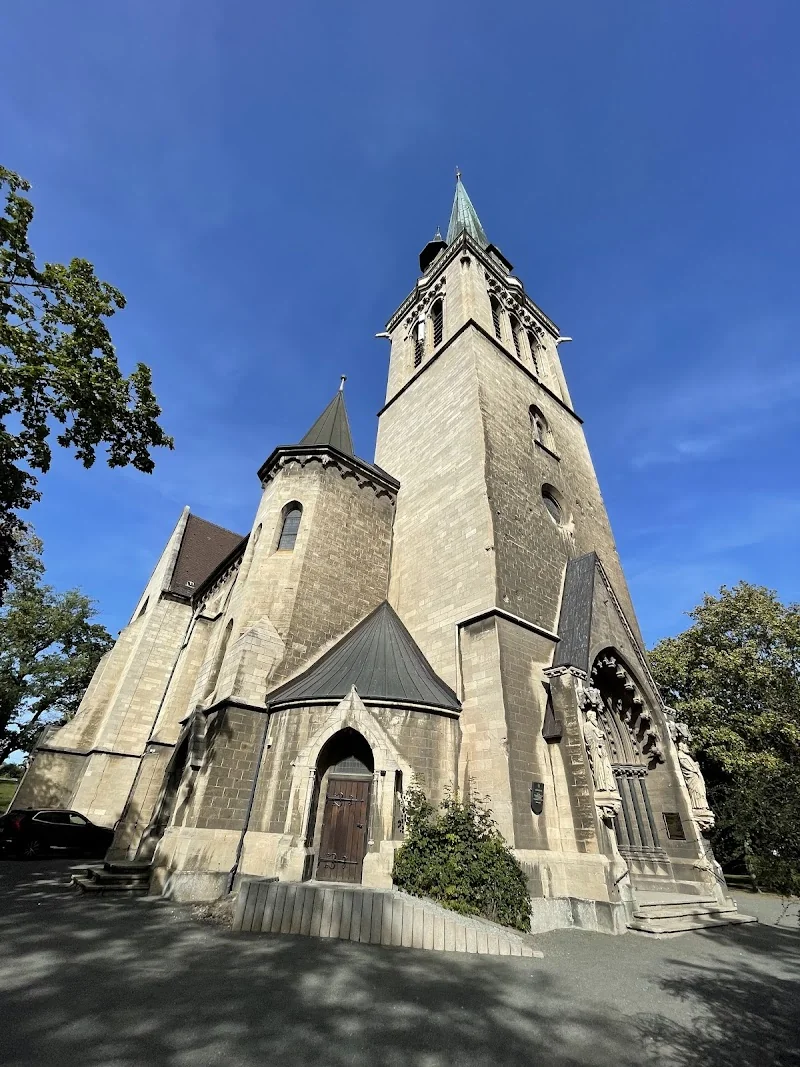
The current Thomaskirche was built between 1900 and 1902, replacing the old Thomaskirche that stood on Löberstraße and had become too small for the growing congregation. The new building was constructed in the neo-Gothic style and was intentionally designed as a representative city church. This style continues to shape the impression today: pointed forms, a clear vertical structure, and the connection of liturgical function and urban presence. According to the Thomas congregation, the Thomaskirche is the only neo-Gothic city church in Erfurt; the city of Erfurt also classifies it as a special church building with high cultural-historical value. This is important for the perception of the location, as it is not just any church, but a building that occupies a special position in the cityscape. ([thomasgemeinde-erfurt.de](https://www.thomasgemeinde-erfurt.de/gemeinde/geschichte-thomaskirche?utm_source=openai))
The history of the church is also marked by breaks. The bombing raid in March 1945 destroyed the Thomaskirche down to the outer walls and the tower, making the reconstruction not only a structural but also a symbolic task. The church was restored and re-consecrated in 1950; a later comprehensive renovation and redesign of the interior took place around the turn of the millennium, with the church being re-consecrated in 2000. Among the outstanding works of art is a Gothic altar retable from 1445, which is one of the four valuable Erfurt carved altars. Together with the 72 m high tower, the historical reconstruction, and the special interior design, a profile emerges that elevates the Thomaskirche far beyond the status of a normal parish church. ([erfurt.de](https://www.erfurt.de/ef/de/erleben/sehenswertes/dom/108154.html?utm_source=openai))
Services, Concerts, and Events at St. Thomas
Today, those searching for St. Thomas in Erfurt find not only architecture and history but also quickly encounter a vibrant community life. The homepage of the Thomas congregation provides information about services, community groups, services, and events, and the congregation's pages also feature photo series for special occasions. This is central from an SEO and user perspective: The Thomaskirche is a place where religious practice, community work, and cultural use intersect. Visitors can experience a classic church space here, but also a venue that is regularly opened for spiritual and musical formats. The website explicitly names the church as a preferred venue for organ, choir, and oratorio concerts, i.e., for events that benefit from the acoustics and sacred atmosphere. ([thomasgemeinde-erfurt.de](https://www.thomasgemeinde-erfurt.de/?utm_source=openai))
Particularly interesting is that the Thomaskirche is not only used for regular services but also for cultural series and special evenings that attract people beyond the core congregation. Examples include the Jazzmeile Thüringen, which was held at the Thomaskirche, as well as the DownTown Celebration, which is documented on the congregation's pages. Open services, family formats, and musically influenced community events also show that St. Thomas is a versatile place where faith, community, and culture meet. For visitors, this means: Those who visit the Thomaskirche experience not just a building, but an active institution with a current program and regional influence. ([erfurt.de](https://www.erfurt.de/ef/de/erleben/veranstaltungen/feste/130405.html?utm_source=openai))
Organ, Bells, and Interior of the Thomaskirche
A central unique feature of St. Thomas is the organ. The history of the instrument goes back a long way, as there was already an organ in the old Thomaskirche. The current instrument of the Thomaskirche was realized by the company Alexander Schuke from Potsdam in several construction phases; the current state was developed over the years from 1950 to 1993. The organ has 4,050 pipes, three manuals, and pedal. Additionally, it features mechanical action and pneumatic stop action, making it an exciting construction for both organists and concert visitors. The organ is not only a technical instrument but also part of the acoustic identity of the church. Those sitting in the Thomaskirche do not just hear music, but a soundscape that is consciously tuned to the space and fills the neo-Gothic architecture with life. ([thomasgemeinde-erfurt.de](https://www.thomasgemeinde-erfurt.de/gemeinde/geschichte-thomaskirche/orgel-der-thomaskirche?utm_source=openai))
The bells also contribute to the atmosphere of the Thomaskirche. The congregation describes their history as long and eventful, and the current ringing system and the peal stand in a continuity that connects the post-war reconstruction with older traditions. The church thus presents itself not only as a silent monument but as a living sound space, where bells, organ, and singing complement each other. For many visitors, this audible impression is decisive: The way into the church space begins with the sound from outside, leads through the organ music into the interior, and often ends with the feeling of having entered a place that combines sacred dignity and cultural openness. This makes St. Thomas particularly attractive for people looking for a church with acoustics, character, and concert quality. ([thomasgemeinde-erfurt.de](https://www.thomasgemeinde-erfurt.de/gemeinde/geschichte-thomaskirche/turmuhr?utm_source=openai))
Directions and Parking at Schillerstraße 48
The Thomaskirche is located at Schillerstraße 48 in the Löbervorstadt district of Erfurt. Thus, it is not on the outskirts of the city, but in an inner-city location that is particularly well combinable with a city visit for pedestrians, culture visitors, and congregation guests. The location in a park area ensures that the church, despite its central position, does not appear as a purely functional building, but as a quiet place with its own frame. Those who know the address can easily find St. Thomas again; the official city website and the Thomas congregation's site consistently state the address. This clear location is particularly helpful for events, as visitors already know where they need to go before their arrival. ([erfurt.de](https://www.erfurt.de/ef/de/erleben/gemeinden/ev/109689.html?utm_source=openai))
Regarding parking, it is important to distinguish clearly: The official sources do not indicate a dedicated visitor parking lot for the Thomaskirche. For drivers, the general infrastructure of Erfurt's city center is relevant, especially the city-regulated parking fees and zones. From the location in Löbervorstadt, it can be practically inferred that one should arrive a bit earlier for concerts or special services and not rely on a large parking lot directly designated at the church. This is not a blanket restriction, but a sensible visit planning for a central city location. Those who wish to arrive relaxed should therefore combine their church visit with a look at the general parking situation in Erfurt and plan more time for the last walking minutes if necessary. ([erfurt.de](https://www.erfurt.de/ef/de/leben/verkehr/mobil/auto/parkgebuehr/index.html?utm_source=openai))
Photos, Impressions, and Why St. Thomas in Erfurt Stays in Memory
Those searching for photos of St. Thomas will find on the Thomas congregation's page material from community life and from the church itself. Additionally, the city pages show the Thomaskirche as a noteworthy building in Erfurt, and individual thematic pages are dedicated to the portal, the windows, the wing altar, or other details. This is a significant advantage for the visual language of the location, as St. Thomas is photogenic not only from one perspective but offers several strong motifs: the neo-Gothic overall impression, the tower, the location in the park, the portal, the windows, and the historical artworks in the interior. Thus, the church is interesting for both documentary photos and atmospheric shots. Those visiting the place should therefore not only expect a church space but a multifaceted visual experience. ([thomasgemeinde-erfurt.de](https://www.thomasgemeinde-erfurt.de/?utm_source=openai))
St. Thomas remains in the memory of many visitors primarily because several levels come together here: the history of an old congregation, the reconstruction after the war, the special role as a concert venue, and the strong impression of a carefully maintained church space. The Thomas congregation is committed to restoration and maintenance through the Friends' Circle, which shows that the place is not only historically significant but also actively cared for and developed. This continuity is crucial for a location like St. Thomas: It is neither a museum nor just a venue, but both at the same time. For visitors specifically looking for photos, atmosphere, organ sound, or special church spaces, the Thomaskirche in Erfurt is therefore a compelling destination with recognizability and a lasting impression. ([thomasgemeinde-erfurt.de](https://www.thomasgemeinde-erfurt.de/dienste/freundeskreis-thomaskirche?utm_source=openai))
Sources:
- Thomasgemeinde Erfurt - Official Website
- Thomasgemeinde Erfurt - History of the Thomaskirche
- Thomasgemeinde Erfurt - Organ of the Thomaskirche
- State Capital Erfurt - Evangelical Congregation Erfurt-Thomasgemeinde
- State Capital Erfurt - Churches in Erfurt: Thomaskirche
- State Capital Erfurt - Jazzmeile Thüringen 2021 at the Thomaskirche
Show moreShow less
St. Thomas | Thomaskirche & Events
St. Thomas in Erfurt is for many people primarily a search term, but in reality, it is a very concrete place with a strong presence: the Evangelical Thomaskirche at Schillerstraße 48, nestled in a park area in the Löbervorstadt district. Those who visit the church experience not interchangeable sacred architecture, but a distinctive monument with its own history, its own sound, and a clear role in the cultural life of the city. The Thomaskirche is not only a parish church but also a venue for concerts, special services, and quiet moments in the heart of the city. This blend of history, atmosphere, and use makes it particularly interesting for visitors, music lovers, and travelers to Erfurt. ([erfurt.de](https://www.erfurt.de/ef/de/erleben/gemeinden/ev/109689.html?utm_source=openai))
Thomaskirche Erfurt: History, Location, and Architectural Features
The current Thomaskirche was built between 1900 and 1902, replacing the old Thomaskirche that stood on Löberstraße and had become too small for the growing congregation. The new building was constructed in the neo-Gothic style and was intentionally designed as a representative city church. This style continues to shape the impression today: pointed forms, a clear vertical structure, and the connection of liturgical function and urban presence. According to the Thomas congregation, the Thomaskirche is the only neo-Gothic city church in Erfurt; the city of Erfurt also classifies it as a special church building with high cultural-historical value. This is important for the perception of the location, as it is not just any church, but a building that occupies a special position in the cityscape. ([thomasgemeinde-erfurt.de](https://www.thomasgemeinde-erfurt.de/gemeinde/geschichte-thomaskirche?utm_source=openai))
The history of the church is also marked by breaks. The bombing raid in March 1945 destroyed the Thomaskirche down to the outer walls and the tower, making the reconstruction not only a structural but also a symbolic task. The church was restored and re-consecrated in 1950; a later comprehensive renovation and redesign of the interior took place around the turn of the millennium, with the church being re-consecrated in 2000. Among the outstanding works of art is a Gothic altar retable from 1445, which is one of the four valuable Erfurt carved altars. Together with the 72 m high tower, the historical reconstruction, and the special interior design, a profile emerges that elevates the Thomaskirche far beyond the status of a normal parish church. ([erfurt.de](https://www.erfurt.de/ef/de/erleben/sehenswertes/dom/108154.html?utm_source=openai))
Services, Concerts, and Events at St. Thomas
Today, those searching for St. Thomas in Erfurt find not only architecture and history but also quickly encounter a vibrant community life. The homepage of the Thomas congregation provides information about services, community groups, services, and events, and the congregation's pages also feature photo series for special occasions. This is central from an SEO and user perspective: The Thomaskirche is a place where religious practice, community work, and cultural use intersect. Visitors can experience a classic church space here, but also a venue that is regularly opened for spiritual and musical formats. The website explicitly names the church as a preferred venue for organ, choir, and oratorio concerts, i.e., for events that benefit from the acoustics and sacred atmosphere. ([thomasgemeinde-erfurt.de](https://www.thomasgemeinde-erfurt.de/?utm_source=openai))
Particularly interesting is that the Thomaskirche is not only used for regular services but also for cultural series and special evenings that attract people beyond the core congregation. Examples include the Jazzmeile Thüringen, which was held at the Thomaskirche, as well as the DownTown Celebration, which is documented on the congregation's pages. Open services, family formats, and musically influenced community events also show that St. Thomas is a versatile place where faith, community, and culture meet. For visitors, this means: Those who visit the Thomaskirche experience not just a building, but an active institution with a current program and regional influence. ([erfurt.de](https://www.erfurt.de/ef/de/erleben/veranstaltungen/feste/130405.html?utm_source=openai))
Organ, Bells, and Interior of the Thomaskirche
A central unique feature of St. Thomas is the organ. The history of the instrument goes back a long way, as there was already an organ in the old Thomaskirche. The current instrument of the Thomaskirche was realized by the company Alexander Schuke from Potsdam in several construction phases; the current state was developed over the years from 1950 to 1993. The organ has 4,050 pipes, three manuals, and pedal. Additionally, it features mechanical action and pneumatic stop action, making it an exciting construction for both organists and concert visitors. The organ is not only a technical instrument but also part of the acoustic identity of the church. Those sitting in the Thomaskirche do not just hear music, but a soundscape that is consciously tuned to the space and fills the neo-Gothic architecture with life. ([thomasgemeinde-erfurt.de](https://www.thomasgemeinde-erfurt.de/gemeinde/geschichte-thomaskirche/orgel-der-thomaskirche?utm_source=openai))
The bells also contribute to the atmosphere of the Thomaskirche. The congregation describes their history as long and eventful, and the current ringing system and the peal stand in a continuity that connects the post-war reconstruction with older traditions. The church thus presents itself not only as a silent monument but as a living sound space, where bells, organ, and singing complement each other. For many visitors, this audible impression is decisive: The way into the church space begins with the sound from outside, leads through the organ music into the interior, and often ends with the feeling of having entered a place that combines sacred dignity and cultural openness. This makes St. Thomas particularly attractive for people looking for a church with acoustics, character, and concert quality. ([thomasgemeinde-erfurt.de](https://www.thomasgemeinde-erfurt.de/gemeinde/geschichte-thomaskirche/turmuhr?utm_source=openai))
Directions and Parking at Schillerstraße 48
The Thomaskirche is located at Schillerstraße 48 in the Löbervorstadt district of Erfurt. Thus, it is not on the outskirts of the city, but in an inner-city location that is particularly well combinable with a city visit for pedestrians, culture visitors, and congregation guests. The location in a park area ensures that the church, despite its central position, does not appear as a purely functional building, but as a quiet place with its own frame. Those who know the address can easily find St. Thomas again; the official city website and the Thomas congregation's site consistently state the address. This clear location is particularly helpful for events, as visitors already know where they need to go before their arrival. ([erfurt.de](https://www.erfurt.de/ef/de/erleben/gemeinden/ev/109689.html?utm_source=openai))
Regarding parking, it is important to distinguish clearly: The official sources do not indicate a dedicated visitor parking lot for the Thomaskirche. For drivers, the general infrastructure of Erfurt's city center is relevant, especially the city-regulated parking fees and zones. From the location in Löbervorstadt, it can be practically inferred that one should arrive a bit earlier for concerts or special services and not rely on a large parking lot directly designated at the church. This is not a blanket restriction, but a sensible visit planning for a central city location. Those who wish to arrive relaxed should therefore combine their church visit with a look at the general parking situation in Erfurt and plan more time for the last walking minutes if necessary. ([erfurt.de](https://www.erfurt.de/ef/de/leben/verkehr/mobil/auto/parkgebuehr/index.html?utm_source=openai))
Photos, Impressions, and Why St. Thomas in Erfurt Stays in Memory
Those searching for photos of St. Thomas will find on the Thomas congregation's page material from community life and from the church itself. Additionally, the city pages show the Thomaskirche as a noteworthy building in Erfurt, and individual thematic pages are dedicated to the portal, the windows, the wing altar, or other details. This is a significant advantage for the visual language of the location, as St. Thomas is photogenic not only from one perspective but offers several strong motifs: the neo-Gothic overall impression, the tower, the location in the park, the portal, the windows, and the historical artworks in the interior. Thus, the church is interesting for both documentary photos and atmospheric shots. Those visiting the place should therefore not only expect a church space but a multifaceted visual experience. ([thomasgemeinde-erfurt.de](https://www.thomasgemeinde-erfurt.de/?utm_source=openai))
St. Thomas remains in the memory of many visitors primarily because several levels come together here: the history of an old congregation, the reconstruction after the war, the special role as a concert venue, and the strong impression of a carefully maintained church space. The Thomas congregation is committed to restoration and maintenance through the Friends' Circle, which shows that the place is not only historically significant but also actively cared for and developed. This continuity is crucial for a location like St. Thomas: It is neither a museum nor just a venue, but both at the same time. For visitors specifically looking for photos, atmosphere, organ sound, or special church spaces, the Thomaskirche in Erfurt is therefore a compelling destination with recognizability and a lasting impression. ([thomasgemeinde-erfurt.de](https://www.thomasgemeinde-erfurt.de/dienste/freundeskreis-thomaskirche?utm_source=openai))
Sources:
- Thomasgemeinde Erfurt - Official Website
- Thomasgemeinde Erfurt - History of the Thomaskirche
- Thomasgemeinde Erfurt - Organ of the Thomaskirche
- State Capital Erfurt - Evangelical Congregation Erfurt-Thomasgemeinde
- State Capital Erfurt - Churches in Erfurt: Thomaskirche
- State Capital Erfurt - Jazzmeile Thüringen 2021 at the Thomaskirche
St. Thomas | Thomaskirche & Events
St. Thomas in Erfurt is for many people primarily a search term, but in reality, it is a very concrete place with a strong presence: the Evangelical Thomaskirche at Schillerstraße 48, nestled in a park area in the Löbervorstadt district. Those who visit the church experience not interchangeable sacred architecture, but a distinctive monument with its own history, its own sound, and a clear role in the cultural life of the city. The Thomaskirche is not only a parish church but also a venue for concerts, special services, and quiet moments in the heart of the city. This blend of history, atmosphere, and use makes it particularly interesting for visitors, music lovers, and travelers to Erfurt. ([erfurt.de](https://www.erfurt.de/ef/de/erleben/gemeinden/ev/109689.html?utm_source=openai))
Thomaskirche Erfurt: History, Location, and Architectural Features
The current Thomaskirche was built between 1900 and 1902, replacing the old Thomaskirche that stood on Löberstraße and had become too small for the growing congregation. The new building was constructed in the neo-Gothic style and was intentionally designed as a representative city church. This style continues to shape the impression today: pointed forms, a clear vertical structure, and the connection of liturgical function and urban presence. According to the Thomas congregation, the Thomaskirche is the only neo-Gothic city church in Erfurt; the city of Erfurt also classifies it as a special church building with high cultural-historical value. This is important for the perception of the location, as it is not just any church, but a building that occupies a special position in the cityscape. ([thomasgemeinde-erfurt.de](https://www.thomasgemeinde-erfurt.de/gemeinde/geschichte-thomaskirche?utm_source=openai))
The history of the church is also marked by breaks. The bombing raid in March 1945 destroyed the Thomaskirche down to the outer walls and the tower, making the reconstruction not only a structural but also a symbolic task. The church was restored and re-consecrated in 1950; a later comprehensive renovation and redesign of the interior took place around the turn of the millennium, with the church being re-consecrated in 2000. Among the outstanding works of art is a Gothic altar retable from 1445, which is one of the four valuable Erfurt carved altars. Together with the 72 m high tower, the historical reconstruction, and the special interior design, a profile emerges that elevates the Thomaskirche far beyond the status of a normal parish church. ([erfurt.de](https://www.erfurt.de/ef/de/erleben/sehenswertes/dom/108154.html?utm_source=openai))
Services, Concerts, and Events at St. Thomas
Today, those searching for St. Thomas in Erfurt find not only architecture and history but also quickly encounter a vibrant community life. The homepage of the Thomas congregation provides information about services, community groups, services, and events, and the congregation's pages also feature photo series for special occasions. This is central from an SEO and user perspective: The Thomaskirche is a place where religious practice, community work, and cultural use intersect. Visitors can experience a classic church space here, but also a venue that is regularly opened for spiritual and musical formats. The website explicitly names the church as a preferred venue for organ, choir, and oratorio concerts, i.e., for events that benefit from the acoustics and sacred atmosphere. ([thomasgemeinde-erfurt.de](https://www.thomasgemeinde-erfurt.de/?utm_source=openai))
Particularly interesting is that the Thomaskirche is not only used for regular services but also for cultural series and special evenings that attract people beyond the core congregation. Examples include the Jazzmeile Thüringen, which was held at the Thomaskirche, as well as the DownTown Celebration, which is documented on the congregation's pages. Open services, family formats, and musically influenced community events also show that St. Thomas is a versatile place where faith, community, and culture meet. For visitors, this means: Those who visit the Thomaskirche experience not just a building, but an active institution with a current program and regional influence. ([erfurt.de](https://www.erfurt.de/ef/de/erleben/veranstaltungen/feste/130405.html?utm_source=openai))
Organ, Bells, and Interior of the Thomaskirche
A central unique feature of St. Thomas is the organ. The history of the instrument goes back a long way, as there was already an organ in the old Thomaskirche. The current instrument of the Thomaskirche was realized by the company Alexander Schuke from Potsdam in several construction phases; the current state was developed over the years from 1950 to 1993. The organ has 4,050 pipes, three manuals, and pedal. Additionally, it features mechanical action and pneumatic stop action, making it an exciting construction for both organists and concert visitors. The organ is not only a technical instrument but also part of the acoustic identity of the church. Those sitting in the Thomaskirche do not just hear music, but a soundscape that is consciously tuned to the space and fills the neo-Gothic architecture with life. ([thomasgemeinde-erfurt.de](https://www.thomasgemeinde-erfurt.de/gemeinde/geschichte-thomaskirche/orgel-der-thomaskirche?utm_source=openai))
The bells also contribute to the atmosphere of the Thomaskirche. The congregation describes their history as long and eventful, and the current ringing system and the peal stand in a continuity that connects the post-war reconstruction with older traditions. The church thus presents itself not only as a silent monument but as a living sound space, where bells, organ, and singing complement each other. For many visitors, this audible impression is decisive: The way into the church space begins with the sound from outside, leads through the organ music into the interior, and often ends with the feeling of having entered a place that combines sacred dignity and cultural openness. This makes St. Thomas particularly attractive for people looking for a church with acoustics, character, and concert quality. ([thomasgemeinde-erfurt.de](https://www.thomasgemeinde-erfurt.de/gemeinde/geschichte-thomaskirche/turmuhr?utm_source=openai))
Directions and Parking at Schillerstraße 48
The Thomaskirche is located at Schillerstraße 48 in the Löbervorstadt district of Erfurt. Thus, it is not on the outskirts of the city, but in an inner-city location that is particularly well combinable with a city visit for pedestrians, culture visitors, and congregation guests. The location in a park area ensures that the church, despite its central position, does not appear as a purely functional building, but as a quiet place with its own frame. Those who know the address can easily find St. Thomas again; the official city website and the Thomas congregation's site consistently state the address. This clear location is particularly helpful for events, as visitors already know where they need to go before their arrival. ([erfurt.de](https://www.erfurt.de/ef/de/erleben/gemeinden/ev/109689.html?utm_source=openai))
Regarding parking, it is important to distinguish clearly: The official sources do not indicate a dedicated visitor parking lot for the Thomaskirche. For drivers, the general infrastructure of Erfurt's city center is relevant, especially the city-regulated parking fees and zones. From the location in Löbervorstadt, it can be practically inferred that one should arrive a bit earlier for concerts or special services and not rely on a large parking lot directly designated at the church. This is not a blanket restriction, but a sensible visit planning for a central city location. Those who wish to arrive relaxed should therefore combine their church visit with a look at the general parking situation in Erfurt and plan more time for the last walking minutes if necessary. ([erfurt.de](https://www.erfurt.de/ef/de/leben/verkehr/mobil/auto/parkgebuehr/index.html?utm_source=openai))
Photos, Impressions, and Why St. Thomas in Erfurt Stays in Memory
Those searching for photos of St. Thomas will find on the Thomas congregation's page material from community life and from the church itself. Additionally, the city pages show the Thomaskirche as a noteworthy building in Erfurt, and individual thematic pages are dedicated to the portal, the windows, the wing altar, or other details. This is a significant advantage for the visual language of the location, as St. Thomas is photogenic not only from one perspective but offers several strong motifs: the neo-Gothic overall impression, the tower, the location in the park, the portal, the windows, and the historical artworks in the interior. Thus, the church is interesting for both documentary photos and atmospheric shots. Those visiting the place should therefore not only expect a church space but a multifaceted visual experience. ([thomasgemeinde-erfurt.de](https://www.thomasgemeinde-erfurt.de/?utm_source=openai))
St. Thomas remains in the memory of many visitors primarily because several levels come together here: the history of an old congregation, the reconstruction after the war, the special role as a concert venue, and the strong impression of a carefully maintained church space. The Thomas congregation is committed to restoration and maintenance through the Friends' Circle, which shows that the place is not only historically significant but also actively cared for and developed. This continuity is crucial for a location like St. Thomas: It is neither a museum nor just a venue, but both at the same time. For visitors specifically looking for photos, atmosphere, organ sound, or special church spaces, the Thomaskirche in Erfurt is therefore a compelling destination with recognizability and a lasting impression. ([thomasgemeinde-erfurt.de](https://www.thomasgemeinde-erfurt.de/dienste/freundeskreis-thomaskirche?utm_source=openai))
Sources:
- Thomasgemeinde Erfurt - Official Website
- Thomasgemeinde Erfurt - History of the Thomaskirche
- Thomasgemeinde Erfurt - Organ of the Thomaskirche
- State Capital Erfurt - Evangelical Congregation Erfurt-Thomasgemeinde
- State Capital Erfurt - Churches in Erfurt: Thomaskirche
- State Capital Erfurt - Jazzmeile Thüringen 2021 at the Thomaskirche
Upcoming Events
No events found
Frequently Asked Questions
Reviews
T Miller
13. February 2026
The sound of the bells is beautiful
Анжела
31. May 2023
Super!)
Frank Menzel
3. December 2023
Top
Fototour Thüringen
6. February 2026
We attended a very nice event here. The church was very well heated (in winter) and that made the concert even more enjoyable.
Sabine P.P.
11. December 2025
There is a medieval Christmas market during the Christmas season, but you can "only" eat and drink, although it is delicious and there is significantly more space on Saturday evenings than at the large Erfurt Christmas market.