
Erfurt
Große Arche 14, 99084 Erfurt, Deutschland
Naturkundemuseum Erfurt | Opening Hours & Tickets
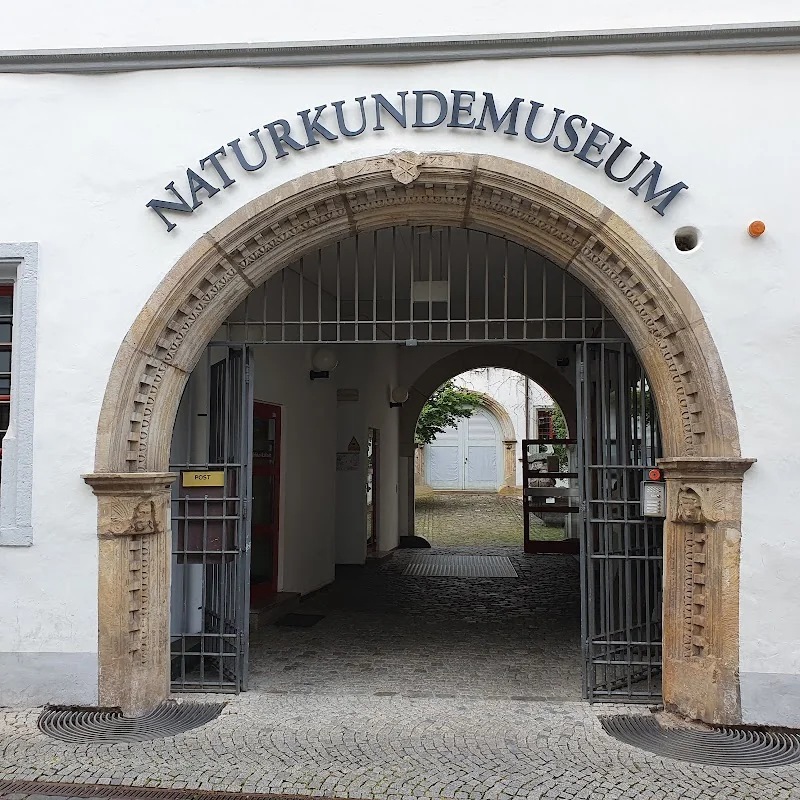
The Naturkundemuseum Erfurt is located in the middle of the old town in a historic dye store and connects city history, natural history, and lively communication in an unusually impressive way. Four exhibition floors, a 14-meter-high oak tree, and Noah's Ark in the basement make the visit a tour that not only imparts knowledge but also makes the nature of Thuringia spatially tangible. Those looking for a museum with a strong recognition value will not find a random exhibition house here, but a place with character, history, and a clear thematic signature. The official site describes the house as a place to explore the nature of Thuringia, emphasizes the animal and plant life of the region, and also points out the special exhibitions and educational offerings. ([erfurt.de](https://www.erfurt.de/ef/de/erleben/kunst/museen/108326.html))
Organizationally, the museum is also well accessible: It is located at Große Arche 14, is quickly reachable from the city center, and is described by the city of Erfurt as a museum with permanent and special exhibitions, guided tours, educational offerings, special events, and workshops. Historically, the house is also remarkable, as the Naturkundemuseum was opened in 1922, dismantled in 1968 during a reconstruction, and newly presented in 1995 in the painstakingly reconstructed ruins of the dye store. This mix of tradition, scientific collection, and current communication continues to shape the appeal of the house to this day. ([erfurt.de](https://www.erfurt.de/ef/de/erleben/kunst/museen/108326.html))
Opening Hours, Admission, and Tickets at Naturkundemuseum Erfurt
For planning, the museum is clearly structured: The official museum website states Tuesday to Sunday from 10:00 AM to 6:00 PM as opening hours, and guided tours are possible by arrangement. Those who want to incorporate a visit into their daily schedule can therefore easily plan for a classic museum visit in the morning or afternoon. Regarding admission, the tariff regulations of the state capital Erfurt refer to regular prices for the Naturkundemuseum: Adults pay 6.00 euros, reduced admission costs 4.00 euros, families 13.00 euros, and groups of 10 or more people 3.00 euros per visitor. Additional flat rates apply for registered guided tours. ([erfurt.de](https://www.erfurt.de/ef/de/erleben/kunst/museen/108326.html))
Those looking for free admission should read the event announcements carefully, as the museum distinguishes between the regular tariff and specific special dates. Lectures or special program points are repeatedly announced as free of charge. For most visitors, this means in practice: Tickets should generally be planned before the visit, while free admission occurs more as an exception at individual events. This is important for those searching for the keywords tickets, admission, and prices, as it creates a clear expectation: The Naturkundemuseum is not a permanently free house, but it occasionally offers free program points. ([erfurt.de](https://www.erfurt.de/mam/ef/rathaus/stadtrecht/4/4119.pdf))
Current Special Exhibition and Events for Families
The special exhibitions are among the most noticeable reasons for a visit to the Naturkundemuseum Erfurt. The current announcements mention the exhibition The Bird WG – The Heinroths, their 1000 Birds, and the Beginnings of Behavioral Research until May 3, 2026; it tells the story of the naturalist couple Oskar and Magdalena Heinroth and their extraordinary observations on bird development. The next major exhibition is already announced for summer 2026: Insects. Marvels of Evolution. The city describes the exhibition as extensively accompanied by an educational program. This shows that the museum understands special exhibitions not only as showcases but as a thematically strong extension of the permanent exhibition. ([geschichtsmuseen.erfurt.de](https://geschichtsmuseen.erfurt.de/gm/de/service/aktuelles/meldungen/2026/ef_153310.html))
The event program is also a clear plus point. The official announcements include guided tours through The Bird WG, lectures for children as part of Juniorcampus, holiday offers, and the Long Night of Museums. This is particularly attractive for visitors because the house not only offers a static presentation but also regularly changing formats with lectures, guided tours, and hands-on offerings. The museum's website also emphasizes that special exhibitions are often in-house productions, occasionally created in cooperation, or designed by artists on nature themes. This creates a program that is professionally sound and simultaneously offers enough variety for repeat visits. ([erfurt.de](https://www.erfurt.de/ef/de/erleben/kunst/museen/108326.html))
Access, Parking, and Location in the Erfurt Old Town
The location of the Naturkundemuseum is one of its great practical advantages: Große Arche 14, 99084 Erfurt, thus centrally located in the old town and near the Cathedral Square. The official site recommends tram lines 3, 4, or 6 to the Cathedral Square; from there, it is about 100 meters to the right into Große Arche via Marktstraße. The parking option mentioned is the parking garage at Cathedral Square. Therefore, those arriving by train or car have clear orientation and do not have to search for long. This fits well with a museum that wants to be attractive not only for locals but also for guests of the city. ([erfurt.de](https://www.erfurt.de/ef/de/erleben/kunst/museen/108326.html))
For visitors with special needs, the paths are also documented: Public disabled parking spaces are located in the parking garage at the Cathedral, about 400 meters away, with the path leading over uneven cobblestones. This is an important note for families, seniors, or guests with wheelchairs, strollers, or walking aids, as it allows for better assessment of realistic route planning. Those who want to make the visit relaxed should therefore take advantage of the central location but also plan a little time for the footpath from the parking option. Especially in the historic city center, the mix of good connections and typical old town cobblestones is a defining part of the visit experience. ([erfurt.de](https://www.erfurt.de/ef/de/erleben/kunst/museen/108326.html))
Accessibility and Visitor Services On-Site
Accessibility at the Naturkundemuseum Erfurt is partially given and transparently described. The access leads via a ramp that is 4 meters long, 1 meter wide, and has a gradient of 7 percent. An elevator connects the ground floor with the 1st and 2nd floors, but its use is mentioned to be accompanied by staff. Additionally, the museum's website points out other ramps in the house, with gradients of up to 12 percent and lengths of up to 12 meters. This information is important for planning because it shows that the house is accessible, but the visit does not proceed completely step-free in all areas. ([erfurt.de](https://www.erfurt.de/ef/de/erleben/kunst/museen/108326.html))
Particularly relevant for wheelchair users is the restriction that Noah's Ark in the basement and the 3rd floor are not accessible. On the positive side, guided tours for blind visitors are possible by prior arrangement, and assistance dogs are allowed. The restroom note is also specifically documented. For inquiries regarding accessibility, the official site thus provides not just a yes or no, but a realistic, honest description of accessibility. In effect, this is important: The Naturkundemuseum promises nothing that it cannot deliver structurally, thereby creating trust with guests who have special needs. ([erfurt.de](https://www.erfurt.de/ef/de/erleben/kunst/museen/108326.html))
Children, Holiday Programs, and Learning Offers
Those coming with children will find more than just classic display boards at the Naturkundemuseum Erfurt. The house mentions educational offerings, guided tours, special events, and workshops as part of its program. In the city's holiday offers, formats for different age groups regularly appear at the Naturkundemuseum: holiday tours from 6 years, winter holiday offers for children from 6 years, Juniorcampus lectures from 7 years, and workshops from 8 years. This range makes the museum interesting for families because the age limits are not rigid but tailored to the respective offering. ([erfurt.de](https://www.erfurt.de/ef/de/erleben/kunst/museen/108326.html))
For keyword searches related to children, winter holidays, and at what age a visit is worthwhile, it is particularly important: There is no single blanket age indication for the entire house, but various formats with different access thresholds. It can be sensibly derived that the visit itself is generally suitable for families, but the respective action format should be pre-adjusted to the child's age. Therefore, those selecting a guided tour, workshop, or holiday program should read the specific announcement, as age, registration, and participation rules are clearly stated there. This is an advantage for parents because they do not have to guess but can directly see which offering fits the child. ([erfurt.de](https://www.erfurt.de/ef/de/service/aktuelles/pm/2024/146609.html?utm_source=openai))
History, Collections, and the Special Exhibition in the Dye Store Ruins
The history of the house is part of its charisma. The Naturkundemuseum Erfurt was opened on October 29, 1922, and owes its existence to many Erfurt citizens, especially the teacher Otto Rapp. After the dismantling of the exhibition in 1968 and a long phase of outsourcing natural science collections, the museum was newly presented in 1995 in the ruins of the dye store from 1527 in Große Arche. This development explains why the house is not only a collection but also a piece of Erfurt's cultural and restoration history. ([erfurt.de](https://www.erfurt.de/ef/de/erleben/kunst/museen/108326.html))
Content-wise, the museum works with a clear dramaturgy: A roughly 350-year-old oak tree rises through four floors, connecting earth history, Thuringian forests, open land, and urban nature. Geological traces of Thuringia are shown on the ground floor, the forests and their inhabitants on the 1st floor, open land and dry grasslands on the 2nd floor, and nature in the city in the attic. At the same time, the museum possesses extensive natural science collections, including about 350,000 insects, around 55,000 mollusks, about 4,500 amphibians, 800 reptiles, around 4,000 birds, about 1,200 mammals, around 12,500 plants, about 15,000 fossils, and 7,000 minerals. The special exhibitions also open a space for in-depth topics and other perspectives on nature and biodiversity. The city is also working on the content and structural development of the Naturkundemuseum and explicitly names barrier-free guided tours as a planning goal. ([erfurt.de](https://www.erfurt.de/ef/de/erleben/kunst/museen/108326.html))
Sources:
Show moreShow less
Naturkundemuseum Erfurt | Opening Hours & Tickets
The Naturkundemuseum Erfurt is located in the middle of the old town in a historic dye store and connects city history, natural history, and lively communication in an unusually impressive way. Four exhibition floors, a 14-meter-high oak tree, and Noah's Ark in the basement make the visit a tour that not only imparts knowledge but also makes the nature of Thuringia spatially tangible. Those looking for a museum with a strong recognition value will not find a random exhibition house here, but a place with character, history, and a clear thematic signature. The official site describes the house as a place to explore the nature of Thuringia, emphasizes the animal and plant life of the region, and also points out the special exhibitions and educational offerings. ([erfurt.de](https://www.erfurt.de/ef/de/erleben/kunst/museen/108326.html))
Organizationally, the museum is also well accessible: It is located at Große Arche 14, is quickly reachable from the city center, and is described by the city of Erfurt as a museum with permanent and special exhibitions, guided tours, educational offerings, special events, and workshops. Historically, the house is also remarkable, as the Naturkundemuseum was opened in 1922, dismantled in 1968 during a reconstruction, and newly presented in 1995 in the painstakingly reconstructed ruins of the dye store. This mix of tradition, scientific collection, and current communication continues to shape the appeal of the house to this day. ([erfurt.de](https://www.erfurt.de/ef/de/erleben/kunst/museen/108326.html))
Opening Hours, Admission, and Tickets at Naturkundemuseum Erfurt
For planning, the museum is clearly structured: The official museum website states Tuesday to Sunday from 10:00 AM to 6:00 PM as opening hours, and guided tours are possible by arrangement. Those who want to incorporate a visit into their daily schedule can therefore easily plan for a classic museum visit in the morning or afternoon. Regarding admission, the tariff regulations of the state capital Erfurt refer to regular prices for the Naturkundemuseum: Adults pay 6.00 euros, reduced admission costs 4.00 euros, families 13.00 euros, and groups of 10 or more people 3.00 euros per visitor. Additional flat rates apply for registered guided tours. ([erfurt.de](https://www.erfurt.de/ef/de/erleben/kunst/museen/108326.html))
Those looking for free admission should read the event announcements carefully, as the museum distinguishes between the regular tariff and specific special dates. Lectures or special program points are repeatedly announced as free of charge. For most visitors, this means in practice: Tickets should generally be planned before the visit, while free admission occurs more as an exception at individual events. This is important for those searching for the keywords tickets, admission, and prices, as it creates a clear expectation: The Naturkundemuseum is not a permanently free house, but it occasionally offers free program points. ([erfurt.de](https://www.erfurt.de/mam/ef/rathaus/stadtrecht/4/4119.pdf))
Current Special Exhibition and Events for Families
The special exhibitions are among the most noticeable reasons for a visit to the Naturkundemuseum Erfurt. The current announcements mention the exhibition The Bird WG – The Heinroths, their 1000 Birds, and the Beginnings of Behavioral Research until May 3, 2026; it tells the story of the naturalist couple Oskar and Magdalena Heinroth and their extraordinary observations on bird development. The next major exhibition is already announced for summer 2026: Insects. Marvels of Evolution. The city describes the exhibition as extensively accompanied by an educational program. This shows that the museum understands special exhibitions not only as showcases but as a thematically strong extension of the permanent exhibition. ([geschichtsmuseen.erfurt.de](https://geschichtsmuseen.erfurt.de/gm/de/service/aktuelles/meldungen/2026/ef_153310.html))
The event program is also a clear plus point. The official announcements include guided tours through The Bird WG, lectures for children as part of Juniorcampus, holiday offers, and the Long Night of Museums. This is particularly attractive for visitors because the house not only offers a static presentation but also regularly changing formats with lectures, guided tours, and hands-on offerings. The museum's website also emphasizes that special exhibitions are often in-house productions, occasionally created in cooperation, or designed by artists on nature themes. This creates a program that is professionally sound and simultaneously offers enough variety for repeat visits. ([erfurt.de](https://www.erfurt.de/ef/de/erleben/kunst/museen/108326.html))
Access, Parking, and Location in the Erfurt Old Town
The location of the Naturkundemuseum is one of its great practical advantages: Große Arche 14, 99084 Erfurt, thus centrally located in the old town and near the Cathedral Square. The official site recommends tram lines 3, 4, or 6 to the Cathedral Square; from there, it is about 100 meters to the right into Große Arche via Marktstraße. The parking option mentioned is the parking garage at Cathedral Square. Therefore, those arriving by train or car have clear orientation and do not have to search for long. This fits well with a museum that wants to be attractive not only for locals but also for guests of the city. ([erfurt.de](https://www.erfurt.de/ef/de/erleben/kunst/museen/108326.html))
For visitors with special needs, the paths are also documented: Public disabled parking spaces are located in the parking garage at the Cathedral, about 400 meters away, with the path leading over uneven cobblestones. This is an important note for families, seniors, or guests with wheelchairs, strollers, or walking aids, as it allows for better assessment of realistic route planning. Those who want to make the visit relaxed should therefore take advantage of the central location but also plan a little time for the footpath from the parking option. Especially in the historic city center, the mix of good connections and typical old town cobblestones is a defining part of the visit experience. ([erfurt.de](https://www.erfurt.de/ef/de/erleben/kunst/museen/108326.html))
Accessibility and Visitor Services On-Site
Accessibility at the Naturkundemuseum Erfurt is partially given and transparently described. The access leads via a ramp that is 4 meters long, 1 meter wide, and has a gradient of 7 percent. An elevator connects the ground floor with the 1st and 2nd floors, but its use is mentioned to be accompanied by staff. Additionally, the museum's website points out other ramps in the house, with gradients of up to 12 percent and lengths of up to 12 meters. This information is important for planning because it shows that the house is accessible, but the visit does not proceed completely step-free in all areas. ([erfurt.de](https://www.erfurt.de/ef/de/erleben/kunst/museen/108326.html))
Particularly relevant for wheelchair users is the restriction that Noah's Ark in the basement and the 3rd floor are not accessible. On the positive side, guided tours for blind visitors are possible by prior arrangement, and assistance dogs are allowed. The restroom note is also specifically documented. For inquiries regarding accessibility, the official site thus provides not just a yes or no, but a realistic, honest description of accessibility. In effect, this is important: The Naturkundemuseum promises nothing that it cannot deliver structurally, thereby creating trust with guests who have special needs. ([erfurt.de](https://www.erfurt.de/ef/de/erleben/kunst/museen/108326.html))
Children, Holiday Programs, and Learning Offers
Those coming with children will find more than just classic display boards at the Naturkundemuseum Erfurt. The house mentions educational offerings, guided tours, special events, and workshops as part of its program. In the city's holiday offers, formats for different age groups regularly appear at the Naturkundemuseum: holiday tours from 6 years, winter holiday offers for children from 6 years, Juniorcampus lectures from 7 years, and workshops from 8 years. This range makes the museum interesting for families because the age limits are not rigid but tailored to the respective offering. ([erfurt.de](https://www.erfurt.de/ef/de/erleben/kunst/museen/108326.html))
For keyword searches related to children, winter holidays, and at what age a visit is worthwhile, it is particularly important: There is no single blanket age indication for the entire house, but various formats with different access thresholds. It can be sensibly derived that the visit itself is generally suitable for families, but the respective action format should be pre-adjusted to the child's age. Therefore, those selecting a guided tour, workshop, or holiday program should read the specific announcement, as age, registration, and participation rules are clearly stated there. This is an advantage for parents because they do not have to guess but can directly see which offering fits the child. ([erfurt.de](https://www.erfurt.de/ef/de/service/aktuelles/pm/2024/146609.html?utm_source=openai))
History, Collections, and the Special Exhibition in the Dye Store Ruins
The history of the house is part of its charisma. The Naturkundemuseum Erfurt was opened on October 29, 1922, and owes its existence to many Erfurt citizens, especially the teacher Otto Rapp. After the dismantling of the exhibition in 1968 and a long phase of outsourcing natural science collections, the museum was newly presented in 1995 in the ruins of the dye store from 1527 in Große Arche. This development explains why the house is not only a collection but also a piece of Erfurt's cultural and restoration history. ([erfurt.de](https://www.erfurt.de/ef/de/erleben/kunst/museen/108326.html))
Content-wise, the museum works with a clear dramaturgy: A roughly 350-year-old oak tree rises through four floors, connecting earth history, Thuringian forests, open land, and urban nature. Geological traces of Thuringia are shown on the ground floor, the forests and their inhabitants on the 1st floor, open land and dry grasslands on the 2nd floor, and nature in the city in the attic. At the same time, the museum possesses extensive natural science collections, including about 350,000 insects, around 55,000 mollusks, about 4,500 amphibians, 800 reptiles, around 4,000 birds, about 1,200 mammals, around 12,500 plants, about 15,000 fossils, and 7,000 minerals. The special exhibitions also open a space for in-depth topics and other perspectives on nature and biodiversity. The city is also working on the content and structural development of the Naturkundemuseum and explicitly names barrier-free guided tours as a planning goal. ([erfurt.de](https://www.erfurt.de/ef/de/erleben/kunst/museen/108326.html))
Sources:
Naturkundemuseum Erfurt | Opening Hours & Tickets
The Naturkundemuseum Erfurt is located in the middle of the old town in a historic dye store and connects city history, natural history, and lively communication in an unusually impressive way. Four exhibition floors, a 14-meter-high oak tree, and Noah's Ark in the basement make the visit a tour that not only imparts knowledge but also makes the nature of Thuringia spatially tangible. Those looking for a museum with a strong recognition value will not find a random exhibition house here, but a place with character, history, and a clear thematic signature. The official site describes the house as a place to explore the nature of Thuringia, emphasizes the animal and plant life of the region, and also points out the special exhibitions and educational offerings. ([erfurt.de](https://www.erfurt.de/ef/de/erleben/kunst/museen/108326.html))
Organizationally, the museum is also well accessible: It is located at Große Arche 14, is quickly reachable from the city center, and is described by the city of Erfurt as a museum with permanent and special exhibitions, guided tours, educational offerings, special events, and workshops. Historically, the house is also remarkable, as the Naturkundemuseum was opened in 1922, dismantled in 1968 during a reconstruction, and newly presented in 1995 in the painstakingly reconstructed ruins of the dye store. This mix of tradition, scientific collection, and current communication continues to shape the appeal of the house to this day. ([erfurt.de](https://www.erfurt.de/ef/de/erleben/kunst/museen/108326.html))
Opening Hours, Admission, and Tickets at Naturkundemuseum Erfurt
For planning, the museum is clearly structured: The official museum website states Tuesday to Sunday from 10:00 AM to 6:00 PM as opening hours, and guided tours are possible by arrangement. Those who want to incorporate a visit into their daily schedule can therefore easily plan for a classic museum visit in the morning or afternoon. Regarding admission, the tariff regulations of the state capital Erfurt refer to regular prices for the Naturkundemuseum: Adults pay 6.00 euros, reduced admission costs 4.00 euros, families 13.00 euros, and groups of 10 or more people 3.00 euros per visitor. Additional flat rates apply for registered guided tours. ([erfurt.de](https://www.erfurt.de/ef/de/erleben/kunst/museen/108326.html))
Those looking for free admission should read the event announcements carefully, as the museum distinguishes between the regular tariff and specific special dates. Lectures or special program points are repeatedly announced as free of charge. For most visitors, this means in practice: Tickets should generally be planned before the visit, while free admission occurs more as an exception at individual events. This is important for those searching for the keywords tickets, admission, and prices, as it creates a clear expectation: The Naturkundemuseum is not a permanently free house, but it occasionally offers free program points. ([erfurt.de](https://www.erfurt.de/mam/ef/rathaus/stadtrecht/4/4119.pdf))
Current Special Exhibition and Events for Families
The special exhibitions are among the most noticeable reasons for a visit to the Naturkundemuseum Erfurt. The current announcements mention the exhibition The Bird WG – The Heinroths, their 1000 Birds, and the Beginnings of Behavioral Research until May 3, 2026; it tells the story of the naturalist couple Oskar and Magdalena Heinroth and their extraordinary observations on bird development. The next major exhibition is already announced for summer 2026: Insects. Marvels of Evolution. The city describes the exhibition as extensively accompanied by an educational program. This shows that the museum understands special exhibitions not only as showcases but as a thematically strong extension of the permanent exhibition. ([geschichtsmuseen.erfurt.de](https://geschichtsmuseen.erfurt.de/gm/de/service/aktuelles/meldungen/2026/ef_153310.html))
The event program is also a clear plus point. The official announcements include guided tours through The Bird WG, lectures for children as part of Juniorcampus, holiday offers, and the Long Night of Museums. This is particularly attractive for visitors because the house not only offers a static presentation but also regularly changing formats with lectures, guided tours, and hands-on offerings. The museum's website also emphasizes that special exhibitions are often in-house productions, occasionally created in cooperation, or designed by artists on nature themes. This creates a program that is professionally sound and simultaneously offers enough variety for repeat visits. ([erfurt.de](https://www.erfurt.de/ef/de/erleben/kunst/museen/108326.html))
Access, Parking, and Location in the Erfurt Old Town
The location of the Naturkundemuseum is one of its great practical advantages: Große Arche 14, 99084 Erfurt, thus centrally located in the old town and near the Cathedral Square. The official site recommends tram lines 3, 4, or 6 to the Cathedral Square; from there, it is about 100 meters to the right into Große Arche via Marktstraße. The parking option mentioned is the parking garage at Cathedral Square. Therefore, those arriving by train or car have clear orientation and do not have to search for long. This fits well with a museum that wants to be attractive not only for locals but also for guests of the city. ([erfurt.de](https://www.erfurt.de/ef/de/erleben/kunst/museen/108326.html))
For visitors with special needs, the paths are also documented: Public disabled parking spaces are located in the parking garage at the Cathedral, about 400 meters away, with the path leading over uneven cobblestones. This is an important note for families, seniors, or guests with wheelchairs, strollers, or walking aids, as it allows for better assessment of realistic route planning. Those who want to make the visit relaxed should therefore take advantage of the central location but also plan a little time for the footpath from the parking option. Especially in the historic city center, the mix of good connections and typical old town cobblestones is a defining part of the visit experience. ([erfurt.de](https://www.erfurt.de/ef/de/erleben/kunst/museen/108326.html))
Accessibility and Visitor Services On-Site
Accessibility at the Naturkundemuseum Erfurt is partially given and transparently described. The access leads via a ramp that is 4 meters long, 1 meter wide, and has a gradient of 7 percent. An elevator connects the ground floor with the 1st and 2nd floors, but its use is mentioned to be accompanied by staff. Additionally, the museum's website points out other ramps in the house, with gradients of up to 12 percent and lengths of up to 12 meters. This information is important for planning because it shows that the house is accessible, but the visit does not proceed completely step-free in all areas. ([erfurt.de](https://www.erfurt.de/ef/de/erleben/kunst/museen/108326.html))
Particularly relevant for wheelchair users is the restriction that Noah's Ark in the basement and the 3rd floor are not accessible. On the positive side, guided tours for blind visitors are possible by prior arrangement, and assistance dogs are allowed. The restroom note is also specifically documented. For inquiries regarding accessibility, the official site thus provides not just a yes or no, but a realistic, honest description of accessibility. In effect, this is important: The Naturkundemuseum promises nothing that it cannot deliver structurally, thereby creating trust with guests who have special needs. ([erfurt.de](https://www.erfurt.de/ef/de/erleben/kunst/museen/108326.html))
Children, Holiday Programs, and Learning Offers
Those coming with children will find more than just classic display boards at the Naturkundemuseum Erfurt. The house mentions educational offerings, guided tours, special events, and workshops as part of its program. In the city's holiday offers, formats for different age groups regularly appear at the Naturkundemuseum: holiday tours from 6 years, winter holiday offers for children from 6 years, Juniorcampus lectures from 7 years, and workshops from 8 years. This range makes the museum interesting for families because the age limits are not rigid but tailored to the respective offering. ([erfurt.de](https://www.erfurt.de/ef/de/erleben/kunst/museen/108326.html))
For keyword searches related to children, winter holidays, and at what age a visit is worthwhile, it is particularly important: There is no single blanket age indication for the entire house, but various formats with different access thresholds. It can be sensibly derived that the visit itself is generally suitable for families, but the respective action format should be pre-adjusted to the child's age. Therefore, those selecting a guided tour, workshop, or holiday program should read the specific announcement, as age, registration, and participation rules are clearly stated there. This is an advantage for parents because they do not have to guess but can directly see which offering fits the child. ([erfurt.de](https://www.erfurt.de/ef/de/service/aktuelles/pm/2024/146609.html?utm_source=openai))
History, Collections, and the Special Exhibition in the Dye Store Ruins
The history of the house is part of its charisma. The Naturkundemuseum Erfurt was opened on October 29, 1922, and owes its existence to many Erfurt citizens, especially the teacher Otto Rapp. After the dismantling of the exhibition in 1968 and a long phase of outsourcing natural science collections, the museum was newly presented in 1995 in the ruins of the dye store from 1527 in Große Arche. This development explains why the house is not only a collection but also a piece of Erfurt's cultural and restoration history. ([erfurt.de](https://www.erfurt.de/ef/de/erleben/kunst/museen/108326.html))
Content-wise, the museum works with a clear dramaturgy: A roughly 350-year-old oak tree rises through four floors, connecting earth history, Thuringian forests, open land, and urban nature. Geological traces of Thuringia are shown on the ground floor, the forests and their inhabitants on the 1st floor, open land and dry grasslands on the 2nd floor, and nature in the city in the attic. At the same time, the museum possesses extensive natural science collections, including about 350,000 insects, around 55,000 mollusks, about 4,500 amphibians, 800 reptiles, around 4,000 birds, about 1,200 mammals, around 12,500 plants, about 15,000 fossils, and 7,000 minerals. The special exhibitions also open a space for in-depth topics and other perspectives on nature and biodiversity. The city is also working on the content and structural development of the Naturkundemuseum and explicitly names barrier-free guided tours as a planning goal. ([erfurt.de](https://www.erfurt.de/ef/de/erleben/kunst/museen/108326.html))
Sources:
Upcoming Events
Frequently Asked Questions
Reviews
B. B. Klein
22. June 2019
A must see museum! The displays are just awesome! The mini replica of Noah's Ark is so well done with sound effects and even the 'ark' swaying by the waves! If you like minerals and crystals they have beautiful specimens. Lots of 'do not touch'... so maybe for older children.
Manfred Wisniewski
27. August 2022
Very compact with a lot of content. The kids really loved the live exhibits.
Erica Frolova
8. June 2022
Very special and extraordinary exhibition Must see 4 floors of the amazing journey to the world of nature
Manuel S.
7. January 2025
Very nice collection of local and foreign animals, presented in different dioramas which mimic the natural habitat. The animals originated mainly from zoos (after they have died). Its really worth the visit, especially with kids.
San San
18. February 2017
Cute, little museum and great for children. The Ark is beautiful and harbors many secrets, waiting to be discovered. Also love the live animals (dwarf mice and rats) but the fish could do with a bigger pond...As someone else mentioned earlier, some staff members could be a bit friendlier and more relaxed. I'm sure 90% of visitors are coming with children.