
Erfurt
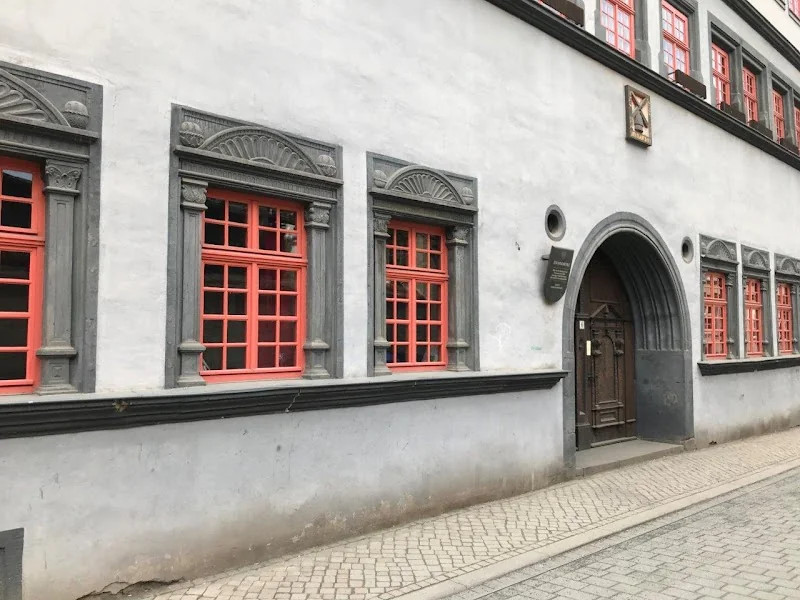
Turniergasse 18, 99084 Erfurt, Deutschland
Music School of the City of Erfurt | Reviews & Opening Hours
The Music School of the City of Erfurt is a municipal educational institution for music and dance for children, teenagers, and adults. Those looking for address, opening hours, or reviews will find a place with clear points of contact, fixed office hours, and a wide range of courses. The provided rating data indicates 4 out of 5 stars based on 18 reviews, which serves as a first orientation value for many interested parties. The most important practical point is the orientation on site: The school management and administration are located at Turniergasse 18, along with Building B at Barfüßerstraße 19. From there, the school spans the spectrum from early musical education through instrumental lessons to ensembles, dance, and counseling. ([erfurt.de](https://www.erfurt.de/ef/de/rathaus/sv/aemter/stelle-188.htmc))
Opening Hours, Address, and Directions to the Music School Erfurt
The official address of the Music School is Turniergasse 18, 99084 Erfurt. The municipal service page also clarifies that the main building, Building A, houses the school management and administration. For regular classes, the city states Monday to Friday from 09:00 to 20:00, excluding school holidays and public holidays. The administrative office hours are more limited: Tuesdays from 09:00 to 12:00 and 13:00 to 18:00, Thursdays from 09:00 to 12:00 and 13:00 to 15:00, and Fridays from 09:00 to 11:30. This helps parents, students, and adults immediately plan a visit. ([erfurt.de](https://www.erfurt.de/ef/de/rathaus/sv/aemter/stelle-188.htmc))
For detailed counseling, appointments are offered on Tuesdays from 16:00 to 18:00 at Turniergasse 18, Room 7. This is particularly relevant for inquiries regarding registration, counseling, and initial orientation, as concrete contacts for starting lessons can be found here. Those arriving by public transport should use tram lines 2, 3, or 6 to the Fischmarkt/Rathaus stop. This places the music school in the heart of the old town, making it easily accessible for rehearsals, lessons, and discussions. The municipal pages particularly highlight this public transport access, which further simplifies orientation for visitors. ([erfurt.de](https://www.erfurt.de/ef/de/rathaus/sv/aemter/stelle-188.htmc))
Lessons, Instruments, and Early Musical Education
The music school does not start only at primary school age. In the area of elementary music education, the offerings begin with the Baby Music Garden from five months, followed by parent-child courses from 18 months, rhythm classes, early musical education from four years, and the instrument carousel for children aged five to seven. The municipal information clearly shows that the school accompanies families through many developmental stages and builds a playful relationship with music early on. Particularly practical is that registration for some courses occurs in fixed starting months like August and February, and prior registration is required for the instrument carousel. ([erfurt.de](https://www.erfurt.de/ef/de/leben/bildung/musikschule/angebote/111567.html))
In the instrumental area, the music school covers a remarkably wide field. In Building A at Turniergasse 18, lessons and counseling are offered for orchestral instruments, singing, guitar, mandolin, and part of the keyboard instruments area. Building B at Barfüßerstraße 19 is dedicated to the keyboard area as well as the entire field of rock, pop, jazz, accordion, and dance. Additionally, subjects include piano, keyboard, harpsichord, organ, and accordion, as well as guitar, mandolin, ukulele, and mandola. This breadth makes the school attractive for both classical and modern interests and explains why so many different inquiries regarding instruments and lessons end up there. ([erfurt.de](https://www.erfurt.de/ef/de/leben/bildung/musikschule/service/110138.html))
For those who already have a specific learning goal, very practical conditions are also available. According to the frequently asked questions, there is only individual instruction in the instrumental area, as individual support is believed to be most effective there. Group music-making is still possible, but through ensembles, bands, and orchestras. Having one's own instrument is important for practicing at home, but loan instruments are available for beginners. The rental fee ranges from 5 to 20 euros per month, depending on the purchase value. If a main subject is taken, music theory as an additional subject is free of charge, and the best entry point, according to the school's experience, is often between six and eight years, although age does not set a rigid boundary. ([erfurt.de](https://www.erfurt.de/ef/de/leben/bildung/musikschule/service/110137.html))
Ensembles, Choirs, and Orchestras: Making Music Together in Erfurt
The Music School of the City of Erfurt is not only a place for lessons but also a network of ensembles and choirs. On the official overview page, it states that since the founding of the first school orchestra in 1963, the number of orchestras, choirs, and ensembles has steadily grown. This long tradition of ensembles is an important search term because it distinguishes the school from many purely instructional institutions: Here, it is not only about technique and theory, but about the shared musical experience, performances, and the connection between learning progress and stage experience. ([erfurt.de](https://www.erfurt.de/ef/de/leben/bildung/musikschule/ensemble/index.html))
Among the most prominent formations are the Youth Symphony Orchestra, which was founded as a school orchestra in 1963 and renamed in 1967, the Collegium musicum, which originated in 1956 and joined the music school in 1994, the Children's String Orchestra from 1976, the Well-Blech-Bigband from 2002, and the guitar pop orchestra Die Heißen Drähte from 1997. These ensembles exemplify the stylistic range of the school: from symphonic classical to string and plucked music to jazz, rock, and pop. The fact that many of these groups regularly teach, rehearse, and perform shows how strongly the music school relies on collaborative work in fixed formations. ([erfurt.de](https://www.erfurt.de/ef/de/leben/bildung/musikschule/ensemble/111527.html))
For visitors and families, these ensembles are also interesting because they repeatedly bring the music school into the public eye. The Collegium musicum traditionally performs before the first Advent in the festive hall of the Erfurt City Hall, the Youth Symphony Orchestra regularly organizes Christmas concerts, the Well-Blech-Bigband has been rehearsing under very suitable conditions in Turniergasse since the opening of the rehearsal cellar in 2009, and Die Heißen Drähte are present with courtyard programs and city festivals such as the Krämerbrückenfest. This creates a real concert culture around the school that becomes visible and audible beyond the lessons. ([erfurt.de](https://www.erfurt.de/ef/de/leben/bildung/musikschule/ensemble/111121.html))
History, Buildings, and Special Rooms of the Music School
The history of the music school goes back a long way. According to a municipal anniversary announcement, the former folk music school was founded in April 1950. Thus, the institution is one of the traditional municipal educational offerings in Erfurt. This origin already explains why the school is perceived today not as a short-term project but as a grown part of cultural life. The development from the early folk music school to the current Music School of the City of Erfurt shows how musical education can be continued in a city over generations. ([erfurt.de](https://www.erfurt.de/ef/de/service/aktuelles/pm/2010/103840.html?utm_source=openai))
The architectural structure is part of the identity. Building A at Turniergasse 18 is the main building with school management and administration; orchestral instruments, singing, guitar, mandolin, and parts of the keyboard and early education classes also take place there. Building B at Barfüßerstraße 19 complements this picture with keyboard instruments and the entire area of rock, pop, jazz, accordion, and dance. For seekers, this division is important because it explains why inquiries about lessons, counseling, or specific instruments sometimes concern different locations. The school is thus not only broadly positioned in content but also spatially finely structured. ([erfurt.de](https://www.erfurt.de/ef/de/leben/bildung/musikschule/service/110138.html))
A special room is the event hall in Turniergasse 18, which, according to the municipal transfer regulations, is intended for up to 80 people. In addition, there is the rehearsal cellar, which primarily serves as a permanent home for larger formations like the Well-Blech-Bigband. The courtyard of the music school is also repeatedly used as a performance venue and is significant for summer concerts or special events. Such places make the school not only functional but also atmospheric: it is a place for lessons, a rehearsal space, and a small stage at the same time. This mix of everyday life and performance distinguishes it from many other educational institutions. ([buergerinfo.erfurt.de](https://buergerinfo.erfurt.de/getfile.asp?id=916938&type=do&utm_source=openai))
The dance area also emphasizes the profile of the music school. The municipal dance page shows that dance classes have been part of the offerings for many years and regularly participate in productions at the Erfurt Theater or municipal events. For teenagers and adults, there is also the format Healthy Through Dance, which combines fundamentals from ballet, yoga, Pilates, and contemporary dance elements. This makes it clear that the music school does not only focus on classical instrumental training but understands body, movement, and expression as interconnected components of cultural education. ([erfurt.de](https://www.erfurt.de/ef/de/leben/bildung/musikschule/angebote/139272.html))
Reviews, Registration, and Practical Questions for Interested Parties
Those looking for reviews usually want to quickly assess whether a visit is worthwhile. The provided rating data with 4 out of 5 stars and 18 reviews provides a first indication. However, even more important for the decision are the practical facts: The music school offers a clear counseling hour, fixed opening hours, and concrete contacts. This allows for a first impression to be easily connected with reliable information about lessons, registration, and building structure. This combination of perception and organization is often crucial for parents. ([erfurt.de](https://www.erfurt.de/ef/de/rathaus/sv/aemter/stelle-188.htmc))
The registration itself is organized simply. According to the FAQ, one can register at any time without obligation using the registration form for lessons, and the start of lessons is generally possible as soon as capacities are available. Lessons are usually held once a week, typically scheduled at the beginning of the school year together with the teacher and family, and for entry during the school year, directly arranged with the teacher. Additionally, it is noted that individual instruction is standard in the instrumental area, while group music-making takes place in ensembles, bands, or orchestras. For those planning a long-term learning path, this provides a structured but flexible entry situation. ([erfurt.de](https://www.erfurt.de/ef/de/leben/bildung/musikschule/service/110137.html))
Cost and equipment questions are also transparently regulated. The music school states a registration fee of 10 euros for new registrations, an instrument usage fee of 2.50 euros per month for piano and drums, and a monthly fee for loan instruments ranging from 5 to 20 euros, depending on the purchase value. If a main instrumental or vocal subject is taken, music theory as an additional subject is free of charge. Additionally, there are discounts, such as social, multiple, sibling, or disability discounts. These details are particularly important for families as they make the entry financially more manageable and show that the school is well organized not only artistically but also administratively. ([erfurt.de](https://www.erfurt.de/ef/de/leben/bildung/musikschule/service/110137.html))
In the end, this creates the image of a music school that is much more than a place for lessons. It is a municipal educational center with tradition, two clearly defined locations, early offerings for young children, a wide range of instruments, and a vibrant ensemble culture. This is exactly why the most common search queries fit together so well: address, opening hours, counseling, instruments, reviews, and ensembles are all thematically connected here. Those interested in music or dance will find a place in Erfurt that impresses with structure, experience, and many real performance opportunities. ([erfurt.de](https://www.erfurt.de/ef/de/rathaus/sv/aemter/stelle-188.htmc))
Sources:
- Erfurt.de – Music School: Service ([erfurt.de](https://www.erfurt.de/ef/de/leben/bildung/musikschule/service/index.html))
- Erfurt.de – Music School: Locations ([erfurt.de](https://www.erfurt.de/ef/de/leben/bildung/musikschule/service/110138.html))
- Erfurt.de – Offers of the Music School ([erfurt.de](https://www.erfurt.de/ef/de/leben/bildung/musikschule/angebote/index.html))
- Erfurt.de – Frequently Asked Questions and Answers ([erfurt.de](https://www.erfurt.de/ef/de/leben/bildung/musikschule/service/110137.html))
- Erfurt.de – Music School Celebrates 60th Anniversary with Many Highlights ([erfurt.de](https://www.erfurt.de/ef/de/service/aktuelles/pm/2010/103840.html?utm_source=openai))
- Erfurt.de – Document for the Temporary Use of Rooms and Areas ([buergerinfo.erfurt.de](https://buergerinfo.erfurt.de/getfile.asp?id=916938&type=do&utm_source=openai))
Show moreShow less
Music School of the City of Erfurt | Reviews & Opening Hours
The Music School of the City of Erfurt is a municipal educational institution for music and dance for children, teenagers, and adults. Those looking for address, opening hours, or reviews will find a place with clear points of contact, fixed office hours, and a wide range of courses. The provided rating data indicates 4 out of 5 stars based on 18 reviews, which serves as a first orientation value for many interested parties. The most important practical point is the orientation on site: The school management and administration are located at Turniergasse 18, along with Building B at Barfüßerstraße 19. From there, the school spans the spectrum from early musical education through instrumental lessons to ensembles, dance, and counseling. ([erfurt.de](https://www.erfurt.de/ef/de/rathaus/sv/aemter/stelle-188.htmc))
Opening Hours, Address, and Directions to the Music School Erfurt
The official address of the Music School is Turniergasse 18, 99084 Erfurt. The municipal service page also clarifies that the main building, Building A, houses the school management and administration. For regular classes, the city states Monday to Friday from 09:00 to 20:00, excluding school holidays and public holidays. The administrative office hours are more limited: Tuesdays from 09:00 to 12:00 and 13:00 to 18:00, Thursdays from 09:00 to 12:00 and 13:00 to 15:00, and Fridays from 09:00 to 11:30. This helps parents, students, and adults immediately plan a visit. ([erfurt.de](https://www.erfurt.de/ef/de/rathaus/sv/aemter/stelle-188.htmc))
For detailed counseling, appointments are offered on Tuesdays from 16:00 to 18:00 at Turniergasse 18, Room 7. This is particularly relevant for inquiries regarding registration, counseling, and initial orientation, as concrete contacts for starting lessons can be found here. Those arriving by public transport should use tram lines 2, 3, or 6 to the Fischmarkt/Rathaus stop. This places the music school in the heart of the old town, making it easily accessible for rehearsals, lessons, and discussions. The municipal pages particularly highlight this public transport access, which further simplifies orientation for visitors. ([erfurt.de](https://www.erfurt.de/ef/de/rathaus/sv/aemter/stelle-188.htmc))
Lessons, Instruments, and Early Musical Education
The music school does not start only at primary school age. In the area of elementary music education, the offerings begin with the Baby Music Garden from five months, followed by parent-child courses from 18 months, rhythm classes, early musical education from four years, and the instrument carousel for children aged five to seven. The municipal information clearly shows that the school accompanies families through many developmental stages and builds a playful relationship with music early on. Particularly practical is that registration for some courses occurs in fixed starting months like August and February, and prior registration is required for the instrument carousel. ([erfurt.de](https://www.erfurt.de/ef/de/leben/bildung/musikschule/angebote/111567.html))
In the instrumental area, the music school covers a remarkably wide field. In Building A at Turniergasse 18, lessons and counseling are offered for orchestral instruments, singing, guitar, mandolin, and part of the keyboard instruments area. Building B at Barfüßerstraße 19 is dedicated to the keyboard area as well as the entire field of rock, pop, jazz, accordion, and dance. Additionally, subjects include piano, keyboard, harpsichord, organ, and accordion, as well as guitar, mandolin, ukulele, and mandola. This breadth makes the school attractive for both classical and modern interests and explains why so many different inquiries regarding instruments and lessons end up there. ([erfurt.de](https://www.erfurt.de/ef/de/leben/bildung/musikschule/service/110138.html))
For those who already have a specific learning goal, very practical conditions are also available. According to the frequently asked questions, there is only individual instruction in the instrumental area, as individual support is believed to be most effective there. Group music-making is still possible, but through ensembles, bands, and orchestras. Having one's own instrument is important for practicing at home, but loan instruments are available for beginners. The rental fee ranges from 5 to 20 euros per month, depending on the purchase value. If a main subject is taken, music theory as an additional subject is free of charge, and the best entry point, according to the school's experience, is often between six and eight years, although age does not set a rigid boundary. ([erfurt.de](https://www.erfurt.de/ef/de/leben/bildung/musikschule/service/110137.html))
Ensembles, Choirs, and Orchestras: Making Music Together in Erfurt
The Music School of the City of Erfurt is not only a place for lessons but also a network of ensembles and choirs. On the official overview page, it states that since the founding of the first school orchestra in 1963, the number of orchestras, choirs, and ensembles has steadily grown. This long tradition of ensembles is an important search term because it distinguishes the school from many purely instructional institutions: Here, it is not only about technique and theory, but about the shared musical experience, performances, and the connection between learning progress and stage experience. ([erfurt.de](https://www.erfurt.de/ef/de/leben/bildung/musikschule/ensemble/index.html))
Among the most prominent formations are the Youth Symphony Orchestra, which was founded as a school orchestra in 1963 and renamed in 1967, the Collegium musicum, which originated in 1956 and joined the music school in 1994, the Children's String Orchestra from 1976, the Well-Blech-Bigband from 2002, and the guitar pop orchestra Die Heißen Drähte from 1997. These ensembles exemplify the stylistic range of the school: from symphonic classical to string and plucked music to jazz, rock, and pop. The fact that many of these groups regularly teach, rehearse, and perform shows how strongly the music school relies on collaborative work in fixed formations. ([erfurt.de](https://www.erfurt.de/ef/de/leben/bildung/musikschule/ensemble/111527.html))
For visitors and families, these ensembles are also interesting because they repeatedly bring the music school into the public eye. The Collegium musicum traditionally performs before the first Advent in the festive hall of the Erfurt City Hall, the Youth Symphony Orchestra regularly organizes Christmas concerts, the Well-Blech-Bigband has been rehearsing under very suitable conditions in Turniergasse since the opening of the rehearsal cellar in 2009, and Die Heißen Drähte are present with courtyard programs and city festivals such as the Krämerbrückenfest. This creates a real concert culture around the school that becomes visible and audible beyond the lessons. ([erfurt.de](https://www.erfurt.de/ef/de/leben/bildung/musikschule/ensemble/111121.html))
History, Buildings, and Special Rooms of the Music School
The history of the music school goes back a long way. According to a municipal anniversary announcement, the former folk music school was founded in April 1950. Thus, the institution is one of the traditional municipal educational offerings in Erfurt. This origin already explains why the school is perceived today not as a short-term project but as a grown part of cultural life. The development from the early folk music school to the current Music School of the City of Erfurt shows how musical education can be continued in a city over generations. ([erfurt.de](https://www.erfurt.de/ef/de/service/aktuelles/pm/2010/103840.html?utm_source=openai))
The architectural structure is part of the identity. Building A at Turniergasse 18 is the main building with school management and administration; orchestral instruments, singing, guitar, mandolin, and parts of the keyboard and early education classes also take place there. Building B at Barfüßerstraße 19 complements this picture with keyboard instruments and the entire area of rock, pop, jazz, accordion, and dance. For seekers, this division is important because it explains why inquiries about lessons, counseling, or specific instruments sometimes concern different locations. The school is thus not only broadly positioned in content but also spatially finely structured. ([erfurt.de](https://www.erfurt.de/ef/de/leben/bildung/musikschule/service/110138.html))
A special room is the event hall in Turniergasse 18, which, according to the municipal transfer regulations, is intended for up to 80 people. In addition, there is the rehearsal cellar, which primarily serves as a permanent home for larger formations like the Well-Blech-Bigband. The courtyard of the music school is also repeatedly used as a performance venue and is significant for summer concerts or special events. Such places make the school not only functional but also atmospheric: it is a place for lessons, a rehearsal space, and a small stage at the same time. This mix of everyday life and performance distinguishes it from many other educational institutions. ([buergerinfo.erfurt.de](https://buergerinfo.erfurt.de/getfile.asp?id=916938&type=do&utm_source=openai))
The dance area also emphasizes the profile of the music school. The municipal dance page shows that dance classes have been part of the offerings for many years and regularly participate in productions at the Erfurt Theater or municipal events. For teenagers and adults, there is also the format Healthy Through Dance, which combines fundamentals from ballet, yoga, Pilates, and contemporary dance elements. This makes it clear that the music school does not only focus on classical instrumental training but understands body, movement, and expression as interconnected components of cultural education. ([erfurt.de](https://www.erfurt.de/ef/de/leben/bildung/musikschule/angebote/139272.html))
Reviews, Registration, and Practical Questions for Interested Parties
Those looking for reviews usually want to quickly assess whether a visit is worthwhile. The provided rating data with 4 out of 5 stars and 18 reviews provides a first indication. However, even more important for the decision are the practical facts: The music school offers a clear counseling hour, fixed opening hours, and concrete contacts. This allows for a first impression to be easily connected with reliable information about lessons, registration, and building structure. This combination of perception and organization is often crucial for parents. ([erfurt.de](https://www.erfurt.de/ef/de/rathaus/sv/aemter/stelle-188.htmc))
The registration itself is organized simply. According to the FAQ, one can register at any time without obligation using the registration form for lessons, and the start of lessons is generally possible as soon as capacities are available. Lessons are usually held once a week, typically scheduled at the beginning of the school year together with the teacher and family, and for entry during the school year, directly arranged with the teacher. Additionally, it is noted that individual instruction is standard in the instrumental area, while group music-making takes place in ensembles, bands, or orchestras. For those planning a long-term learning path, this provides a structured but flexible entry situation. ([erfurt.de](https://www.erfurt.de/ef/de/leben/bildung/musikschule/service/110137.html))
Cost and equipment questions are also transparently regulated. The music school states a registration fee of 10 euros for new registrations, an instrument usage fee of 2.50 euros per month for piano and drums, and a monthly fee for loan instruments ranging from 5 to 20 euros, depending on the purchase value. If a main instrumental or vocal subject is taken, music theory as an additional subject is free of charge. Additionally, there are discounts, such as social, multiple, sibling, or disability discounts. These details are particularly important for families as they make the entry financially more manageable and show that the school is well organized not only artistically but also administratively. ([erfurt.de](https://www.erfurt.de/ef/de/leben/bildung/musikschule/service/110137.html))
In the end, this creates the image of a music school that is much more than a place for lessons. It is a municipal educational center with tradition, two clearly defined locations, early offerings for young children, a wide range of instruments, and a vibrant ensemble culture. This is exactly why the most common search queries fit together so well: address, opening hours, counseling, instruments, reviews, and ensembles are all thematically connected here. Those interested in music or dance will find a place in Erfurt that impresses with structure, experience, and many real performance opportunities. ([erfurt.de](https://www.erfurt.de/ef/de/rathaus/sv/aemter/stelle-188.htmc))
Sources:
- Erfurt.de – Music School: Service ([erfurt.de](https://www.erfurt.de/ef/de/leben/bildung/musikschule/service/index.html))
- Erfurt.de – Music School: Locations ([erfurt.de](https://www.erfurt.de/ef/de/leben/bildung/musikschule/service/110138.html))
- Erfurt.de – Offers of the Music School ([erfurt.de](https://www.erfurt.de/ef/de/leben/bildung/musikschule/angebote/index.html))
- Erfurt.de – Frequently Asked Questions and Answers ([erfurt.de](https://www.erfurt.de/ef/de/leben/bildung/musikschule/service/110137.html))
- Erfurt.de – Music School Celebrates 60th Anniversary with Many Highlights ([erfurt.de](https://www.erfurt.de/ef/de/service/aktuelles/pm/2010/103840.html?utm_source=openai))
- Erfurt.de – Document for the Temporary Use of Rooms and Areas ([buergerinfo.erfurt.de](https://buergerinfo.erfurt.de/getfile.asp?id=916938&type=do&utm_source=openai))
Music School of the City of Erfurt | Reviews & Opening Hours
The Music School of the City of Erfurt is a municipal educational institution for music and dance for children, teenagers, and adults. Those looking for address, opening hours, or reviews will find a place with clear points of contact, fixed office hours, and a wide range of courses. The provided rating data indicates 4 out of 5 stars based on 18 reviews, which serves as a first orientation value for many interested parties. The most important practical point is the orientation on site: The school management and administration are located at Turniergasse 18, along with Building B at Barfüßerstraße 19. From there, the school spans the spectrum from early musical education through instrumental lessons to ensembles, dance, and counseling. ([erfurt.de](https://www.erfurt.de/ef/de/rathaus/sv/aemter/stelle-188.htmc))
Opening Hours, Address, and Directions to the Music School Erfurt
The official address of the Music School is Turniergasse 18, 99084 Erfurt. The municipal service page also clarifies that the main building, Building A, houses the school management and administration. For regular classes, the city states Monday to Friday from 09:00 to 20:00, excluding school holidays and public holidays. The administrative office hours are more limited: Tuesdays from 09:00 to 12:00 and 13:00 to 18:00, Thursdays from 09:00 to 12:00 and 13:00 to 15:00, and Fridays from 09:00 to 11:30. This helps parents, students, and adults immediately plan a visit. ([erfurt.de](https://www.erfurt.de/ef/de/rathaus/sv/aemter/stelle-188.htmc))
For detailed counseling, appointments are offered on Tuesdays from 16:00 to 18:00 at Turniergasse 18, Room 7. This is particularly relevant for inquiries regarding registration, counseling, and initial orientation, as concrete contacts for starting lessons can be found here. Those arriving by public transport should use tram lines 2, 3, or 6 to the Fischmarkt/Rathaus stop. This places the music school in the heart of the old town, making it easily accessible for rehearsals, lessons, and discussions. The municipal pages particularly highlight this public transport access, which further simplifies orientation for visitors. ([erfurt.de](https://www.erfurt.de/ef/de/rathaus/sv/aemter/stelle-188.htmc))
Lessons, Instruments, and Early Musical Education
The music school does not start only at primary school age. In the area of elementary music education, the offerings begin with the Baby Music Garden from five months, followed by parent-child courses from 18 months, rhythm classes, early musical education from four years, and the instrument carousel for children aged five to seven. The municipal information clearly shows that the school accompanies families through many developmental stages and builds a playful relationship with music early on. Particularly practical is that registration for some courses occurs in fixed starting months like August and February, and prior registration is required for the instrument carousel. ([erfurt.de](https://www.erfurt.de/ef/de/leben/bildung/musikschule/angebote/111567.html))
In the instrumental area, the music school covers a remarkably wide field. In Building A at Turniergasse 18, lessons and counseling are offered for orchestral instruments, singing, guitar, mandolin, and part of the keyboard instruments area. Building B at Barfüßerstraße 19 is dedicated to the keyboard area as well as the entire field of rock, pop, jazz, accordion, and dance. Additionally, subjects include piano, keyboard, harpsichord, organ, and accordion, as well as guitar, mandolin, ukulele, and mandola. This breadth makes the school attractive for both classical and modern interests and explains why so many different inquiries regarding instruments and lessons end up there. ([erfurt.de](https://www.erfurt.de/ef/de/leben/bildung/musikschule/service/110138.html))
For those who already have a specific learning goal, very practical conditions are also available. According to the frequently asked questions, there is only individual instruction in the instrumental area, as individual support is believed to be most effective there. Group music-making is still possible, but through ensembles, bands, and orchestras. Having one's own instrument is important for practicing at home, but loan instruments are available for beginners. The rental fee ranges from 5 to 20 euros per month, depending on the purchase value. If a main subject is taken, music theory as an additional subject is free of charge, and the best entry point, according to the school's experience, is often between six and eight years, although age does not set a rigid boundary. ([erfurt.de](https://www.erfurt.de/ef/de/leben/bildung/musikschule/service/110137.html))
Ensembles, Choirs, and Orchestras: Making Music Together in Erfurt
The Music School of the City of Erfurt is not only a place for lessons but also a network of ensembles and choirs. On the official overview page, it states that since the founding of the first school orchestra in 1963, the number of orchestras, choirs, and ensembles has steadily grown. This long tradition of ensembles is an important search term because it distinguishes the school from many purely instructional institutions: Here, it is not only about technique and theory, but about the shared musical experience, performances, and the connection between learning progress and stage experience. ([erfurt.de](https://www.erfurt.de/ef/de/leben/bildung/musikschule/ensemble/index.html))
Among the most prominent formations are the Youth Symphony Orchestra, which was founded as a school orchestra in 1963 and renamed in 1967, the Collegium musicum, which originated in 1956 and joined the music school in 1994, the Children's String Orchestra from 1976, the Well-Blech-Bigband from 2002, and the guitar pop orchestra Die Heißen Drähte from 1997. These ensembles exemplify the stylistic range of the school: from symphonic classical to string and plucked music to jazz, rock, and pop. The fact that many of these groups regularly teach, rehearse, and perform shows how strongly the music school relies on collaborative work in fixed formations. ([erfurt.de](https://www.erfurt.de/ef/de/leben/bildung/musikschule/ensemble/111527.html))
For visitors and families, these ensembles are also interesting because they repeatedly bring the music school into the public eye. The Collegium musicum traditionally performs before the first Advent in the festive hall of the Erfurt City Hall, the Youth Symphony Orchestra regularly organizes Christmas concerts, the Well-Blech-Bigband has been rehearsing under very suitable conditions in Turniergasse since the opening of the rehearsal cellar in 2009, and Die Heißen Drähte are present with courtyard programs and city festivals such as the Krämerbrückenfest. This creates a real concert culture around the school that becomes visible and audible beyond the lessons. ([erfurt.de](https://www.erfurt.de/ef/de/leben/bildung/musikschule/ensemble/111121.html))
History, Buildings, and Special Rooms of the Music School
The history of the music school goes back a long way. According to a municipal anniversary announcement, the former folk music school was founded in April 1950. Thus, the institution is one of the traditional municipal educational offerings in Erfurt. This origin already explains why the school is perceived today not as a short-term project but as a grown part of cultural life. The development from the early folk music school to the current Music School of the City of Erfurt shows how musical education can be continued in a city over generations. ([erfurt.de](https://www.erfurt.de/ef/de/service/aktuelles/pm/2010/103840.html?utm_source=openai))
The architectural structure is part of the identity. Building A at Turniergasse 18 is the main building with school management and administration; orchestral instruments, singing, guitar, mandolin, and parts of the keyboard and early education classes also take place there. Building B at Barfüßerstraße 19 complements this picture with keyboard instruments and the entire area of rock, pop, jazz, accordion, and dance. For seekers, this division is important because it explains why inquiries about lessons, counseling, or specific instruments sometimes concern different locations. The school is thus not only broadly positioned in content but also spatially finely structured. ([erfurt.de](https://www.erfurt.de/ef/de/leben/bildung/musikschule/service/110138.html))
A special room is the event hall in Turniergasse 18, which, according to the municipal transfer regulations, is intended for up to 80 people. In addition, there is the rehearsal cellar, which primarily serves as a permanent home for larger formations like the Well-Blech-Bigband. The courtyard of the music school is also repeatedly used as a performance venue and is significant for summer concerts or special events. Such places make the school not only functional but also atmospheric: it is a place for lessons, a rehearsal space, and a small stage at the same time. This mix of everyday life and performance distinguishes it from many other educational institutions. ([buergerinfo.erfurt.de](https://buergerinfo.erfurt.de/getfile.asp?id=916938&type=do&utm_source=openai))
The dance area also emphasizes the profile of the music school. The municipal dance page shows that dance classes have been part of the offerings for many years and regularly participate in productions at the Erfurt Theater or municipal events. For teenagers and adults, there is also the format Healthy Through Dance, which combines fundamentals from ballet, yoga, Pilates, and contemporary dance elements. This makes it clear that the music school does not only focus on classical instrumental training but understands body, movement, and expression as interconnected components of cultural education. ([erfurt.de](https://www.erfurt.de/ef/de/leben/bildung/musikschule/angebote/139272.html))
Reviews, Registration, and Practical Questions for Interested Parties
Those looking for reviews usually want to quickly assess whether a visit is worthwhile. The provided rating data with 4 out of 5 stars and 18 reviews provides a first indication. However, even more important for the decision are the practical facts: The music school offers a clear counseling hour, fixed opening hours, and concrete contacts. This allows for a first impression to be easily connected with reliable information about lessons, registration, and building structure. This combination of perception and organization is often crucial for parents. ([erfurt.de](https://www.erfurt.de/ef/de/rathaus/sv/aemter/stelle-188.htmc))
The registration itself is organized simply. According to the FAQ, one can register at any time without obligation using the registration form for lessons, and the start of lessons is generally possible as soon as capacities are available. Lessons are usually held once a week, typically scheduled at the beginning of the school year together with the teacher and family, and for entry during the school year, directly arranged with the teacher. Additionally, it is noted that individual instruction is standard in the instrumental area, while group music-making takes place in ensembles, bands, or orchestras. For those planning a long-term learning path, this provides a structured but flexible entry situation. ([erfurt.de](https://www.erfurt.de/ef/de/leben/bildung/musikschule/service/110137.html))
Cost and equipment questions are also transparently regulated. The music school states a registration fee of 10 euros for new registrations, an instrument usage fee of 2.50 euros per month for piano and drums, and a monthly fee for loan instruments ranging from 5 to 20 euros, depending on the purchase value. If a main instrumental or vocal subject is taken, music theory as an additional subject is free of charge. Additionally, there are discounts, such as social, multiple, sibling, or disability discounts. These details are particularly important for families as they make the entry financially more manageable and show that the school is well organized not only artistically but also administratively. ([erfurt.de](https://www.erfurt.de/ef/de/leben/bildung/musikschule/service/110137.html))
In the end, this creates the image of a music school that is much more than a place for lessons. It is a municipal educational center with tradition, two clearly defined locations, early offerings for young children, a wide range of instruments, and a vibrant ensemble culture. This is exactly why the most common search queries fit together so well: address, opening hours, counseling, instruments, reviews, and ensembles are all thematically connected here. Those interested in music or dance will find a place in Erfurt that impresses with structure, experience, and many real performance opportunities. ([erfurt.de](https://www.erfurt.de/ef/de/rathaus/sv/aemter/stelle-188.htmc))
Sources:
- Erfurt.de – Music School: Service ([erfurt.de](https://www.erfurt.de/ef/de/leben/bildung/musikschule/service/index.html))
- Erfurt.de – Music School: Locations ([erfurt.de](https://www.erfurt.de/ef/de/leben/bildung/musikschule/service/110138.html))
- Erfurt.de – Offers of the Music School ([erfurt.de](https://www.erfurt.de/ef/de/leben/bildung/musikschule/angebote/index.html))
- Erfurt.de – Frequently Asked Questions and Answers ([erfurt.de](https://www.erfurt.de/ef/de/leben/bildung/musikschule/service/110137.html))
- Erfurt.de – Music School Celebrates 60th Anniversary with Many Highlights ([erfurt.de](https://www.erfurt.de/ef/de/service/aktuelles/pm/2010/103840.html?utm_source=openai))
- Erfurt.de – Document for the Temporary Use of Rooms and Areas ([buergerinfo.erfurt.de](https://buergerinfo.erfurt.de/getfile.asp?id=916938&type=do&utm_source=openai))
Upcoming Events
No events found
Frequently Asked Questions
Reviews
A T
20. September 2017
The best
Boss Orange
22. February 2024
It's a good place to learn, but there's zero network/reception here, which is abnormal. So if you're waiting for an important call or want to call your kids, don't even try. No calls go through, and if you do get a call, the parties can't hear each other.
Klaus Albrecht
17. June 2023
Always a dream location, especially the famous courtyard concerts during the Krämerbrückenfest!
P.
19. October 2021
The guitar teacher is super sweet to our little one.. 🎸🎸🎸🎸🎸
Igor
15. December 2024
The horror of my childhood.