
Erfurt
Am Kirchberg 32, 99094 Erfurt, Deutschland
Margaretha-Reichardt-Haus | History & Visit
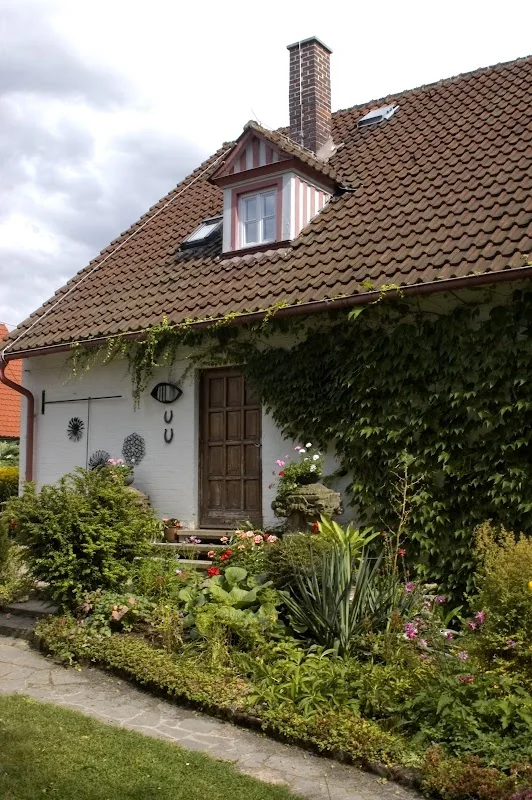
The Margaretha-Reichardt-Haus in Erfurt-Bischleben is not an ordinary museum, but an authentic place of Bauhaus history, where life, work, and memory overlap in a special way. The residential and weaving house built in 1939 for the Bauhaus artist Margaretha Reichardt, who was born in Erfurt, has been a technical monument since 1987 and has been part of the Angermuseum as an external site since 1992. Visitors to the house not only see a monument from the outside but also experience a historically grown connection of living space, workshop, and artistic biography. The artist's living quarters on the ground floor have been preserved in their original condition, while the workshop with functional hand looms is located in the basement. This combination makes the house a rare place where textile art, architecture, and everyday history come together directly. It is particularly attractive for visitors that the house does not present an abstract collection, but a concrete, tangible environment where the history of a Bauhaus weaver remains visible. For this reason, many interested parties search for photos, history, directions, parking, or visits: The house is small, personal, original, and at the same time culturally significant. The official museum website states that a visit is possible by prior telephone appointment, making it easy to plan a visit. ([kunstmuseen.erfurt.de](https://kunstmuseen.erfurt.de/km/de/angermuseum/haus/margaretha_reichardt_haus/index.html))
Bauhaus History and Margaretha Reichardt
Margaretha Reichardt is considered one of the important German textile artists of the 20th century, and her life path is closely connected to Erfurt, Dessau, and the Bauhaus movement. She was born in Erfurt in 1907 and was also buried there in 1984; she completed her early education at the Erfurt School of Applied Arts before starting her studies at the Bauhaus Dessau in 1926. There, she was part of the weaving department and specialized in textile design, a field that was particularly innovative at the Bauhaus. According to official sources, she began experimenting with various yarns and fabrics as early as 1927, improved the properties of iron yarn, and wove durable, shape-stable straps that were later used for tubular steel furniture by Marcel Breuer, among others. This connection shows how strongly Reichardt's work extended beyond the pure textile area. After completing her Bauhaus education, she initially continued to work in the modern environment and returned to Erfurt in 1933. There, she established her own hand weaving workshop and developed into an independent designer who shaped her own style with textiles, fabrics, and weaving works for decades. The city of Erfurt emphasizes that Reichardt designed wall and floor carpets, dress fabrics, as well as furniture and decorative fabrics, thus covering a very broad textile spectrum. This versatility makes her name interesting to this day for all those interested in Bauhaus, design history, and crafts. The later house in Bischleben is therefore not just a place of residence, but the spatial continuation of an artistic attitude that connected functionality, quality, and design clarity. ([erfurt.de](https://www.erfurt.de/ef/de/service/aktuelles/pm/2017/126323.html?utm_source=openai))
For local Bauhaus history, Margaretha Reichardt holds a special significance because after her return to Erfurt, she did not simply remain a former Bauhaus student, but built an independent workshop culture. Official Erfurt sources indicate that she operated a hand weaving workshop from 1933 and trained over 50 weavers. This is remarkable because it created not only an artistic work but also a system of training and passing on knowledge. At a time when many Bauhaus ideas were still struggling for recognition, Reichardt established a lasting practice in Erfurt. Looking at her biography also explains why the Margaretha-Reichardt-Haus appears so credible as a museum: It is not a retrospective symbol, but the real place of a productive phase of life and work. The official museum presentation explicitly connects the house with the life’s work of the Bauhaus graduate and master weaver. Her significance extends beyond the city, but in Erfurt, she is particularly present because here biography, workshop, and memorial site converge. Therefore, anyone searching for Margaretha Reichardt, Margaretha Reichardt House Erfurt, or Bauhaus textile art will not end up at just any memorial address, but at a place that makes the development of an artist from training at the School of Applied Arts through the Bauhaus to her own workshop comprehensible. This closed narrative is one of the reasons why the house is equally exciting for culture enthusiasts, design fans, and those interested in history. ([erfurt.de](https://www.erfurt.de/ef/de/service/aktuelles/pm/2017/126323.html?utm_source=openai))
Visit by Appointment, Admission, and Practical Information
The Margaretha-Reichardt-Haus is a place that is best visited consciously and with some advance notice. The official museum website clearly states that a visit to the house and workshop is possible by prior telephone appointment. Especially for groups, good planning is advisable, as the museum requests a longer-term registration for groups of five or more. This regulation fits well with the character of the house: It is not a large exhibition operation with constant public traffic, but rather a more personal memorial and museum site where care and mediation play an important role. For individual visitors, access is also possible, but it is organized and not spontaneous like at an everyday thoroughfare. The admission prices are transparently displayed: Adults pay 4.00 euros, reduced 2.50 euros, families 8.00 euros, and groups of 10 or more 2.00 euros per person. For guided tours of up to 60 minutes, 20.00 euros plus admission are charged. These prices show that the house is consciously designed as a low-threshold cultural offering that remains well-suited for families, small travel groups, or Bauhaus enthusiasts with a limited budget. Content-wise, advance registration is particularly worthwhile because the workshop and living spaces can not only be shown but also explained. This transforms the visit from mere viewing into a comprehensible insight into the life and work world of Margaretha Reichardt. Those looking for tickets, opening hours, or visits should therefore think more of a small but intense museum experience rather than a classic event format. Exactly therein lies the strength of the house: It does not rely on mass operation but on authenticity, tranquility, and mediation. ([kunstmuseen.erfurt.de](https://kunstmuseen.erfurt.de/km/de/angermuseum/haus/margaretha_reichardt_haus/index.html))
For inquiries regarding admission, tours, or visit planning, the house also provides clear guidance. An additional peculiarity is that groups of five or more should not only be announced but should be registered in advance according to the museum's website. This helps the museum adequately prepare the presentation of the rooms and the workshop. Anyone booking a tour should also consider that the indicated tour duration is up to 60 minutes. This makes it clear that the visit is consciously kept compact, focused, and content-rich. This fits well with a historic house where every corner, every room, and every loom is part of the narrative. Practically, this means: An appointment can be easily integrated into a city stay in Erfurt, especially if the visit is combined with other Bauhaus or museum locations. Especially since the house is located in the Erfurt district of Bischleben, advance registration is helpful to coordinate arrival and time windows sensibly. The admission structure, guided tour options, and group days make the visit flexible enough for different target groups, but at the same time clearly regulated. For the content of the visit experience, it is important that it is a place with monument-protected substance that not only conveys information but also atmosphere. Therefore, those who value genuine historical places, craft demonstrations, and quiet, personal museum visits will find here exactly the right mix of accessibility and uniqueness. ([kunstmuseen.erfurt.de](https://kunstmuseen.erfurt.de/km/de/angermuseum/haus/margaretha_reichardt_haus/index.html))
Directions by Bus and Parking at the House
The Margaretha-Reichardt-Haus is located in Erfurt-Bischleben at the address Am Kirchberg 32, 99094 Erfurt. For arrival by public transport, the official museum website mentions bus line 51 towards Hochheim from Erfurt Hbf; the stop is at Am Kirchberg, from there it is about a 10-minute walk. This information is particularly practical as it makes planning the visit without a car feasible and shows that while the house is not located in the city center, it is still easily accessible. Those traveling from outside can thus easily incorporate the visit into a tour of Erfurt. Especially for a monument that is located in a district and not in the pedestrian zone, a clear public transport indication is valuable. The Erfurt museum overview also lists the house as a fixed address in the city's museum network, underscoring its integration into the urban cultural structure. For visitors arriving by car, it is important to know that parking in front of the house is limited, according to the official site. It is therefore not a location with ample visitor parking but rather a residential and memorial site with limited space. This is relevant for planning and suggests allowing a bit more time for arrival. Those who want to be on the safe side should best combine the visit with public transport or inquire in advance about the specific parking situation on site. The quiet location in Bischleben fits well with the character of the house: It is not a loud excursion destination but a historical place where one should arrive in peace. This can be an advantage for culture travelers, as the visit feels significantly more relaxed. ([kunstmuseen.erfurt.de](https://kunstmuseen.erfurt.de/km/de/angermuseum/haus/margaretha_reichardt_haus/index.html))
For search intentions regarding directions, parking, or parking, the Margaretha-Reichardt-Haus is relatively uncomplicated but clearly regulated. The combination of a concrete bus connection and limited parking options makes it clear that conscious travel planning is sensible. This is not negative but typical for a historic house in a developed residential environment. Therefore, those using a car should not expect a large parking offer but understand the location as a monument within the urban space. For many visitors, this is pleasant because such a place is not dominated by infrastructure but preserves its historical environment. The official address Am Kirchberg 32 is also a good anchor for navigation systems and city maps. Since the house is operated as an external site of the Angermuseum, it can also be better classified culturally geographically: It belongs to an urban museum network but is experienced as an independent place in the district. Therefore, anyone searching for Margaretha Reichardt House directions or Margaretha Reichardt House parking will not find the complexity of a large event but the clear framework of an authentic museum location. This should be taken into account when planning to enjoy the visit relaxed and without time pressure. ([kunstmuseen.erfurt.de](https://kunstmuseen.erfurt.de/km/de/angermuseum/haus/margaretha_reichardt_haus/index.html))
Looms, Living Spaces, and Hand Weaving
The heart of the Margaretha-Reichardt-Haus is its workshop. In the basement, there are several functional hand looms, where Reichardt's student Christine Leister demonstrates the art of hand weaving and also produces fabrics based on historical models. This combination of demonstration and production brings the place to life, as the museum shows not only results but also processes. This is one of the great strengths of the house: Textile art is not presented as a completed chapter but as a craft that can be traced in the space. For visitors, this is particularly exciting because looms, threads, materials, and movements create an immediate understanding of the working world of a Bauhaus weaver. The official presentation also emphasizes that the living spaces of Margaretha Reichardt on the ground floor are preserved as a memorial site in their original condition. This creates a rare contrast between private living space and productive workshop. The house thus tells not only of art but also of everyday life, discipline, workshop organization, and the question of how a designer lived and worked in her own house. For many interested parties, this authenticity is precisely the reason to visit the place. The reconstruction and preservation were designed so that the house does not appear museum sterile but retains the impression of a real, inhabited, and productive house. This also explains why the official museum website ties the visit so strongly to advance registration: The rooms are small, sensitive, and closely interconnected in content. When entering the house, one does not experience a large exhibition but a concentrated piece of art and everyday history. ([kunstmuseen.erfurt.de](https://kunstmuseen.erfurt.de/km/de/angermuseum/haus/margaretha_reichardt_haus/index.html))
The textile work associated with Margaretha Reichardt extends far beyond a single building. According to official sources, she designed fabrics for wall and floor carpets, dress fabrics, as well as furniture and decorative fabrics. This shows how broad her design approach was and why the house remains so appealing to today's design enthusiasts. Particularly noteworthy is also the mention of her experimental work with iron yarn, which was later used for the upholstery of tubular steel furniture. This makes it clear that the Bauhaus was not just a style but a network of material research, craftsmanship, and modern form-giving. In the house itself, this idea is vividly illustrated because the historical looms do not appear as a backdrop but as active tools. When fabrics are produced today based on historical models, it connects to the original Bauhaus idea of thinking design and function together. Visitors thus gain not only an impression of Reichardt's biography but also of the material culture of an entire era. Especially in a city like Erfurt, which consciously maintains its Bauhaus heritage, the Margaretha-Reichardt-Haus is therefore an important building block. It connects the narrative of an individual artist with the larger context of modernity. Therefore, anyone searching for hand weaving, looms, original living spaces, or Bauhaus textile art will find here a place that not only explains all these terms but makes them spatially tangible. ([kunstmuseen.erfurt.de](https://kunstmuseen.erfurt.de/km/de/angermuseum/haus/margaretha_reichardt_haus/index.html))
Photos, Impressions, and Why a Visit is Worthwhile
The search query for photos is very understandable at the Margaretha-Reichardt-Haus, as the house lives from its visible substance. On the official museum website, there is a gallery with exterior views, explanations at the loom, and images of historical looms. Such impressions help to create a picture in advance: How does the residential and weaving house look from the outside? How compact is the workshop? What do the original rooms look like? For many visitors, this visual preparation is important because the house does not function like a large exhibition house but rather like a condensed memorial site. Those searching for Margaretha-Reichardt-Haus photos are often looking for more than just an image motif; they are looking for a sense of atmosphere, scale, and historical authenticity. The house provides ideal conditions for this, as it is a technical monument, a residential house, a workshop location, and part of the Erfurt Bauhaus landscape at the same time. The exterior view already tells a lot about the time in which it was built, and the interior rooms reinforce this impression through their original furnishings. Especially in the interplay of architecture and craftsmanship, an impressive image emerges that is well-suited for cultural trips, city walks, and thematic Bauhaus tours. Therefore, the visit is worthwhile not only for experts but for everyone who appreciates historical places with a personal touch. Those seeking tranquility, authenticity, and craftsmanship precision will find here more than in a loud, overloaded exhibition. ([kunstmuseen.erfurt.de](https://kunstmuseen.erfurt.de/km/de/angermuseum/haus/margaretha_reichardt_haus/index.html))
The charm of the house also lies in the mix of familiarity and intimacy. Margaretha Reichardt is an important figure in Bauhaus research and Erfurt's cultural history, yet the house itself remains manageable and personal. This tension makes the place interesting: It is large enough to be significant and small enough to remain approachable. Those who view the photos in the gallery or visit the place quickly realize that it is not spectacular staging that is at the center but substance. For this reason, the house is suitable for people interested in architectural history, textile design, or women in the Bauhaus. It is a concrete proof of how a Bauhaus artist created her own place after her education and career start. For the city of Erfurt, this is also identity-forming, as a native Erfurt resident is not only remembered but kept visible at a real place. Therefore, anyone planning a visit should not only consider the house as a photo motif but as a cultural-historical experience. The images are the entry point, but the actual experience occurs in the space itself. This connection between prior curiosity and immediate observation makes the Margaretha-Reichardt-Haus a remarkable address in the Erfurt museum network. ([kunstmuseen.erfurt.de](https://kunstmuseen.erfurt.de/km/de/angermuseum/haus/margaretha_reichardt_haus/index.html))
Why the Margaretha-Reichardt-Haus is So Important for Erfurt
The Margaretha-Reichardt-Haus is much more than a supplementary museum location for Erfurt. It embodies the connection of local biography, Bauhaus modernity, and craft continuity. The city explicitly emphasizes that it preserves the legacy of Margaretha Reichardt, and therein lies the significance of the house: It is an authentic place of creation and life, not a retrospective exhibition building. That the residential and weaving house has been part of the Angermuseum since 1992 makes it a fixed component of the urban museum landscape. At the same time, it remains an independent memorial site with its own atmosphere and history. This is important for Erfurt because the city shows that culture does not only take place in the city center and not only in large exhibition houses but also in districts and in monument-protected individual locations. The house connects regional history with international art and design history, as the Bauhaus is a global theme, and Reichardt's work belongs to this larger narrative. Furthermore, it is particularly valuable that the house does not only talk about the past but also keeps craft knowledge visible. The demonstrations at the looms and the preservation of the living spaces make the place a living memory. Thus, the Margaretha-Reichardt-Haus fulfills exactly the task that is central for many cultural places today: It not only preserves but also conveys. For visitors, this means that an appointment there is not just a museum visit but a meeting with Bauhaus history in a concrete space. Anyone who wants to understand Erfurt should know this place. Anyone who wants to understand Bauhaus should also visit it. ([kunstmuseen.erfurt.de](https://kunstmuseen.erfurt.de/km/de/angermuseum/haus/margaretha_reichardt_haus/index.html))
Sources:
Show moreShow less
Margaretha-Reichardt-Haus | History & Visit
The Margaretha-Reichardt-Haus in Erfurt-Bischleben is not an ordinary museum, but an authentic place of Bauhaus history, where life, work, and memory overlap in a special way. The residential and weaving house built in 1939 for the Bauhaus artist Margaretha Reichardt, who was born in Erfurt, has been a technical monument since 1987 and has been part of the Angermuseum as an external site since 1992. Visitors to the house not only see a monument from the outside but also experience a historically grown connection of living space, workshop, and artistic biography. The artist's living quarters on the ground floor have been preserved in their original condition, while the workshop with functional hand looms is located in the basement. This combination makes the house a rare place where textile art, architecture, and everyday history come together directly. It is particularly attractive for visitors that the house does not present an abstract collection, but a concrete, tangible environment where the history of a Bauhaus weaver remains visible. For this reason, many interested parties search for photos, history, directions, parking, or visits: The house is small, personal, original, and at the same time culturally significant. The official museum website states that a visit is possible by prior telephone appointment, making it easy to plan a visit. ([kunstmuseen.erfurt.de](https://kunstmuseen.erfurt.de/km/de/angermuseum/haus/margaretha_reichardt_haus/index.html))
Bauhaus History and Margaretha Reichardt
Margaretha Reichardt is considered one of the important German textile artists of the 20th century, and her life path is closely connected to Erfurt, Dessau, and the Bauhaus movement. She was born in Erfurt in 1907 and was also buried there in 1984; she completed her early education at the Erfurt School of Applied Arts before starting her studies at the Bauhaus Dessau in 1926. There, she was part of the weaving department and specialized in textile design, a field that was particularly innovative at the Bauhaus. According to official sources, she began experimenting with various yarns and fabrics as early as 1927, improved the properties of iron yarn, and wove durable, shape-stable straps that were later used for tubular steel furniture by Marcel Breuer, among others. This connection shows how strongly Reichardt's work extended beyond the pure textile area. After completing her Bauhaus education, she initially continued to work in the modern environment and returned to Erfurt in 1933. There, she established her own hand weaving workshop and developed into an independent designer who shaped her own style with textiles, fabrics, and weaving works for decades. The city of Erfurt emphasizes that Reichardt designed wall and floor carpets, dress fabrics, as well as furniture and decorative fabrics, thus covering a very broad textile spectrum. This versatility makes her name interesting to this day for all those interested in Bauhaus, design history, and crafts. The later house in Bischleben is therefore not just a place of residence, but the spatial continuation of an artistic attitude that connected functionality, quality, and design clarity. ([erfurt.de](https://www.erfurt.de/ef/de/service/aktuelles/pm/2017/126323.html?utm_source=openai))
For local Bauhaus history, Margaretha Reichardt holds a special significance because after her return to Erfurt, she did not simply remain a former Bauhaus student, but built an independent workshop culture. Official Erfurt sources indicate that she operated a hand weaving workshop from 1933 and trained over 50 weavers. This is remarkable because it created not only an artistic work but also a system of training and passing on knowledge. At a time when many Bauhaus ideas were still struggling for recognition, Reichardt established a lasting practice in Erfurt. Looking at her biography also explains why the Margaretha-Reichardt-Haus appears so credible as a museum: It is not a retrospective symbol, but the real place of a productive phase of life and work. The official museum presentation explicitly connects the house with the life’s work of the Bauhaus graduate and master weaver. Her significance extends beyond the city, but in Erfurt, she is particularly present because here biography, workshop, and memorial site converge. Therefore, anyone searching for Margaretha Reichardt, Margaretha Reichardt House Erfurt, or Bauhaus textile art will not end up at just any memorial address, but at a place that makes the development of an artist from training at the School of Applied Arts through the Bauhaus to her own workshop comprehensible. This closed narrative is one of the reasons why the house is equally exciting for culture enthusiasts, design fans, and those interested in history. ([erfurt.de](https://www.erfurt.de/ef/de/service/aktuelles/pm/2017/126323.html?utm_source=openai))
Visit by Appointment, Admission, and Practical Information
The Margaretha-Reichardt-Haus is a place that is best visited consciously and with some advance notice. The official museum website clearly states that a visit to the house and workshop is possible by prior telephone appointment. Especially for groups, good planning is advisable, as the museum requests a longer-term registration for groups of five or more. This regulation fits well with the character of the house: It is not a large exhibition operation with constant public traffic, but rather a more personal memorial and museum site where care and mediation play an important role. For individual visitors, access is also possible, but it is organized and not spontaneous like at an everyday thoroughfare. The admission prices are transparently displayed: Adults pay 4.00 euros, reduced 2.50 euros, families 8.00 euros, and groups of 10 or more 2.00 euros per person. For guided tours of up to 60 minutes, 20.00 euros plus admission are charged. These prices show that the house is consciously designed as a low-threshold cultural offering that remains well-suited for families, small travel groups, or Bauhaus enthusiasts with a limited budget. Content-wise, advance registration is particularly worthwhile because the workshop and living spaces can not only be shown but also explained. This transforms the visit from mere viewing into a comprehensible insight into the life and work world of Margaretha Reichardt. Those looking for tickets, opening hours, or visits should therefore think more of a small but intense museum experience rather than a classic event format. Exactly therein lies the strength of the house: It does not rely on mass operation but on authenticity, tranquility, and mediation. ([kunstmuseen.erfurt.de](https://kunstmuseen.erfurt.de/km/de/angermuseum/haus/margaretha_reichardt_haus/index.html))
For inquiries regarding admission, tours, or visit planning, the house also provides clear guidance. An additional peculiarity is that groups of five or more should not only be announced but should be registered in advance according to the museum's website. This helps the museum adequately prepare the presentation of the rooms and the workshop. Anyone booking a tour should also consider that the indicated tour duration is up to 60 minutes. This makes it clear that the visit is consciously kept compact, focused, and content-rich. This fits well with a historic house where every corner, every room, and every loom is part of the narrative. Practically, this means: An appointment can be easily integrated into a city stay in Erfurt, especially if the visit is combined with other Bauhaus or museum locations. Especially since the house is located in the Erfurt district of Bischleben, advance registration is helpful to coordinate arrival and time windows sensibly. The admission structure, guided tour options, and group days make the visit flexible enough for different target groups, but at the same time clearly regulated. For the content of the visit experience, it is important that it is a place with monument-protected substance that not only conveys information but also atmosphere. Therefore, those who value genuine historical places, craft demonstrations, and quiet, personal museum visits will find here exactly the right mix of accessibility and uniqueness. ([kunstmuseen.erfurt.de](https://kunstmuseen.erfurt.de/km/de/angermuseum/haus/margaretha_reichardt_haus/index.html))
Directions by Bus and Parking at the House
The Margaretha-Reichardt-Haus is located in Erfurt-Bischleben at the address Am Kirchberg 32, 99094 Erfurt. For arrival by public transport, the official museum website mentions bus line 51 towards Hochheim from Erfurt Hbf; the stop is at Am Kirchberg, from there it is about a 10-minute walk. This information is particularly practical as it makes planning the visit without a car feasible and shows that while the house is not located in the city center, it is still easily accessible. Those traveling from outside can thus easily incorporate the visit into a tour of Erfurt. Especially for a monument that is located in a district and not in the pedestrian zone, a clear public transport indication is valuable. The Erfurt museum overview also lists the house as a fixed address in the city's museum network, underscoring its integration into the urban cultural structure. For visitors arriving by car, it is important to know that parking in front of the house is limited, according to the official site. It is therefore not a location with ample visitor parking but rather a residential and memorial site with limited space. This is relevant for planning and suggests allowing a bit more time for arrival. Those who want to be on the safe side should best combine the visit with public transport or inquire in advance about the specific parking situation on site. The quiet location in Bischleben fits well with the character of the house: It is not a loud excursion destination but a historical place where one should arrive in peace. This can be an advantage for culture travelers, as the visit feels significantly more relaxed. ([kunstmuseen.erfurt.de](https://kunstmuseen.erfurt.de/km/de/angermuseum/haus/margaretha_reichardt_haus/index.html))
For search intentions regarding directions, parking, or parking, the Margaretha-Reichardt-Haus is relatively uncomplicated but clearly regulated. The combination of a concrete bus connection and limited parking options makes it clear that conscious travel planning is sensible. This is not negative but typical for a historic house in a developed residential environment. Therefore, those using a car should not expect a large parking offer but understand the location as a monument within the urban space. For many visitors, this is pleasant because such a place is not dominated by infrastructure but preserves its historical environment. The official address Am Kirchberg 32 is also a good anchor for navigation systems and city maps. Since the house is operated as an external site of the Angermuseum, it can also be better classified culturally geographically: It belongs to an urban museum network but is experienced as an independent place in the district. Therefore, anyone searching for Margaretha Reichardt House directions or Margaretha Reichardt House parking will not find the complexity of a large event but the clear framework of an authentic museum location. This should be taken into account when planning to enjoy the visit relaxed and without time pressure. ([kunstmuseen.erfurt.de](https://kunstmuseen.erfurt.de/km/de/angermuseum/haus/margaretha_reichardt_haus/index.html))
Looms, Living Spaces, and Hand Weaving
The heart of the Margaretha-Reichardt-Haus is its workshop. In the basement, there are several functional hand looms, where Reichardt's student Christine Leister demonstrates the art of hand weaving and also produces fabrics based on historical models. This combination of demonstration and production brings the place to life, as the museum shows not only results but also processes. This is one of the great strengths of the house: Textile art is not presented as a completed chapter but as a craft that can be traced in the space. For visitors, this is particularly exciting because looms, threads, materials, and movements create an immediate understanding of the working world of a Bauhaus weaver. The official presentation also emphasizes that the living spaces of Margaretha Reichardt on the ground floor are preserved as a memorial site in their original condition. This creates a rare contrast between private living space and productive workshop. The house thus tells not only of art but also of everyday life, discipline, workshop organization, and the question of how a designer lived and worked in her own house. For many interested parties, this authenticity is precisely the reason to visit the place. The reconstruction and preservation were designed so that the house does not appear museum sterile but retains the impression of a real, inhabited, and productive house. This also explains why the official museum website ties the visit so strongly to advance registration: The rooms are small, sensitive, and closely interconnected in content. When entering the house, one does not experience a large exhibition but a concentrated piece of art and everyday history. ([kunstmuseen.erfurt.de](https://kunstmuseen.erfurt.de/km/de/angermuseum/haus/margaretha_reichardt_haus/index.html))
The textile work associated with Margaretha Reichardt extends far beyond a single building. According to official sources, she designed fabrics for wall and floor carpets, dress fabrics, as well as furniture and decorative fabrics. This shows how broad her design approach was and why the house remains so appealing to today's design enthusiasts. Particularly noteworthy is also the mention of her experimental work with iron yarn, which was later used for the upholstery of tubular steel furniture. This makes it clear that the Bauhaus was not just a style but a network of material research, craftsmanship, and modern form-giving. In the house itself, this idea is vividly illustrated because the historical looms do not appear as a backdrop but as active tools. When fabrics are produced today based on historical models, it connects to the original Bauhaus idea of thinking design and function together. Visitors thus gain not only an impression of Reichardt's biography but also of the material culture of an entire era. Especially in a city like Erfurt, which consciously maintains its Bauhaus heritage, the Margaretha-Reichardt-Haus is therefore an important building block. It connects the narrative of an individual artist with the larger context of modernity. Therefore, anyone searching for hand weaving, looms, original living spaces, or Bauhaus textile art will find here a place that not only explains all these terms but makes them spatially tangible. ([kunstmuseen.erfurt.de](https://kunstmuseen.erfurt.de/km/de/angermuseum/haus/margaretha_reichardt_haus/index.html))
Photos, Impressions, and Why a Visit is Worthwhile
The search query for photos is very understandable at the Margaretha-Reichardt-Haus, as the house lives from its visible substance. On the official museum website, there is a gallery with exterior views, explanations at the loom, and images of historical looms. Such impressions help to create a picture in advance: How does the residential and weaving house look from the outside? How compact is the workshop? What do the original rooms look like? For many visitors, this visual preparation is important because the house does not function like a large exhibition house but rather like a condensed memorial site. Those searching for Margaretha-Reichardt-Haus photos are often looking for more than just an image motif; they are looking for a sense of atmosphere, scale, and historical authenticity. The house provides ideal conditions for this, as it is a technical monument, a residential house, a workshop location, and part of the Erfurt Bauhaus landscape at the same time. The exterior view already tells a lot about the time in which it was built, and the interior rooms reinforce this impression through their original furnishings. Especially in the interplay of architecture and craftsmanship, an impressive image emerges that is well-suited for cultural trips, city walks, and thematic Bauhaus tours. Therefore, the visit is worthwhile not only for experts but for everyone who appreciates historical places with a personal touch. Those seeking tranquility, authenticity, and craftsmanship precision will find here more than in a loud, overloaded exhibition. ([kunstmuseen.erfurt.de](https://kunstmuseen.erfurt.de/km/de/angermuseum/haus/margaretha_reichardt_haus/index.html))
The charm of the house also lies in the mix of familiarity and intimacy. Margaretha Reichardt is an important figure in Bauhaus research and Erfurt's cultural history, yet the house itself remains manageable and personal. This tension makes the place interesting: It is large enough to be significant and small enough to remain approachable. Those who view the photos in the gallery or visit the place quickly realize that it is not spectacular staging that is at the center but substance. For this reason, the house is suitable for people interested in architectural history, textile design, or women in the Bauhaus. It is a concrete proof of how a Bauhaus artist created her own place after her education and career start. For the city of Erfurt, this is also identity-forming, as a native Erfurt resident is not only remembered but kept visible at a real place. Therefore, anyone planning a visit should not only consider the house as a photo motif but as a cultural-historical experience. The images are the entry point, but the actual experience occurs in the space itself. This connection between prior curiosity and immediate observation makes the Margaretha-Reichardt-Haus a remarkable address in the Erfurt museum network. ([kunstmuseen.erfurt.de](https://kunstmuseen.erfurt.de/km/de/angermuseum/haus/margaretha_reichardt_haus/index.html))
Why the Margaretha-Reichardt-Haus is So Important for Erfurt
The Margaretha-Reichardt-Haus is much more than a supplementary museum location for Erfurt. It embodies the connection of local biography, Bauhaus modernity, and craft continuity. The city explicitly emphasizes that it preserves the legacy of Margaretha Reichardt, and therein lies the significance of the house: It is an authentic place of creation and life, not a retrospective exhibition building. That the residential and weaving house has been part of the Angermuseum since 1992 makes it a fixed component of the urban museum landscape. At the same time, it remains an independent memorial site with its own atmosphere and history. This is important for Erfurt because the city shows that culture does not only take place in the city center and not only in large exhibition houses but also in districts and in monument-protected individual locations. The house connects regional history with international art and design history, as the Bauhaus is a global theme, and Reichardt's work belongs to this larger narrative. Furthermore, it is particularly valuable that the house does not only talk about the past but also keeps craft knowledge visible. The demonstrations at the looms and the preservation of the living spaces make the place a living memory. Thus, the Margaretha-Reichardt-Haus fulfills exactly the task that is central for many cultural places today: It not only preserves but also conveys. For visitors, this means that an appointment there is not just a museum visit but a meeting with Bauhaus history in a concrete space. Anyone who wants to understand Erfurt should know this place. Anyone who wants to understand Bauhaus should also visit it. ([kunstmuseen.erfurt.de](https://kunstmuseen.erfurt.de/km/de/angermuseum/haus/margaretha_reichardt_haus/index.html))
Sources:
Margaretha-Reichardt-Haus | History & Visit
The Margaretha-Reichardt-Haus in Erfurt-Bischleben is not an ordinary museum, but an authentic place of Bauhaus history, where life, work, and memory overlap in a special way. The residential and weaving house built in 1939 for the Bauhaus artist Margaretha Reichardt, who was born in Erfurt, has been a technical monument since 1987 and has been part of the Angermuseum as an external site since 1992. Visitors to the house not only see a monument from the outside but also experience a historically grown connection of living space, workshop, and artistic biography. The artist's living quarters on the ground floor have been preserved in their original condition, while the workshop with functional hand looms is located in the basement. This combination makes the house a rare place where textile art, architecture, and everyday history come together directly. It is particularly attractive for visitors that the house does not present an abstract collection, but a concrete, tangible environment where the history of a Bauhaus weaver remains visible. For this reason, many interested parties search for photos, history, directions, parking, or visits: The house is small, personal, original, and at the same time culturally significant. The official museum website states that a visit is possible by prior telephone appointment, making it easy to plan a visit. ([kunstmuseen.erfurt.de](https://kunstmuseen.erfurt.de/km/de/angermuseum/haus/margaretha_reichardt_haus/index.html))
Bauhaus History and Margaretha Reichardt
Margaretha Reichardt is considered one of the important German textile artists of the 20th century, and her life path is closely connected to Erfurt, Dessau, and the Bauhaus movement. She was born in Erfurt in 1907 and was also buried there in 1984; she completed her early education at the Erfurt School of Applied Arts before starting her studies at the Bauhaus Dessau in 1926. There, she was part of the weaving department and specialized in textile design, a field that was particularly innovative at the Bauhaus. According to official sources, she began experimenting with various yarns and fabrics as early as 1927, improved the properties of iron yarn, and wove durable, shape-stable straps that were later used for tubular steel furniture by Marcel Breuer, among others. This connection shows how strongly Reichardt's work extended beyond the pure textile area. After completing her Bauhaus education, she initially continued to work in the modern environment and returned to Erfurt in 1933. There, she established her own hand weaving workshop and developed into an independent designer who shaped her own style with textiles, fabrics, and weaving works for decades. The city of Erfurt emphasizes that Reichardt designed wall and floor carpets, dress fabrics, as well as furniture and decorative fabrics, thus covering a very broad textile spectrum. This versatility makes her name interesting to this day for all those interested in Bauhaus, design history, and crafts. The later house in Bischleben is therefore not just a place of residence, but the spatial continuation of an artistic attitude that connected functionality, quality, and design clarity. ([erfurt.de](https://www.erfurt.de/ef/de/service/aktuelles/pm/2017/126323.html?utm_source=openai))
For local Bauhaus history, Margaretha Reichardt holds a special significance because after her return to Erfurt, she did not simply remain a former Bauhaus student, but built an independent workshop culture. Official Erfurt sources indicate that she operated a hand weaving workshop from 1933 and trained over 50 weavers. This is remarkable because it created not only an artistic work but also a system of training and passing on knowledge. At a time when many Bauhaus ideas were still struggling for recognition, Reichardt established a lasting practice in Erfurt. Looking at her biography also explains why the Margaretha-Reichardt-Haus appears so credible as a museum: It is not a retrospective symbol, but the real place of a productive phase of life and work. The official museum presentation explicitly connects the house with the life’s work of the Bauhaus graduate and master weaver. Her significance extends beyond the city, but in Erfurt, she is particularly present because here biography, workshop, and memorial site converge. Therefore, anyone searching for Margaretha Reichardt, Margaretha Reichardt House Erfurt, or Bauhaus textile art will not end up at just any memorial address, but at a place that makes the development of an artist from training at the School of Applied Arts through the Bauhaus to her own workshop comprehensible. This closed narrative is one of the reasons why the house is equally exciting for culture enthusiasts, design fans, and those interested in history. ([erfurt.de](https://www.erfurt.de/ef/de/service/aktuelles/pm/2017/126323.html?utm_source=openai))
Visit by Appointment, Admission, and Practical Information
The Margaretha-Reichardt-Haus is a place that is best visited consciously and with some advance notice. The official museum website clearly states that a visit to the house and workshop is possible by prior telephone appointment. Especially for groups, good planning is advisable, as the museum requests a longer-term registration for groups of five or more. This regulation fits well with the character of the house: It is not a large exhibition operation with constant public traffic, but rather a more personal memorial and museum site where care and mediation play an important role. For individual visitors, access is also possible, but it is organized and not spontaneous like at an everyday thoroughfare. The admission prices are transparently displayed: Adults pay 4.00 euros, reduced 2.50 euros, families 8.00 euros, and groups of 10 or more 2.00 euros per person. For guided tours of up to 60 minutes, 20.00 euros plus admission are charged. These prices show that the house is consciously designed as a low-threshold cultural offering that remains well-suited for families, small travel groups, or Bauhaus enthusiasts with a limited budget. Content-wise, advance registration is particularly worthwhile because the workshop and living spaces can not only be shown but also explained. This transforms the visit from mere viewing into a comprehensible insight into the life and work world of Margaretha Reichardt. Those looking for tickets, opening hours, or visits should therefore think more of a small but intense museum experience rather than a classic event format. Exactly therein lies the strength of the house: It does not rely on mass operation but on authenticity, tranquility, and mediation. ([kunstmuseen.erfurt.de](https://kunstmuseen.erfurt.de/km/de/angermuseum/haus/margaretha_reichardt_haus/index.html))
For inquiries regarding admission, tours, or visit planning, the house also provides clear guidance. An additional peculiarity is that groups of five or more should not only be announced but should be registered in advance according to the museum's website. This helps the museum adequately prepare the presentation of the rooms and the workshop. Anyone booking a tour should also consider that the indicated tour duration is up to 60 minutes. This makes it clear that the visit is consciously kept compact, focused, and content-rich. This fits well with a historic house where every corner, every room, and every loom is part of the narrative. Practically, this means: An appointment can be easily integrated into a city stay in Erfurt, especially if the visit is combined with other Bauhaus or museum locations. Especially since the house is located in the Erfurt district of Bischleben, advance registration is helpful to coordinate arrival and time windows sensibly. The admission structure, guided tour options, and group days make the visit flexible enough for different target groups, but at the same time clearly regulated. For the content of the visit experience, it is important that it is a place with monument-protected substance that not only conveys information but also atmosphere. Therefore, those who value genuine historical places, craft demonstrations, and quiet, personal museum visits will find here exactly the right mix of accessibility and uniqueness. ([kunstmuseen.erfurt.de](https://kunstmuseen.erfurt.de/km/de/angermuseum/haus/margaretha_reichardt_haus/index.html))
Directions by Bus and Parking at the House
The Margaretha-Reichardt-Haus is located in Erfurt-Bischleben at the address Am Kirchberg 32, 99094 Erfurt. For arrival by public transport, the official museum website mentions bus line 51 towards Hochheim from Erfurt Hbf; the stop is at Am Kirchberg, from there it is about a 10-minute walk. This information is particularly practical as it makes planning the visit without a car feasible and shows that while the house is not located in the city center, it is still easily accessible. Those traveling from outside can thus easily incorporate the visit into a tour of Erfurt. Especially for a monument that is located in a district and not in the pedestrian zone, a clear public transport indication is valuable. The Erfurt museum overview also lists the house as a fixed address in the city's museum network, underscoring its integration into the urban cultural structure. For visitors arriving by car, it is important to know that parking in front of the house is limited, according to the official site. It is therefore not a location with ample visitor parking but rather a residential and memorial site with limited space. This is relevant for planning and suggests allowing a bit more time for arrival. Those who want to be on the safe side should best combine the visit with public transport or inquire in advance about the specific parking situation on site. The quiet location in Bischleben fits well with the character of the house: It is not a loud excursion destination but a historical place where one should arrive in peace. This can be an advantage for culture travelers, as the visit feels significantly more relaxed. ([kunstmuseen.erfurt.de](https://kunstmuseen.erfurt.de/km/de/angermuseum/haus/margaretha_reichardt_haus/index.html))
For search intentions regarding directions, parking, or parking, the Margaretha-Reichardt-Haus is relatively uncomplicated but clearly regulated. The combination of a concrete bus connection and limited parking options makes it clear that conscious travel planning is sensible. This is not negative but typical for a historic house in a developed residential environment. Therefore, those using a car should not expect a large parking offer but understand the location as a monument within the urban space. For many visitors, this is pleasant because such a place is not dominated by infrastructure but preserves its historical environment. The official address Am Kirchberg 32 is also a good anchor for navigation systems and city maps. Since the house is operated as an external site of the Angermuseum, it can also be better classified culturally geographically: It belongs to an urban museum network but is experienced as an independent place in the district. Therefore, anyone searching for Margaretha Reichardt House directions or Margaretha Reichardt House parking will not find the complexity of a large event but the clear framework of an authentic museum location. This should be taken into account when planning to enjoy the visit relaxed and without time pressure. ([kunstmuseen.erfurt.de](https://kunstmuseen.erfurt.de/km/de/angermuseum/haus/margaretha_reichardt_haus/index.html))
Looms, Living Spaces, and Hand Weaving
The heart of the Margaretha-Reichardt-Haus is its workshop. In the basement, there are several functional hand looms, where Reichardt's student Christine Leister demonstrates the art of hand weaving and also produces fabrics based on historical models. This combination of demonstration and production brings the place to life, as the museum shows not only results but also processes. This is one of the great strengths of the house: Textile art is not presented as a completed chapter but as a craft that can be traced in the space. For visitors, this is particularly exciting because looms, threads, materials, and movements create an immediate understanding of the working world of a Bauhaus weaver. The official presentation also emphasizes that the living spaces of Margaretha Reichardt on the ground floor are preserved as a memorial site in their original condition. This creates a rare contrast between private living space and productive workshop. The house thus tells not only of art but also of everyday life, discipline, workshop organization, and the question of how a designer lived and worked in her own house. For many interested parties, this authenticity is precisely the reason to visit the place. The reconstruction and preservation were designed so that the house does not appear museum sterile but retains the impression of a real, inhabited, and productive house. This also explains why the official museum website ties the visit so strongly to advance registration: The rooms are small, sensitive, and closely interconnected in content. When entering the house, one does not experience a large exhibition but a concentrated piece of art and everyday history. ([kunstmuseen.erfurt.de](https://kunstmuseen.erfurt.de/km/de/angermuseum/haus/margaretha_reichardt_haus/index.html))
The textile work associated with Margaretha Reichardt extends far beyond a single building. According to official sources, she designed fabrics for wall and floor carpets, dress fabrics, as well as furniture and decorative fabrics. This shows how broad her design approach was and why the house remains so appealing to today's design enthusiasts. Particularly noteworthy is also the mention of her experimental work with iron yarn, which was later used for the upholstery of tubular steel furniture. This makes it clear that the Bauhaus was not just a style but a network of material research, craftsmanship, and modern form-giving. In the house itself, this idea is vividly illustrated because the historical looms do not appear as a backdrop but as active tools. When fabrics are produced today based on historical models, it connects to the original Bauhaus idea of thinking design and function together. Visitors thus gain not only an impression of Reichardt's biography but also of the material culture of an entire era. Especially in a city like Erfurt, which consciously maintains its Bauhaus heritage, the Margaretha-Reichardt-Haus is therefore an important building block. It connects the narrative of an individual artist with the larger context of modernity. Therefore, anyone searching for hand weaving, looms, original living spaces, or Bauhaus textile art will find here a place that not only explains all these terms but makes them spatially tangible. ([kunstmuseen.erfurt.de](https://kunstmuseen.erfurt.de/km/de/angermuseum/haus/margaretha_reichardt_haus/index.html))
Photos, Impressions, and Why a Visit is Worthwhile
The search query for photos is very understandable at the Margaretha-Reichardt-Haus, as the house lives from its visible substance. On the official museum website, there is a gallery with exterior views, explanations at the loom, and images of historical looms. Such impressions help to create a picture in advance: How does the residential and weaving house look from the outside? How compact is the workshop? What do the original rooms look like? For many visitors, this visual preparation is important because the house does not function like a large exhibition house but rather like a condensed memorial site. Those searching for Margaretha-Reichardt-Haus photos are often looking for more than just an image motif; they are looking for a sense of atmosphere, scale, and historical authenticity. The house provides ideal conditions for this, as it is a technical monument, a residential house, a workshop location, and part of the Erfurt Bauhaus landscape at the same time. The exterior view already tells a lot about the time in which it was built, and the interior rooms reinforce this impression through their original furnishings. Especially in the interplay of architecture and craftsmanship, an impressive image emerges that is well-suited for cultural trips, city walks, and thematic Bauhaus tours. Therefore, the visit is worthwhile not only for experts but for everyone who appreciates historical places with a personal touch. Those seeking tranquility, authenticity, and craftsmanship precision will find here more than in a loud, overloaded exhibition. ([kunstmuseen.erfurt.de](https://kunstmuseen.erfurt.de/km/de/angermuseum/haus/margaretha_reichardt_haus/index.html))
The charm of the house also lies in the mix of familiarity and intimacy. Margaretha Reichardt is an important figure in Bauhaus research and Erfurt's cultural history, yet the house itself remains manageable and personal. This tension makes the place interesting: It is large enough to be significant and small enough to remain approachable. Those who view the photos in the gallery or visit the place quickly realize that it is not spectacular staging that is at the center but substance. For this reason, the house is suitable for people interested in architectural history, textile design, or women in the Bauhaus. It is a concrete proof of how a Bauhaus artist created her own place after her education and career start. For the city of Erfurt, this is also identity-forming, as a native Erfurt resident is not only remembered but kept visible at a real place. Therefore, anyone planning a visit should not only consider the house as a photo motif but as a cultural-historical experience. The images are the entry point, but the actual experience occurs in the space itself. This connection between prior curiosity and immediate observation makes the Margaretha-Reichardt-Haus a remarkable address in the Erfurt museum network. ([kunstmuseen.erfurt.de](https://kunstmuseen.erfurt.de/km/de/angermuseum/haus/margaretha_reichardt_haus/index.html))
Why the Margaretha-Reichardt-Haus is So Important for Erfurt
The Margaretha-Reichardt-Haus is much more than a supplementary museum location for Erfurt. It embodies the connection of local biography, Bauhaus modernity, and craft continuity. The city explicitly emphasizes that it preserves the legacy of Margaretha Reichardt, and therein lies the significance of the house: It is an authentic place of creation and life, not a retrospective exhibition building. That the residential and weaving house has been part of the Angermuseum since 1992 makes it a fixed component of the urban museum landscape. At the same time, it remains an independent memorial site with its own atmosphere and history. This is important for Erfurt because the city shows that culture does not only take place in the city center and not only in large exhibition houses but also in districts and in monument-protected individual locations. The house connects regional history with international art and design history, as the Bauhaus is a global theme, and Reichardt's work belongs to this larger narrative. Furthermore, it is particularly valuable that the house does not only talk about the past but also keeps craft knowledge visible. The demonstrations at the looms and the preservation of the living spaces make the place a living memory. Thus, the Margaretha-Reichardt-Haus fulfills exactly the task that is central for many cultural places today: It not only preserves but also conveys. For visitors, this means that an appointment there is not just a museum visit but a meeting with Bauhaus history in a concrete space. Anyone who wants to understand Erfurt should know this place. Anyone who wants to understand Bauhaus should also visit it. ([kunstmuseen.erfurt.de](https://kunstmuseen.erfurt.de/km/de/angermuseum/haus/margaretha_reichardt_haus/index.html))
Sources:
Upcoming Events
No events found
Frequently Asked Questions
Reviews
Kai Uwe Schierz
14. February 2019
An authentically preserved home and workplace of the Bauhaus weaver Margaretha Reichardt, born in Erfurt, now under monument protection and operated as a museum branch of the Angermuseum Erfurt. Built in 1939. You can visit it by appointment. It's tricky: located on the edge of a residential area, with no parking nearby, and from the bus stop, it's several hundred meters uphill to reach the house. Christine Leister demonstrates weaving on the hand loom. Reichardt is said to have acquired two of these hand looms from the Dessau Bauhaus workshop after its closure.
reni hanocak
5. January 2026
Unfortunately closed at the moment. 4 stars for the significance of Margarethe Reichardt's life's work. Maybe the city of Erfurt, the Bauhaus Museum, or even the state can manage to make this museum accessible to the public again in a new direction of the Bauhaus.
Jacqueline H
3. June 2018
So, it's a solid house and a very original, interesting workshop. The function of the looms is definitely worth seeing, as is the garden.
Christine Wolf
9. September 2019
Experience old craftsmanship live. I always enjoy coming here when I'm out with groups. Prior registration is required.
Wolf-Dieter Schmidt
10. December 2019
No longer exists