
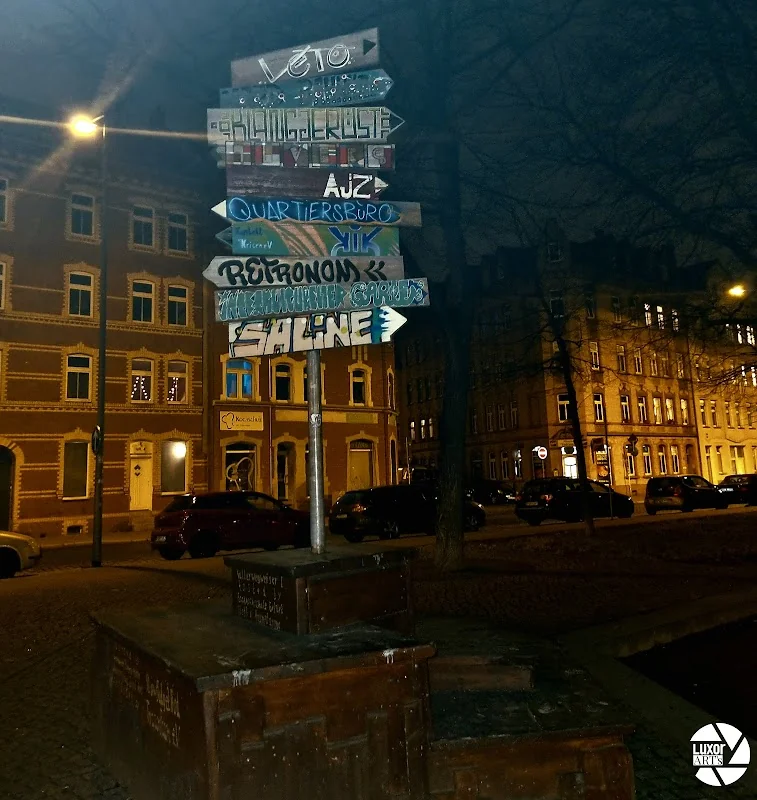
Erfurt
Ilversgehofener Pl., 99086 Erfurt-Ilversgehofen, Deutschland
Ilversgehofener Platz | Access & Residential Quarter
The Ilversgehofener Platz is not just a point on the map in Erfurt, but an urban hub with history, green space, and a clear urban planning function. It is located in the district of Ilversgehofen at the northern end of Magdeburger Allee, marking a place where movement, community, and daily paths intersect. Those searching for the square often mean not just the exact location, but also the connection of the stop, neighborhood, living environment, and the offerings in the vicinity. This is precisely why the square is so interesting for search queries like maps, access, living, rewe, or renting an apartment: it combines orientation with concrete urban space. The city of Erfurt describes the area as part of a central supply area and at the same time as a place where new uses and an enhanced urban image come together. This creates not an anonymous traffic space, but an urban space with a recognizable profile that has changed multiple times over the years. ([erfurt.de](https://www.erfurt.de/ef/de/leben/planen/stadtplanung/wettbewerbe/wip/index.html))
The particular strength of Ilversgehofener Platz lies in this mix of location, history, and present. On one hand, it is a traditional town square with a developed environment; on the other hand, it is part of a contemporary development area intended for housing, open space, and complementary services. This combination explains why so many search intentions converge around the square: people want to know how to get there, which tram goes there, whether a new residential quarter is being developed, if there are shopping opportunities, and what infrastructure is available in the vicinity. The official city planning envisions a significant enhancement of the space without losing the character of the place. Thus, the square is a good example of how Erfurt connects urban space, traffic, and local supply in the north of Magdeburger Allee. ([erfurt.de](https://www.erfurt.de/ef/de/leben/planen/stadtplanung/wettbewerbe/wip/index.html))
Where is Ilversgehofener Platz located in Erfurt?
Geographically, Ilversgehofener Platz is located in the Erfurt district of Ilversgehofen at the corner of Magdeburger Allee and Stollbergstraße. The city assigns the area to the northern part of the compact urban area and describes it as a space located at the northern endpoint of Magdeburger Allee. This location makes the square very easy to find: it is not hidden somewhere in a purely residential area, but sits on an axis that is read as an important urban connection in Erfurt. Those searching for the square on the city map should therefore orient themselves best to Magdeburger Allee and Stollbergstraße. The official planning also shows that the area is located in the central supply area of Ilversgehofen, which is particularly relevant for the daily life of the neighborhood. This is important for anyone searching with terms like maps, access, or address, because the square is not just a name, but part of an urban system. ([erfurt.de](https://www.erfurt.de/ef/de/leben/planen/stadtplanung/wettbewerbe/wip/index.html))
Historically, this location is also clearly defined. Until the mid-1990s, the Union cinema with other buildings stood on the competition site, which have since been demolished. This information explains why the square is not just an open space, but a place with a past, transformation, and re-evaluation. City planning focuses precisely on this and aims to functionally enhance the space, close the block structure, and reorganize the town square urbanistically. This means for orientation on site: Ilversgehofener Platz is a square in transition, whose current shape has emerged from previous uses. Those who are there experience a place that has grown out of the history of the neighborhood and today serves as an interface between living environment, open space, and traffic. For seekers, this is a helpful thought, as the square is not only relevant as an individual area but as part of the urban center of Ilversgehofen. ([erfurt.de](https://www.erfurt.de/ef/de/leben/planen/stadtplanung/wettbewerbe/wip/index.html))
Access by tram and orientation on site
Access to Ilversgehofener Platz is particularly interesting via public transport. The EVAG indicates the stop Ilversgehofener Platz on its line 5; the ride goes towards the main station. This means the square is very well integrated into Erfurt's tram network and can be sensibly used as a transfer and destination point in the north of the city. The city itself also emphasizes in its documents that the new uses are directly connected to a public transport stop at the northern endpoint of Magdeburger Allee. For visitors, this means: those who want to go to the square can do so most easily by tram and then orient themselves at the corner of Magdeburger Allee/Stollbergstraße. The stop is therefore not only a practical entry point but also an essential part of the square's identity. ([evag-erfurt.de](https://www.evag-erfurt.de/site/evag/get/documents/evag/isoli/afp/data25/afp_20_1_5.pdf))
The importance of the public transport connection is also evident in urban development. In the course of the reconstruction of the tram line, the square was renovated and redefined as an important traffic junction. The city explicitly describes it as a place where residents of the district or transfer passengers should feel comfortable in the future. This is more than a friendly formulation: it shows that the square is not solely focused on through traffic but on quality of stay, accessibility, and clear path relationships. Therefore, those searching for access or maps will find a robust structure here: tram, defined urban space, clear reference to Magdeburger Allee, and proximity to central functions of the neighborhood. Additionally, the development of the area has repeatedly been linked to open space, town square, and neighborhood reference. The square is therefore easy to find but also easy to understand: it is an urban point of orientation where the paths of daily life converge. ([erfurt.de](https://www.erfurt.de/ef/de/service/aktuelles/am/2007/101495.html))
History of Ilversgehofener Platz and its park
The history of Ilversgehofener Platz is closely linked to its park. The city explicitly states that the redesign of the park established in 1914 has taken on an important function in shaping a new connected green system in the north of the city. This shows: the square did not just emerge with the recent renovations but carries a significantly older landscape layer within it. When the square was reopened in 2007 after a three-month renovation period, this was part of a larger renovation movement in connection with the reconstruction of the tram line. At that time, the city described it as an important traffic junction and at the same time as a place of communication and relaxation. This dual function is still shaping today because it explains why the square does not appear purely technical or purely decorative. It is both: a connecting traffic space and a green urban center. ([erfurt.de](https://www.erfurt.de/ef/de/service/aktuelles/am/2007/101495.html))
This history becomes particularly tangible in the specific design elements. In the middle of the square stands a restored sculpture with the theme “Old and Young,” which according to the city administration underscores the social and intergenerational dimension of the place. Additionally, there are perennial areas and plantings that make the square appear differently throughout the year. In 2020, the perennial mixture “Blütenschleier” was added at Ilversgehofener Platz, which is suitable for dry and sunny locations. The city also documented the planting of 2,600 flower bulbs and tubers as well as another 1,000 bulbs in the green area. Thus, the square is not only historically interesting but also noteworthy in terms of gardening and landscape planning. It thrives on the idea that a town square can develop attractiveness throughout the year without losing its function as a traffic and stay space. Those passing by therefore experience a place that does not display history in a museum-like manner but translates it into a contemporary green space. ([erfurt.de](https://www.erfurt.de/ef/de/service/aktuelles/am/2007/101495.html))
Residential quarter, retail, and services at the square
A central aspect of Ilversgehofener Platz is the planned urban development. The city of Erfurt has described a planning area of about 0.6 hectares for the area, which was developed as part of an invited competition. The goal is a predominant residential use with around 79 housing units and subordinate commercial and service uses. This makes it clear why terms like renting an apartment, apartment Erfurt Ilversgehofen Platz, or Ilversgehofener Platz rewe appear in search queries: the place is not just a square, but also a residential and usage location with urban development potential. The city documents also explicitly state that retail uses on the ground floor correspond to the goals of the Erfurt retail and center concept. This means in practice: the location should not function in isolation but strengthen the neighborhood and support it with everyday offers. ([erfurt.de](https://www.erfurt.de/ef/de/leben/planen/stadtplanung/wettbewerbe/wip/index.html))
The development plan for the area of Magdeburger Allee/Stollbergstraße also provides important indications for this. There, the city names planning goals that include the preservation and securing of residential use, the creation of appropriate open space, the securing of a mixed-use with non-disturbing commercial uses, and the preservation of the typical local image for Ilversgehofen. At the same time, it is pointed out that open parking facilities should be avoided, which could diminish residential quality. The planning documents for the residential quarter also provide for an underground garage. For seekers, this is an important detail because it shows that the topic of parking is not treated as a large public parking complex but as part of an integrated neighborhood concept. The square is thus developing not only towards residential space but also towards an orderly, compact, and open-space-oriented urban structure. Those searching for everyday facilities like rewe, hairdresser, or dentist should best look in the vicinity of the central supply area and along Magdeburger Allee, as this is precisely where the mix of housing, trade, and services is planned. ([erfurt.de](https://www.erfurt.de/ef/de/leben/planen/stadtplanung/fp_bp/ilv/117950.html))
Ilversgehofener Platz in daily life: Living, surroundings, and planning
In daily life, Ilversgehofener Platz primarily acts as an interface between the neighborhood and the city. The urban plans make it clear that here, not just a single construction project is to be implemented, but a place with a longer impact is being created. The planned block edge development at the corner of Magdeburger Allee/Stollbergstraße is intended to spatially frame the town square while simultaneously enhancing the street space. This makes the square more readable for residents, passersby, and users of public transport alike. The public space should function but also be pleasant: with front gardens, open space, greenery, and a clear edge to the street. This is precisely why the square is so relevant for search queries about maps, address, and living, as planning and daily life meet in close quarters here. The development also shows that Erfurt does not treat the location as a peripheral area but as part of a stable supply corridor in Ilversgehofen. ([erfurt.de](https://www.erfurt.de/ef/de/leben/planen/stadtplanung/wettbewerbe/wip/index.html))
For orientation around the square, it is important what the city and the linked documents emphasize: it is about living, open space, retail on the ground floor, non-disturbing services, and good accessibility by tram. So, those searching for Sparkasse Ilversgehofener Platz Erfurt, dentist Ilversgehofener Platz, or Ilversgehofener Platz hairdresser are essentially looking for the urban infrastructure of the surroundings. The official documents do not name individual businesses as a fixed inventory list, but rather the framework within which such uses make sense. This is honest and practical for users alike, as it avoids false promises and instead shows the structure of the place. In the end, Ilversgehofener Platz is therefore primarily one thing: an urban everyday place with a clear history, clear connections, and an urban planning future that brings together living, green space, and local supply. ([erfurt.de](https://www.erfurt.de/ef/de/leben/planen/stadtplanung/fp_bp/ilv/117950.html))
Sources:
- Erfurt.de – Residential Quarter Ilversgehofener Platz
- Erfurt.de – Ilversgehofener Platz handed over
- Erfurt.de – Blütenschleier replaces Silbersommer at Ilversgehofener Platz
- EVAG – Line 5 Ilversgehofener Platz towards main station
- Erfurt.de – Development Plan ILV654 Magdeburger Allee/Stollbergstraße
- Citizen Info Erfurt – Residential Quarter Ilversgehofener Platz, Planning Drawing
Show moreShow less
Ilversgehofener Platz | Access & Residential Quarter
The Ilversgehofener Platz is not just a point on the map in Erfurt, but an urban hub with history, green space, and a clear urban planning function. It is located in the district of Ilversgehofen at the northern end of Magdeburger Allee, marking a place where movement, community, and daily paths intersect. Those searching for the square often mean not just the exact location, but also the connection of the stop, neighborhood, living environment, and the offerings in the vicinity. This is precisely why the square is so interesting for search queries like maps, access, living, rewe, or renting an apartment: it combines orientation with concrete urban space. The city of Erfurt describes the area as part of a central supply area and at the same time as a place where new uses and an enhanced urban image come together. This creates not an anonymous traffic space, but an urban space with a recognizable profile that has changed multiple times over the years. ([erfurt.de](https://www.erfurt.de/ef/de/leben/planen/stadtplanung/wettbewerbe/wip/index.html))
The particular strength of Ilversgehofener Platz lies in this mix of location, history, and present. On one hand, it is a traditional town square with a developed environment; on the other hand, it is part of a contemporary development area intended for housing, open space, and complementary services. This combination explains why so many search intentions converge around the square: people want to know how to get there, which tram goes there, whether a new residential quarter is being developed, if there are shopping opportunities, and what infrastructure is available in the vicinity. The official city planning envisions a significant enhancement of the space without losing the character of the place. Thus, the square is a good example of how Erfurt connects urban space, traffic, and local supply in the north of Magdeburger Allee. ([erfurt.de](https://www.erfurt.de/ef/de/leben/planen/stadtplanung/wettbewerbe/wip/index.html))
Where is Ilversgehofener Platz located in Erfurt?
Geographically, Ilversgehofener Platz is located in the Erfurt district of Ilversgehofen at the corner of Magdeburger Allee and Stollbergstraße. The city assigns the area to the northern part of the compact urban area and describes it as a space located at the northern endpoint of Magdeburger Allee. This location makes the square very easy to find: it is not hidden somewhere in a purely residential area, but sits on an axis that is read as an important urban connection in Erfurt. Those searching for the square on the city map should therefore orient themselves best to Magdeburger Allee and Stollbergstraße. The official planning also shows that the area is located in the central supply area of Ilversgehofen, which is particularly relevant for the daily life of the neighborhood. This is important for anyone searching with terms like maps, access, or address, because the square is not just a name, but part of an urban system. ([erfurt.de](https://www.erfurt.de/ef/de/leben/planen/stadtplanung/wettbewerbe/wip/index.html))
Historically, this location is also clearly defined. Until the mid-1990s, the Union cinema with other buildings stood on the competition site, which have since been demolished. This information explains why the square is not just an open space, but a place with a past, transformation, and re-evaluation. City planning focuses precisely on this and aims to functionally enhance the space, close the block structure, and reorganize the town square urbanistically. This means for orientation on site: Ilversgehofener Platz is a square in transition, whose current shape has emerged from previous uses. Those who are there experience a place that has grown out of the history of the neighborhood and today serves as an interface between living environment, open space, and traffic. For seekers, this is a helpful thought, as the square is not only relevant as an individual area but as part of the urban center of Ilversgehofen. ([erfurt.de](https://www.erfurt.de/ef/de/leben/planen/stadtplanung/wettbewerbe/wip/index.html))
Access by tram and orientation on site
Access to Ilversgehofener Platz is particularly interesting via public transport. The EVAG indicates the stop Ilversgehofener Platz on its line 5; the ride goes towards the main station. This means the square is very well integrated into Erfurt's tram network and can be sensibly used as a transfer and destination point in the north of the city. The city itself also emphasizes in its documents that the new uses are directly connected to a public transport stop at the northern endpoint of Magdeburger Allee. For visitors, this means: those who want to go to the square can do so most easily by tram and then orient themselves at the corner of Magdeburger Allee/Stollbergstraße. The stop is therefore not only a practical entry point but also an essential part of the square's identity. ([evag-erfurt.de](https://www.evag-erfurt.de/site/evag/get/documents/evag/isoli/afp/data25/afp_20_1_5.pdf))
The importance of the public transport connection is also evident in urban development. In the course of the reconstruction of the tram line, the square was renovated and redefined as an important traffic junction. The city explicitly describes it as a place where residents of the district or transfer passengers should feel comfortable in the future. This is more than a friendly formulation: it shows that the square is not solely focused on through traffic but on quality of stay, accessibility, and clear path relationships. Therefore, those searching for access or maps will find a robust structure here: tram, defined urban space, clear reference to Magdeburger Allee, and proximity to central functions of the neighborhood. Additionally, the development of the area has repeatedly been linked to open space, town square, and neighborhood reference. The square is therefore easy to find but also easy to understand: it is an urban point of orientation where the paths of daily life converge. ([erfurt.de](https://www.erfurt.de/ef/de/service/aktuelles/am/2007/101495.html))
History of Ilversgehofener Platz and its park
The history of Ilversgehofener Platz is closely linked to its park. The city explicitly states that the redesign of the park established in 1914 has taken on an important function in shaping a new connected green system in the north of the city. This shows: the square did not just emerge with the recent renovations but carries a significantly older landscape layer within it. When the square was reopened in 2007 after a three-month renovation period, this was part of a larger renovation movement in connection with the reconstruction of the tram line. At that time, the city described it as an important traffic junction and at the same time as a place of communication and relaxation. This dual function is still shaping today because it explains why the square does not appear purely technical or purely decorative. It is both: a connecting traffic space and a green urban center. ([erfurt.de](https://www.erfurt.de/ef/de/service/aktuelles/am/2007/101495.html))
This history becomes particularly tangible in the specific design elements. In the middle of the square stands a restored sculpture with the theme “Old and Young,” which according to the city administration underscores the social and intergenerational dimension of the place. Additionally, there are perennial areas and plantings that make the square appear differently throughout the year. In 2020, the perennial mixture “Blütenschleier” was added at Ilversgehofener Platz, which is suitable for dry and sunny locations. The city also documented the planting of 2,600 flower bulbs and tubers as well as another 1,000 bulbs in the green area. Thus, the square is not only historically interesting but also noteworthy in terms of gardening and landscape planning. It thrives on the idea that a town square can develop attractiveness throughout the year without losing its function as a traffic and stay space. Those passing by therefore experience a place that does not display history in a museum-like manner but translates it into a contemporary green space. ([erfurt.de](https://www.erfurt.de/ef/de/service/aktuelles/am/2007/101495.html))
Residential quarter, retail, and services at the square
A central aspect of Ilversgehofener Platz is the planned urban development. The city of Erfurt has described a planning area of about 0.6 hectares for the area, which was developed as part of an invited competition. The goal is a predominant residential use with around 79 housing units and subordinate commercial and service uses. This makes it clear why terms like renting an apartment, apartment Erfurt Ilversgehofen Platz, or Ilversgehofener Platz rewe appear in search queries: the place is not just a square, but also a residential and usage location with urban development potential. The city documents also explicitly state that retail uses on the ground floor correspond to the goals of the Erfurt retail and center concept. This means in practice: the location should not function in isolation but strengthen the neighborhood and support it with everyday offers. ([erfurt.de](https://www.erfurt.de/ef/de/leben/planen/stadtplanung/wettbewerbe/wip/index.html))
The development plan for the area of Magdeburger Allee/Stollbergstraße also provides important indications for this. There, the city names planning goals that include the preservation and securing of residential use, the creation of appropriate open space, the securing of a mixed-use with non-disturbing commercial uses, and the preservation of the typical local image for Ilversgehofen. At the same time, it is pointed out that open parking facilities should be avoided, which could diminish residential quality. The planning documents for the residential quarter also provide for an underground garage. For seekers, this is an important detail because it shows that the topic of parking is not treated as a large public parking complex but as part of an integrated neighborhood concept. The square is thus developing not only towards residential space but also towards an orderly, compact, and open-space-oriented urban structure. Those searching for everyday facilities like rewe, hairdresser, or dentist should best look in the vicinity of the central supply area and along Magdeburger Allee, as this is precisely where the mix of housing, trade, and services is planned. ([erfurt.de](https://www.erfurt.de/ef/de/leben/planen/stadtplanung/fp_bp/ilv/117950.html))
Ilversgehofener Platz in daily life: Living, surroundings, and planning
In daily life, Ilversgehofener Platz primarily acts as an interface between the neighborhood and the city. The urban plans make it clear that here, not just a single construction project is to be implemented, but a place with a longer impact is being created. The planned block edge development at the corner of Magdeburger Allee/Stollbergstraße is intended to spatially frame the town square while simultaneously enhancing the street space. This makes the square more readable for residents, passersby, and users of public transport alike. The public space should function but also be pleasant: with front gardens, open space, greenery, and a clear edge to the street. This is precisely why the square is so relevant for search queries about maps, address, and living, as planning and daily life meet in close quarters here. The development also shows that Erfurt does not treat the location as a peripheral area but as part of a stable supply corridor in Ilversgehofen. ([erfurt.de](https://www.erfurt.de/ef/de/leben/planen/stadtplanung/wettbewerbe/wip/index.html))
For orientation around the square, it is important what the city and the linked documents emphasize: it is about living, open space, retail on the ground floor, non-disturbing services, and good accessibility by tram. So, those searching for Sparkasse Ilversgehofener Platz Erfurt, dentist Ilversgehofener Platz, or Ilversgehofener Platz hairdresser are essentially looking for the urban infrastructure of the surroundings. The official documents do not name individual businesses as a fixed inventory list, but rather the framework within which such uses make sense. This is honest and practical for users alike, as it avoids false promises and instead shows the structure of the place. In the end, Ilversgehofener Platz is therefore primarily one thing: an urban everyday place with a clear history, clear connections, and an urban planning future that brings together living, green space, and local supply. ([erfurt.de](https://www.erfurt.de/ef/de/leben/planen/stadtplanung/fp_bp/ilv/117950.html))
Sources:
- Erfurt.de – Residential Quarter Ilversgehofener Platz
- Erfurt.de – Ilversgehofener Platz handed over
- Erfurt.de – Blütenschleier replaces Silbersommer at Ilversgehofener Platz
- EVAG – Line 5 Ilversgehofener Platz towards main station
- Erfurt.de – Development Plan ILV654 Magdeburger Allee/Stollbergstraße
- Citizen Info Erfurt – Residential Quarter Ilversgehofener Platz, Planning Drawing
Ilversgehofener Platz | Access & Residential Quarter
The Ilversgehofener Platz is not just a point on the map in Erfurt, but an urban hub with history, green space, and a clear urban planning function. It is located in the district of Ilversgehofen at the northern end of Magdeburger Allee, marking a place where movement, community, and daily paths intersect. Those searching for the square often mean not just the exact location, but also the connection of the stop, neighborhood, living environment, and the offerings in the vicinity. This is precisely why the square is so interesting for search queries like maps, access, living, rewe, or renting an apartment: it combines orientation with concrete urban space. The city of Erfurt describes the area as part of a central supply area and at the same time as a place where new uses and an enhanced urban image come together. This creates not an anonymous traffic space, but an urban space with a recognizable profile that has changed multiple times over the years. ([erfurt.de](https://www.erfurt.de/ef/de/leben/planen/stadtplanung/wettbewerbe/wip/index.html))
The particular strength of Ilversgehofener Platz lies in this mix of location, history, and present. On one hand, it is a traditional town square with a developed environment; on the other hand, it is part of a contemporary development area intended for housing, open space, and complementary services. This combination explains why so many search intentions converge around the square: people want to know how to get there, which tram goes there, whether a new residential quarter is being developed, if there are shopping opportunities, and what infrastructure is available in the vicinity. The official city planning envisions a significant enhancement of the space without losing the character of the place. Thus, the square is a good example of how Erfurt connects urban space, traffic, and local supply in the north of Magdeburger Allee. ([erfurt.de](https://www.erfurt.de/ef/de/leben/planen/stadtplanung/wettbewerbe/wip/index.html))
Where is Ilversgehofener Platz located in Erfurt?
Geographically, Ilversgehofener Platz is located in the Erfurt district of Ilversgehofen at the corner of Magdeburger Allee and Stollbergstraße. The city assigns the area to the northern part of the compact urban area and describes it as a space located at the northern endpoint of Magdeburger Allee. This location makes the square very easy to find: it is not hidden somewhere in a purely residential area, but sits on an axis that is read as an important urban connection in Erfurt. Those searching for the square on the city map should therefore orient themselves best to Magdeburger Allee and Stollbergstraße. The official planning also shows that the area is located in the central supply area of Ilversgehofen, which is particularly relevant for the daily life of the neighborhood. This is important for anyone searching with terms like maps, access, or address, because the square is not just a name, but part of an urban system. ([erfurt.de](https://www.erfurt.de/ef/de/leben/planen/stadtplanung/wettbewerbe/wip/index.html))
Historically, this location is also clearly defined. Until the mid-1990s, the Union cinema with other buildings stood on the competition site, which have since been demolished. This information explains why the square is not just an open space, but a place with a past, transformation, and re-evaluation. City planning focuses precisely on this and aims to functionally enhance the space, close the block structure, and reorganize the town square urbanistically. This means for orientation on site: Ilversgehofener Platz is a square in transition, whose current shape has emerged from previous uses. Those who are there experience a place that has grown out of the history of the neighborhood and today serves as an interface between living environment, open space, and traffic. For seekers, this is a helpful thought, as the square is not only relevant as an individual area but as part of the urban center of Ilversgehofen. ([erfurt.de](https://www.erfurt.de/ef/de/leben/planen/stadtplanung/wettbewerbe/wip/index.html))
Access by tram and orientation on site
Access to Ilversgehofener Platz is particularly interesting via public transport. The EVAG indicates the stop Ilversgehofener Platz on its line 5; the ride goes towards the main station. This means the square is very well integrated into Erfurt's tram network and can be sensibly used as a transfer and destination point in the north of the city. The city itself also emphasizes in its documents that the new uses are directly connected to a public transport stop at the northern endpoint of Magdeburger Allee. For visitors, this means: those who want to go to the square can do so most easily by tram and then orient themselves at the corner of Magdeburger Allee/Stollbergstraße. The stop is therefore not only a practical entry point but also an essential part of the square's identity. ([evag-erfurt.de](https://www.evag-erfurt.de/site/evag/get/documents/evag/isoli/afp/data25/afp_20_1_5.pdf))
The importance of the public transport connection is also evident in urban development. In the course of the reconstruction of the tram line, the square was renovated and redefined as an important traffic junction. The city explicitly describes it as a place where residents of the district or transfer passengers should feel comfortable in the future. This is more than a friendly formulation: it shows that the square is not solely focused on through traffic but on quality of stay, accessibility, and clear path relationships. Therefore, those searching for access or maps will find a robust structure here: tram, defined urban space, clear reference to Magdeburger Allee, and proximity to central functions of the neighborhood. Additionally, the development of the area has repeatedly been linked to open space, town square, and neighborhood reference. The square is therefore easy to find but also easy to understand: it is an urban point of orientation where the paths of daily life converge. ([erfurt.de](https://www.erfurt.de/ef/de/service/aktuelles/am/2007/101495.html))
History of Ilversgehofener Platz and its park
The history of Ilversgehofener Platz is closely linked to its park. The city explicitly states that the redesign of the park established in 1914 has taken on an important function in shaping a new connected green system in the north of the city. This shows: the square did not just emerge with the recent renovations but carries a significantly older landscape layer within it. When the square was reopened in 2007 after a three-month renovation period, this was part of a larger renovation movement in connection with the reconstruction of the tram line. At that time, the city described it as an important traffic junction and at the same time as a place of communication and relaxation. This dual function is still shaping today because it explains why the square does not appear purely technical or purely decorative. It is both: a connecting traffic space and a green urban center. ([erfurt.de](https://www.erfurt.de/ef/de/service/aktuelles/am/2007/101495.html))
This history becomes particularly tangible in the specific design elements. In the middle of the square stands a restored sculpture with the theme “Old and Young,” which according to the city administration underscores the social and intergenerational dimension of the place. Additionally, there are perennial areas and plantings that make the square appear differently throughout the year. In 2020, the perennial mixture “Blütenschleier” was added at Ilversgehofener Platz, which is suitable for dry and sunny locations. The city also documented the planting of 2,600 flower bulbs and tubers as well as another 1,000 bulbs in the green area. Thus, the square is not only historically interesting but also noteworthy in terms of gardening and landscape planning. It thrives on the idea that a town square can develop attractiveness throughout the year without losing its function as a traffic and stay space. Those passing by therefore experience a place that does not display history in a museum-like manner but translates it into a contemporary green space. ([erfurt.de](https://www.erfurt.de/ef/de/service/aktuelles/am/2007/101495.html))
Residential quarter, retail, and services at the square
A central aspect of Ilversgehofener Platz is the planned urban development. The city of Erfurt has described a planning area of about 0.6 hectares for the area, which was developed as part of an invited competition. The goal is a predominant residential use with around 79 housing units and subordinate commercial and service uses. This makes it clear why terms like renting an apartment, apartment Erfurt Ilversgehofen Platz, or Ilversgehofener Platz rewe appear in search queries: the place is not just a square, but also a residential and usage location with urban development potential. The city documents also explicitly state that retail uses on the ground floor correspond to the goals of the Erfurt retail and center concept. This means in practice: the location should not function in isolation but strengthen the neighborhood and support it with everyday offers. ([erfurt.de](https://www.erfurt.de/ef/de/leben/planen/stadtplanung/wettbewerbe/wip/index.html))
The development plan for the area of Magdeburger Allee/Stollbergstraße also provides important indications for this. There, the city names planning goals that include the preservation and securing of residential use, the creation of appropriate open space, the securing of a mixed-use with non-disturbing commercial uses, and the preservation of the typical local image for Ilversgehofen. At the same time, it is pointed out that open parking facilities should be avoided, which could diminish residential quality. The planning documents for the residential quarter also provide for an underground garage. For seekers, this is an important detail because it shows that the topic of parking is not treated as a large public parking complex but as part of an integrated neighborhood concept. The square is thus developing not only towards residential space but also towards an orderly, compact, and open-space-oriented urban structure. Those searching for everyday facilities like rewe, hairdresser, or dentist should best look in the vicinity of the central supply area and along Magdeburger Allee, as this is precisely where the mix of housing, trade, and services is planned. ([erfurt.de](https://www.erfurt.de/ef/de/leben/planen/stadtplanung/fp_bp/ilv/117950.html))
Ilversgehofener Platz in daily life: Living, surroundings, and planning
In daily life, Ilversgehofener Platz primarily acts as an interface between the neighborhood and the city. The urban plans make it clear that here, not just a single construction project is to be implemented, but a place with a longer impact is being created. The planned block edge development at the corner of Magdeburger Allee/Stollbergstraße is intended to spatially frame the town square while simultaneously enhancing the street space. This makes the square more readable for residents, passersby, and users of public transport alike. The public space should function but also be pleasant: with front gardens, open space, greenery, and a clear edge to the street. This is precisely why the square is so relevant for search queries about maps, address, and living, as planning and daily life meet in close quarters here. The development also shows that Erfurt does not treat the location as a peripheral area but as part of a stable supply corridor in Ilversgehofen. ([erfurt.de](https://www.erfurt.de/ef/de/leben/planen/stadtplanung/wettbewerbe/wip/index.html))
For orientation around the square, it is important what the city and the linked documents emphasize: it is about living, open space, retail on the ground floor, non-disturbing services, and good accessibility by tram. So, those searching for Sparkasse Ilversgehofener Platz Erfurt, dentist Ilversgehofener Platz, or Ilversgehofener Platz hairdresser are essentially looking for the urban infrastructure of the surroundings. The official documents do not name individual businesses as a fixed inventory list, but rather the framework within which such uses make sense. This is honest and practical for users alike, as it avoids false promises and instead shows the structure of the place. In the end, Ilversgehofener Platz is therefore primarily one thing: an urban everyday place with a clear history, clear connections, and an urban planning future that brings together living, green space, and local supply. ([erfurt.de](https://www.erfurt.de/ef/de/leben/planen/stadtplanung/fp_bp/ilv/117950.html))
Sources:
- Erfurt.de – Residential Quarter Ilversgehofener Platz
- Erfurt.de – Ilversgehofener Platz handed over
- Erfurt.de – Blütenschleier replaces Silbersommer at Ilversgehofener Platz
- EVAG – Line 5 Ilversgehofener Platz towards main station
- Erfurt.de – Development Plan ILV654 Magdeburger Allee/Stollbergstraße
- Citizen Info Erfurt – Residential Quarter Ilversgehofener Platz, Planning Drawing
Upcoming Events
No events found
Frequently Asked Questions
Reviews
No reviews found