
Erfurt
Futterstraße 7, 99084 Erfurt, Deutschland
Historic Old Town Erfurt | Old Town Tour & History
The Historic Old Town Erfurt is not a single point of interest, but the medieval heart of the Thuringian capital. Those who wander here move through the largest German area monument, where patrician houses, trade, crafts, churches, and Jewish medieval traces meet in extraordinary density. This mixture creates the special charm: short distances, strong contrasts, and an urban space that not only tells history but also preserves it visibly. The official tourism information describes Erfurt as a city with cultural and architectural treasures, medieval flair, and history to touch; the city administration emphasizes the special significance of the Old Town as a historically grown center. Particularly attractive is that many highlights can be connected in just a few steps. Domberg, Krämerbrücke, Old Synagogue, Fish Market, Augustinian Monastery, and Petersberg together form a compact experience that is ideal for a city stroll, a guided tour, or a short cultural trip. ([erfurt-tourismus.de](https://www.erfurt-tourismus.de/sehens-wissenswertes/sehenswertes/))
Why the historic Old Town Erfurt is so special
In the Middle Ages, Erfurt was a flourishing city with over 20,000 inhabitants, making it one of the largest cities in the northern alpine empire. This historical significance is still visible in the cityscape today, as the Old Town has not lost its function as an urban center. The city administration describes it as the largest German area monument, which bears witness to patricians, long-distance traders, craftsmen, and one of the most significant Jewish communities of the empire. For visitors, this means: The Old Town is not a backdrop, but a grown space with real depth, where houses, squares, and paths have merged over centuries. This continuity makes Erfurt equally interesting for cultural travelers, families, groups, and individual guests. Here, one does not only experience individual sights but a coherent overall picture of alleys, squares, churchyards, sight axes, and city landmarks. The official tourism site also emphasizes that the romantic Old Town enchants guests and residents with medieval flair and fascinating history. ([erfurt.de](https://www.erfurt.de/ef/de/erleben/kunst/mittelalter/index.html))
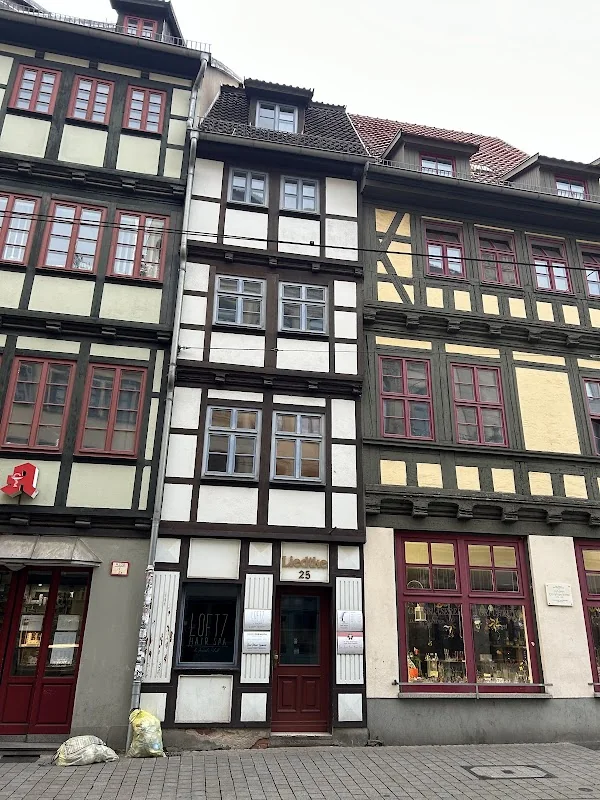
Additionally, there is the special location in the heart of the city. The Old Town is compact enough to explore on foot and large enough to continually open up new perspectives. As one moves from one square to the next, it quickly becomes apparent that Erfurt cannot be reduced to a single monument. Rather, the historical attractiveness lives from the connection of everyday city and monument space: small shops next to historic facades, quiet side streets next to busy axes, sacred architecture next to civic architecture. This change makes the walk exciting. Even without a guided tour, the most important impressions can be captured within a few hours because the paths are short and the visual contrasts are strong. Especially in the morning and evening hours, an atmosphere is created that highlights the medieval character even more clearly. In Erfurt, history is not presented in distant display cases but made tangible in the vibrant urban space. ([erfurt-tourismus.de](https://www.erfurt-tourismus.de/sehens-wissenswertes/sehenswertes/))
Krämerbrücke, St. Mary's Cathedral, and the most famous sights
Among the most famous landmarks of the Historic Old Town Erfurt is the Krämerbrücke. It is the longest continuously built and inhabited bridge in Europe and is one of the most prominent secular buildings in the city. The current stone bridge dates back to 1325, was originally 120 meters long, and initially carried 62 narrow houses, which were later combined into 32 houses. Even today, galleries, small shops, and workshops shape the image. Thuringian blue printing fabrics, ceramics, glass, jewelry, wood carvings, and regional specialties make the journey across the bridge an experience that combines culture, trade, and atmosphere. Just a few steps away lies St. Mary's Cathedral with its impressive silhouette. The official tourism site describes it as a Gothic cathedral with a high Gothic choir and Romanesque tower area, which goes back to the bishop's church initiated by Boniface in 742. Together with St. Severi, the Domberg forms one of the strongest visual anchors of the entire Old Town. ([erfurt-tourismus.de](https://www.erfurt-tourismus.de/sehenswerte/kraemerbruecke/))
Even away from these two landmarks, the Old Town is rich in impressive places. The official sights page mentions, among other things, venerable monasteries, imposing churches, the Erfurt treasure, and magnificent patrician houses as defining elements of the city center. In addition, there are squares and buildings such as Fish Market, Town Hall, Augustinian Monastery, Bartholomew Tower, St. Thomas Church, and other historical ensembles that continually enhance the tour. Particularly attractive for first-time visitors is that many of these destinations are reachable in a continuous walking path. From the Krämerbrücke, one can quickly reach Wenigemarkt, from there continue to churches, courtyards, and museum locations. Even the Tourist Information is located directly at the Krämerbrücke, making orientation and entry easy. Therefore, first-time visitors to Erfurt do not receive isolated snapshots but a dense historical web that constitutes the charm of the city. ([erfurt-tourismus.de](https://www.erfurt-tourismus.de/sehens-wissenswertes/sehenswertes/))
UNESCO World Heritage and Jewish medieval heritage in Erfurt
A central component of Erfurt's historical profile is the Jewish medieval heritage, which has been on the UNESCO World Heritage List since September 17, 2023. The official UNESCO site and the Erfurt tourism information name the core components as the Old Synagogue, the medieval mikveh, and the so-called Stone House. These three sites document the outstanding significance of the Jewish community in Erfurt between the late 11th and mid-14th centuries. Especially the Old Synagogue is one of the few preserved medieval synagogues and is considered one of the oldest synagogues in Europe still intact to the roof. The oldest documented construction phase is dated around 1100. Thus, the UNESCO complex is not a fringe topic but an essential chapter of Erfurt's city history and an important reason why the historic Old Town attracts attention far beyond Thuringia. ([erfurt-tourismus.de](https://www.erfurt-tourismus.de/en/unesco/))
For visitors, the UNESCO heritage is not only historically significant but also easily accessible. According to the official UNESCO site, the Old Synagogue can be visited independently during opening hours; audio guides are available, and private tours are possible. The mikveh is viewable through a viewing opening in the protective structure and is accessible as part of a guided tour, while the Stone House can currently only be viewed from the outside. This combination of freely accessible and guided sites makes the tour vivid. Those interested in the cultural diversity of medieval Erfurt do not receive an abstract museum narrative here, but concrete places where history becomes spatially tangible. The UNESCO designation also emphasizes that the Old Town is not only beautiful but of outstanding historical relevance. This is particularly important for the positioning of the historic Old Town Erfurt in tourism, as culture, education, and experience are connected in one place. ([erfurt-tourismus.de](https://www.erfurt-tourismus.de/en/unesco/))
Old Town Tour Erfurt: Route, Duration, and Booking
Those who want to experience the Historic Old Town Erfurt in a structured way are well advised to take an official Old Town tour. The tourism information offers the tour 'The Classic' year-round. It lasts about two hours, starts behind the Erfurt Tourist Information at Benediktsplatz 1, and can be booked as a public or group tour depending on the target audience. The current information page states a limit of 25 listeners per city guide for groups. The route leads to central points of the Old Town, including Domplatz, Krämerbrücke, Wenigemarkt, Fish Market, and other historical axes. Thus, the tour is not only a practical orientation aid but also a thematic condensation of the most important stories and buildings. Those who do not want to discover the city alone get an ideal first overview and can then return specifically to their personal favorites. ([erfurt-tourismus.de](https://www.erfurt-tourismus.de/stadtfuehrung/individuell/altstadtfuehrung/))
Particularly helpful is that the Old Town tour explicitly addresses different mobility needs. The official route is described as about 2 kilometers long and without significant inclines; at the same time, the tourism site recommends sturdy footwear due to the historic cobblestones in the Old Town center. For guests with mobility impairments, an adapted route is offered, and wheelchairs and walkers are available upon request. There are also notes for families, seniors, blind, and hearing-impaired individuals on the official site. This is particularly relevant for search intentions around historic old town erfurt, old town tour erfurt, and historic places erfurt, as it shows that the city center is not only historically dense but also well-organized. Those who want to experience the Old Town not in a rush but with an eye for detail will find the suitable, officially curated form of the tour here. ([erfurt-tourismus.de](https://www.erfurt-tourismus.de/stadtfuehrung/individuell/altstadtfuehrung/))
Access and Parking in the Historic Old Town
For traveling to the Historic Old Town Erfurt, the parking guidance system of the city center is particularly important. The city of Erfurt informs that around 3,700 parking spaces are available in numerous parking garages at the edge of the traffic-calmed city center. The dynamic parking guidance system connects these parking garages and leads visitors directly to the nearest available space. At important city access points and on the central ring, signs and indicators display current information on available spaces, traffic conditions, and possible road closures. This is particularly practical for visitors who want to arrive without long searching and want to park their car as close as possible to the central sights. For the historic Old Town, this means: The stationary traffic is shifted to the edge, while the core itself remains largely free of unnecessary car traffic. This preserves the cityscape and makes the stay for pedestrians significantly more pleasant. ([erfurt.de](https://www.erfurt.de/ef/de/leben/verkehr/mobil/auto/parken/index.html))
The specific distances in the Old Town also speak for good accessibility. According to the official tourism site, the Krämerbrücke is about 250 meters from public transport; St. Mary's Cathedral is even only about 50 meters from the bus and tram. Several parking garages are mentioned in the immediate vicinity of the Krämerbrücke, including the Domplatz parking garage, the Hirschlachufer parking garage, and the Q-Park Anger 1 parking garage. For guests who want to not only visit the Old Town but also approach it comfortably, this is a great advantage. The combination of parking guidance system, short walking distances, and proximity to public transport makes the city center well-planned even for day visitors. Especially in a historically sensitive urban area, this traffic organization is important because it increases the quality of stay and makes the Old Town center significantly more relaxed for walks, shopping, and culture. ([erfurt.de](https://www.erfurt.de/sehens-wissenswertes/kraemerbruecke/))
Experience the historic Old Town Erfurt leisurely on foot
The greatest strength of the Historic Old Town Erfurt is its compactness. Many of the most important places are so close together that they can be easily connected on foot in one day. This is why the official city tours recommend sturdy footwear, as the cobblestones are part of the historic character of the center just like the facades themselves. At the same time, the classic Old Town tour shows that a walk of about two kilometers is sufficient to gain a very broad impression. Those who take their time can explore the Old Town at leisure, linger in courtyards, seek viewpoints, and continually switch between large landmarks and small details. This is what makes it appealing for families, couples, groups, and cultural travelers: The Old Town is not overwhelmingly large but rich enough to remain exciting for several hours. ([erfurt.de](https://www.erfurt-tourismus.de/stadtfuehrung/individuell/altstadtfuehrung/))
For a particularly rounded visit, it is worthwhile to combine the Old Town with Petersberg. The official tourism site describes the Petersberg Citadel as one of the largest and largely preserved baroque city fortifications in Central Europe, which rises above the Old Town and offers wide views over Erfurt. Additionally, there are the panoramic path and a passenger elevator that facilitate access. Therefore, those who combine the Old Town, Domberg, and Petersberg receive a very complete picture of Erfurt's history, topography, and urban development. This mix of experiencing, walking, looking, and understanding makes the historic Old Town so strong. It is not a place for haste but for conscious discovery. Those who put together a good route ideally start at the Tourist Information, connect Krämerbrücke, Domberg, and Fish Market, make a detour to the UNESCO sites, and end the tour with a view from Petersberg. This transforms a city stroll into a dense, memorable experience. ([erfurt-tourismus.de](https://www.erfurt-tourismus.de/sehens-wissenswertes/sehenswertes/zitadelle-petersberg/?utm_source=openai))
Sources:
Show moreShow less
Historic Old Town Erfurt | Old Town Tour & History
The Historic Old Town Erfurt is not a single point of interest, but the medieval heart of the Thuringian capital. Those who wander here move through the largest German area monument, where patrician houses, trade, crafts, churches, and Jewish medieval traces meet in extraordinary density. This mixture creates the special charm: short distances, strong contrasts, and an urban space that not only tells history but also preserves it visibly. The official tourism information describes Erfurt as a city with cultural and architectural treasures, medieval flair, and history to touch; the city administration emphasizes the special significance of the Old Town as a historically grown center. Particularly attractive is that many highlights can be connected in just a few steps. Domberg, Krämerbrücke, Old Synagogue, Fish Market, Augustinian Monastery, and Petersberg together form a compact experience that is ideal for a city stroll, a guided tour, or a short cultural trip. ([erfurt-tourismus.de](https://www.erfurt-tourismus.de/sehens-wissenswertes/sehenswertes/))
Why the historic Old Town Erfurt is so special
In the Middle Ages, Erfurt was a flourishing city with over 20,000 inhabitants, making it one of the largest cities in the northern alpine empire. This historical significance is still visible in the cityscape today, as the Old Town has not lost its function as an urban center. The city administration describes it as the largest German area monument, which bears witness to patricians, long-distance traders, craftsmen, and one of the most significant Jewish communities of the empire. For visitors, this means: The Old Town is not a backdrop, but a grown space with real depth, where houses, squares, and paths have merged over centuries. This continuity makes Erfurt equally interesting for cultural travelers, families, groups, and individual guests. Here, one does not only experience individual sights but a coherent overall picture of alleys, squares, churchyards, sight axes, and city landmarks. The official tourism site also emphasizes that the romantic Old Town enchants guests and residents with medieval flair and fascinating history. ([erfurt.de](https://www.erfurt.de/ef/de/erleben/kunst/mittelalter/index.html))
Additionally, there is the special location in the heart of the city. The Old Town is compact enough to explore on foot and large enough to continually open up new perspectives. As one moves from one square to the next, it quickly becomes apparent that Erfurt cannot be reduced to a single monument. Rather, the historical attractiveness lives from the connection of everyday city and monument space: small shops next to historic facades, quiet side streets next to busy axes, sacred architecture next to civic architecture. This change makes the walk exciting. Even without a guided tour, the most important impressions can be captured within a few hours because the paths are short and the visual contrasts are strong. Especially in the morning and evening hours, an atmosphere is created that highlights the medieval character even more clearly. In Erfurt, history is not presented in distant display cases but made tangible in the vibrant urban space. ([erfurt-tourismus.de](https://www.erfurt-tourismus.de/sehens-wissenswertes/sehenswertes/))
Krämerbrücke, St. Mary's Cathedral, and the most famous sights
Among the most famous landmarks of the Historic Old Town Erfurt is the Krämerbrücke. It is the longest continuously built and inhabited bridge in Europe and is one of the most prominent secular buildings in the city. The current stone bridge dates back to 1325, was originally 120 meters long, and initially carried 62 narrow houses, which were later combined into 32 houses. Even today, galleries, small shops, and workshops shape the image. Thuringian blue printing fabrics, ceramics, glass, jewelry, wood carvings, and regional specialties make the journey across the bridge an experience that combines culture, trade, and atmosphere. Just a few steps away lies St. Mary's Cathedral with its impressive silhouette. The official tourism site describes it as a Gothic cathedral with a high Gothic choir and Romanesque tower area, which goes back to the bishop's church initiated by Boniface in 742. Together with St. Severi, the Domberg forms one of the strongest visual anchors of the entire Old Town. ([erfurt-tourismus.de](https://www.erfurt-tourismus.de/sehenswerte/kraemerbruecke/))
Even away from these two landmarks, the Old Town is rich in impressive places. The official sights page mentions, among other things, venerable monasteries, imposing churches, the Erfurt treasure, and magnificent patrician houses as defining elements of the city center. In addition, there are squares and buildings such as Fish Market, Town Hall, Augustinian Monastery, Bartholomew Tower, St. Thomas Church, and other historical ensembles that continually enhance the tour. Particularly attractive for first-time visitors is that many of these destinations are reachable in a continuous walking path. From the Krämerbrücke, one can quickly reach Wenigemarkt, from there continue to churches, courtyards, and museum locations. Even the Tourist Information is located directly at the Krämerbrücke, making orientation and entry easy. Therefore, first-time visitors to Erfurt do not receive isolated snapshots but a dense historical web that constitutes the charm of the city. ([erfurt-tourismus.de](https://www.erfurt-tourismus.de/sehens-wissenswertes/sehenswertes/))
UNESCO World Heritage and Jewish medieval heritage in Erfurt
A central component of Erfurt's historical profile is the Jewish medieval heritage, which has been on the UNESCO World Heritage List since September 17, 2023. The official UNESCO site and the Erfurt tourism information name the core components as the Old Synagogue, the medieval mikveh, and the so-called Stone House. These three sites document the outstanding significance of the Jewish community in Erfurt between the late 11th and mid-14th centuries. Especially the Old Synagogue is one of the few preserved medieval synagogues and is considered one of the oldest synagogues in Europe still intact to the roof. The oldest documented construction phase is dated around 1100. Thus, the UNESCO complex is not a fringe topic but an essential chapter of Erfurt's city history and an important reason why the historic Old Town attracts attention far beyond Thuringia. ([erfurt-tourismus.de](https://www.erfurt-tourismus.de/en/unesco/))
For visitors, the UNESCO heritage is not only historically significant but also easily accessible. According to the official UNESCO site, the Old Synagogue can be visited independently during opening hours; audio guides are available, and private tours are possible. The mikveh is viewable through a viewing opening in the protective structure and is accessible as part of a guided tour, while the Stone House can currently only be viewed from the outside. This combination of freely accessible and guided sites makes the tour vivid. Those interested in the cultural diversity of medieval Erfurt do not receive an abstract museum narrative here, but concrete places where history becomes spatially tangible. The UNESCO designation also emphasizes that the Old Town is not only beautiful but of outstanding historical relevance. This is particularly important for the positioning of the historic Old Town Erfurt in tourism, as culture, education, and experience are connected in one place. ([erfurt-tourismus.de](https://www.erfurt-tourismus.de/en/unesco/))
Old Town Tour Erfurt: Route, Duration, and Booking
Those who want to experience the Historic Old Town Erfurt in a structured way are well advised to take an official Old Town tour. The tourism information offers the tour 'The Classic' year-round. It lasts about two hours, starts behind the Erfurt Tourist Information at Benediktsplatz 1, and can be booked as a public or group tour depending on the target audience. The current information page states a limit of 25 listeners per city guide for groups. The route leads to central points of the Old Town, including Domplatz, Krämerbrücke, Wenigemarkt, Fish Market, and other historical axes. Thus, the tour is not only a practical orientation aid but also a thematic condensation of the most important stories and buildings. Those who do not want to discover the city alone get an ideal first overview and can then return specifically to their personal favorites. ([erfurt-tourismus.de](https://www.erfurt-tourismus.de/stadtfuehrung/individuell/altstadtfuehrung/))
Particularly helpful is that the Old Town tour explicitly addresses different mobility needs. The official route is described as about 2 kilometers long and without significant inclines; at the same time, the tourism site recommends sturdy footwear due to the historic cobblestones in the Old Town center. For guests with mobility impairments, an adapted route is offered, and wheelchairs and walkers are available upon request. There are also notes for families, seniors, blind, and hearing-impaired individuals on the official site. This is particularly relevant for search intentions around historic old town erfurt, old town tour erfurt, and historic places erfurt, as it shows that the city center is not only historically dense but also well-organized. Those who want to experience the Old Town not in a rush but with an eye for detail will find the suitable, officially curated form of the tour here. ([erfurt-tourismus.de](https://www.erfurt-tourismus.de/stadtfuehrung/individuell/altstadtfuehrung/))
Access and Parking in the Historic Old Town
For traveling to the Historic Old Town Erfurt, the parking guidance system of the city center is particularly important. The city of Erfurt informs that around 3,700 parking spaces are available in numerous parking garages at the edge of the traffic-calmed city center. The dynamic parking guidance system connects these parking garages and leads visitors directly to the nearest available space. At important city access points and on the central ring, signs and indicators display current information on available spaces, traffic conditions, and possible road closures. This is particularly practical for visitors who want to arrive without long searching and want to park their car as close as possible to the central sights. For the historic Old Town, this means: The stationary traffic is shifted to the edge, while the core itself remains largely free of unnecessary car traffic. This preserves the cityscape and makes the stay for pedestrians significantly more pleasant. ([erfurt.de](https://www.erfurt.de/ef/de/leben/verkehr/mobil/auto/parken/index.html))
The specific distances in the Old Town also speak for good accessibility. According to the official tourism site, the Krämerbrücke is about 250 meters from public transport; St. Mary's Cathedral is even only about 50 meters from the bus and tram. Several parking garages are mentioned in the immediate vicinity of the Krämerbrücke, including the Domplatz parking garage, the Hirschlachufer parking garage, and the Q-Park Anger 1 parking garage. For guests who want to not only visit the Old Town but also approach it comfortably, this is a great advantage. The combination of parking guidance system, short walking distances, and proximity to public transport makes the city center well-planned even for day visitors. Especially in a historically sensitive urban area, this traffic organization is important because it increases the quality of stay and makes the Old Town center significantly more relaxed for walks, shopping, and culture. ([erfurt.de](https://www.erfurt.de/sehens-wissenswertes/kraemerbruecke/))
Experience the historic Old Town Erfurt leisurely on foot
The greatest strength of the Historic Old Town Erfurt is its compactness. Many of the most important places are so close together that they can be easily connected on foot in one day. This is why the official city tours recommend sturdy footwear, as the cobblestones are part of the historic character of the center just like the facades themselves. At the same time, the classic Old Town tour shows that a walk of about two kilometers is sufficient to gain a very broad impression. Those who take their time can explore the Old Town at leisure, linger in courtyards, seek viewpoints, and continually switch between large landmarks and small details. This is what makes it appealing for families, couples, groups, and cultural travelers: The Old Town is not overwhelmingly large but rich enough to remain exciting for several hours. ([erfurt.de](https://www.erfurt-tourismus.de/stadtfuehrung/individuell/altstadtfuehrung/))
For a particularly rounded visit, it is worthwhile to combine the Old Town with Petersberg. The official tourism site describes the Petersberg Citadel as one of the largest and largely preserved baroque city fortifications in Central Europe, which rises above the Old Town and offers wide views over Erfurt. Additionally, there are the panoramic path and a passenger elevator that facilitate access. Therefore, those who combine the Old Town, Domberg, and Petersberg receive a very complete picture of Erfurt's history, topography, and urban development. This mix of experiencing, walking, looking, and understanding makes the historic Old Town so strong. It is not a place for haste but for conscious discovery. Those who put together a good route ideally start at the Tourist Information, connect Krämerbrücke, Domberg, and Fish Market, make a detour to the UNESCO sites, and end the tour with a view from Petersberg. This transforms a city stroll into a dense, memorable experience. ([erfurt-tourismus.de](https://www.erfurt-tourismus.de/sehens-wissenswertes/sehenswertes/zitadelle-petersberg/?utm_source=openai))
Sources:
Historic Old Town Erfurt | Old Town Tour & History
The Historic Old Town Erfurt is not a single point of interest, but the medieval heart of the Thuringian capital. Those who wander here move through the largest German area monument, where patrician houses, trade, crafts, churches, and Jewish medieval traces meet in extraordinary density. This mixture creates the special charm: short distances, strong contrasts, and an urban space that not only tells history but also preserves it visibly. The official tourism information describes Erfurt as a city with cultural and architectural treasures, medieval flair, and history to touch; the city administration emphasizes the special significance of the Old Town as a historically grown center. Particularly attractive is that many highlights can be connected in just a few steps. Domberg, Krämerbrücke, Old Synagogue, Fish Market, Augustinian Monastery, and Petersberg together form a compact experience that is ideal for a city stroll, a guided tour, or a short cultural trip. ([erfurt-tourismus.de](https://www.erfurt-tourismus.de/sehens-wissenswertes/sehenswertes/))
Why the historic Old Town Erfurt is so special
In the Middle Ages, Erfurt was a flourishing city with over 20,000 inhabitants, making it one of the largest cities in the northern alpine empire. This historical significance is still visible in the cityscape today, as the Old Town has not lost its function as an urban center. The city administration describes it as the largest German area monument, which bears witness to patricians, long-distance traders, craftsmen, and one of the most significant Jewish communities of the empire. For visitors, this means: The Old Town is not a backdrop, but a grown space with real depth, where houses, squares, and paths have merged over centuries. This continuity makes Erfurt equally interesting for cultural travelers, families, groups, and individual guests. Here, one does not only experience individual sights but a coherent overall picture of alleys, squares, churchyards, sight axes, and city landmarks. The official tourism site also emphasizes that the romantic Old Town enchants guests and residents with medieval flair and fascinating history. ([erfurt.de](https://www.erfurt.de/ef/de/erleben/kunst/mittelalter/index.html))
Additionally, there is the special location in the heart of the city. The Old Town is compact enough to explore on foot and large enough to continually open up new perspectives. As one moves from one square to the next, it quickly becomes apparent that Erfurt cannot be reduced to a single monument. Rather, the historical attractiveness lives from the connection of everyday city and monument space: small shops next to historic facades, quiet side streets next to busy axes, sacred architecture next to civic architecture. This change makes the walk exciting. Even without a guided tour, the most important impressions can be captured within a few hours because the paths are short and the visual contrasts are strong. Especially in the morning and evening hours, an atmosphere is created that highlights the medieval character even more clearly. In Erfurt, history is not presented in distant display cases but made tangible in the vibrant urban space. ([erfurt-tourismus.de](https://www.erfurt-tourismus.de/sehens-wissenswertes/sehenswertes/))
Krämerbrücke, St. Mary's Cathedral, and the most famous sights
Among the most famous landmarks of the Historic Old Town Erfurt is the Krämerbrücke. It is the longest continuously built and inhabited bridge in Europe and is one of the most prominent secular buildings in the city. The current stone bridge dates back to 1325, was originally 120 meters long, and initially carried 62 narrow houses, which were later combined into 32 houses. Even today, galleries, small shops, and workshops shape the image. Thuringian blue printing fabrics, ceramics, glass, jewelry, wood carvings, and regional specialties make the journey across the bridge an experience that combines culture, trade, and atmosphere. Just a few steps away lies St. Mary's Cathedral with its impressive silhouette. The official tourism site describes it as a Gothic cathedral with a high Gothic choir and Romanesque tower area, which goes back to the bishop's church initiated by Boniface in 742. Together with St. Severi, the Domberg forms one of the strongest visual anchors of the entire Old Town. ([erfurt-tourismus.de](https://www.erfurt-tourismus.de/sehenswerte/kraemerbruecke/))
Even away from these two landmarks, the Old Town is rich in impressive places. The official sights page mentions, among other things, venerable monasteries, imposing churches, the Erfurt treasure, and magnificent patrician houses as defining elements of the city center. In addition, there are squares and buildings such as Fish Market, Town Hall, Augustinian Monastery, Bartholomew Tower, St. Thomas Church, and other historical ensembles that continually enhance the tour. Particularly attractive for first-time visitors is that many of these destinations are reachable in a continuous walking path. From the Krämerbrücke, one can quickly reach Wenigemarkt, from there continue to churches, courtyards, and museum locations. Even the Tourist Information is located directly at the Krämerbrücke, making orientation and entry easy. Therefore, first-time visitors to Erfurt do not receive isolated snapshots but a dense historical web that constitutes the charm of the city. ([erfurt-tourismus.de](https://www.erfurt-tourismus.de/sehens-wissenswertes/sehenswertes/))
UNESCO World Heritage and Jewish medieval heritage in Erfurt
A central component of Erfurt's historical profile is the Jewish medieval heritage, which has been on the UNESCO World Heritage List since September 17, 2023. The official UNESCO site and the Erfurt tourism information name the core components as the Old Synagogue, the medieval mikveh, and the so-called Stone House. These three sites document the outstanding significance of the Jewish community in Erfurt between the late 11th and mid-14th centuries. Especially the Old Synagogue is one of the few preserved medieval synagogues and is considered one of the oldest synagogues in Europe still intact to the roof. The oldest documented construction phase is dated around 1100. Thus, the UNESCO complex is not a fringe topic but an essential chapter of Erfurt's city history and an important reason why the historic Old Town attracts attention far beyond Thuringia. ([erfurt-tourismus.de](https://www.erfurt-tourismus.de/en/unesco/))
For visitors, the UNESCO heritage is not only historically significant but also easily accessible. According to the official UNESCO site, the Old Synagogue can be visited independently during opening hours; audio guides are available, and private tours are possible. The mikveh is viewable through a viewing opening in the protective structure and is accessible as part of a guided tour, while the Stone House can currently only be viewed from the outside. This combination of freely accessible and guided sites makes the tour vivid. Those interested in the cultural diversity of medieval Erfurt do not receive an abstract museum narrative here, but concrete places where history becomes spatially tangible. The UNESCO designation also emphasizes that the Old Town is not only beautiful but of outstanding historical relevance. This is particularly important for the positioning of the historic Old Town Erfurt in tourism, as culture, education, and experience are connected in one place. ([erfurt-tourismus.de](https://www.erfurt-tourismus.de/en/unesco/))
Old Town Tour Erfurt: Route, Duration, and Booking
Those who want to experience the Historic Old Town Erfurt in a structured way are well advised to take an official Old Town tour. The tourism information offers the tour 'The Classic' year-round. It lasts about two hours, starts behind the Erfurt Tourist Information at Benediktsplatz 1, and can be booked as a public or group tour depending on the target audience. The current information page states a limit of 25 listeners per city guide for groups. The route leads to central points of the Old Town, including Domplatz, Krämerbrücke, Wenigemarkt, Fish Market, and other historical axes. Thus, the tour is not only a practical orientation aid but also a thematic condensation of the most important stories and buildings. Those who do not want to discover the city alone get an ideal first overview and can then return specifically to their personal favorites. ([erfurt-tourismus.de](https://www.erfurt-tourismus.de/stadtfuehrung/individuell/altstadtfuehrung/))
Particularly helpful is that the Old Town tour explicitly addresses different mobility needs. The official route is described as about 2 kilometers long and without significant inclines; at the same time, the tourism site recommends sturdy footwear due to the historic cobblestones in the Old Town center. For guests with mobility impairments, an adapted route is offered, and wheelchairs and walkers are available upon request. There are also notes for families, seniors, blind, and hearing-impaired individuals on the official site. This is particularly relevant for search intentions around historic old town erfurt, old town tour erfurt, and historic places erfurt, as it shows that the city center is not only historically dense but also well-organized. Those who want to experience the Old Town not in a rush but with an eye for detail will find the suitable, officially curated form of the tour here. ([erfurt-tourismus.de](https://www.erfurt-tourismus.de/stadtfuehrung/individuell/altstadtfuehrung/))
Access and Parking in the Historic Old Town
For traveling to the Historic Old Town Erfurt, the parking guidance system of the city center is particularly important. The city of Erfurt informs that around 3,700 parking spaces are available in numerous parking garages at the edge of the traffic-calmed city center. The dynamic parking guidance system connects these parking garages and leads visitors directly to the nearest available space. At important city access points and on the central ring, signs and indicators display current information on available spaces, traffic conditions, and possible road closures. This is particularly practical for visitors who want to arrive without long searching and want to park their car as close as possible to the central sights. For the historic Old Town, this means: The stationary traffic is shifted to the edge, while the core itself remains largely free of unnecessary car traffic. This preserves the cityscape and makes the stay for pedestrians significantly more pleasant. ([erfurt.de](https://www.erfurt.de/ef/de/leben/verkehr/mobil/auto/parken/index.html))
The specific distances in the Old Town also speak for good accessibility. According to the official tourism site, the Krämerbrücke is about 250 meters from public transport; St. Mary's Cathedral is even only about 50 meters from the bus and tram. Several parking garages are mentioned in the immediate vicinity of the Krämerbrücke, including the Domplatz parking garage, the Hirschlachufer parking garage, and the Q-Park Anger 1 parking garage. For guests who want to not only visit the Old Town but also approach it comfortably, this is a great advantage. The combination of parking guidance system, short walking distances, and proximity to public transport makes the city center well-planned even for day visitors. Especially in a historically sensitive urban area, this traffic organization is important because it increases the quality of stay and makes the Old Town center significantly more relaxed for walks, shopping, and culture. ([erfurt.de](https://www.erfurt.de/sehens-wissenswertes/kraemerbruecke/))
Experience the historic Old Town Erfurt leisurely on foot
The greatest strength of the Historic Old Town Erfurt is its compactness. Many of the most important places are so close together that they can be easily connected on foot in one day. This is why the official city tours recommend sturdy footwear, as the cobblestones are part of the historic character of the center just like the facades themselves. At the same time, the classic Old Town tour shows that a walk of about two kilometers is sufficient to gain a very broad impression. Those who take their time can explore the Old Town at leisure, linger in courtyards, seek viewpoints, and continually switch between large landmarks and small details. This is what makes it appealing for families, couples, groups, and cultural travelers: The Old Town is not overwhelmingly large but rich enough to remain exciting for several hours. ([erfurt.de](https://www.erfurt-tourismus.de/stadtfuehrung/individuell/altstadtfuehrung/))
For a particularly rounded visit, it is worthwhile to combine the Old Town with Petersberg. The official tourism site describes the Petersberg Citadel as one of the largest and largely preserved baroque city fortifications in Central Europe, which rises above the Old Town and offers wide views over Erfurt. Additionally, there are the panoramic path and a passenger elevator that facilitate access. Therefore, those who combine the Old Town, Domberg, and Petersberg receive a very complete picture of Erfurt's history, topography, and urban development. This mix of experiencing, walking, looking, and understanding makes the historic Old Town so strong. It is not a place for haste but for conscious discovery. Those who put together a good route ideally start at the Tourist Information, connect Krämerbrücke, Domberg, and Fish Market, make a detour to the UNESCO sites, and end the tour with a view from Petersberg. This transforms a city stroll into a dense, memorable experience. ([erfurt-tourismus.de](https://www.erfurt-tourismus.de/sehens-wissenswertes/sehenswertes/zitadelle-petersberg/?utm_source=openai))
Sources:
Upcoming Events
No events found
Frequently Asked Questions
Reviews
Johannes Krause
4. January 2026
Erfurt's old town stretches from Anger, next to Krämerbrücke, to Domplatz. It has been well restored, although some buildings have remained untouched. At Christmas time, countless small Christmas markets spread across the city center, adding a further charming touch to the already wonderful atmosphere. All in all, we were very impressed by the city.
Paul Lallemand
6. November 2025
I love Erfurt. It has vibes of a big city, but it is very small and quiet in the end. It's not bad for shopping and there's really a lot to see. We had some luck with museums, as we got by chance there on the first Tuesday of the month and got told that each public museum sponsored by the city has free entry on that day. One thing we really appreciated: the city is extremely clean.
J.
6. July 2024
I enjoyed my walk through the old town of Erfurt very much! Here’s the description of my experience: Erfurt is a gem of a town that perfectly captures the essence of Germany's rich history and vibrant culture. As you wander through its narrow, cobblestone streets, you're transported back in time by the stunning medieval architecture that characterizes this charming city. The heart of Erfurt is the breathtaking Domplatz, home to the magnificent Erfurt Cathedral and the Severikirche, whose towering spires dominate the skyline and offer a glimpse into the town's storied past. One of the town's most unique features is the Krämerbrücke, a picturesque bridge lined with half-timbered houses that are now quaint shops and cafes, offering an idyllic spot for a leisurely stroll or a cup of coffee. The atmosphere in Erfurt is a delightful blend of history and modernity, with centuries-old buildings standing alongside trendy boutiques and lively markets. The town is not just visually stunning but also rich in cultural experiences. From the bustling fish market, Fischmarkt, surrounded by beautifully preserved Renaissance buildings, to the serene riverside paths along the Gera River, there's something for everyone. Erfurt's vibrant arts scene and frequent cultural events, such as the medieval Christmas market, further add to its allure. Erfurt's charm is amplified by its welcoming locals and the delicious local cuisine. Don’t miss trying the Thuringian specialties like bratwurst and dumplings, which are an absolute treat. The town offers a warm and friendly atmosphere, making visitors feel at home amidst its historical beauty and modern amenities. Overall, Erfurt is a must-visit destination that beautifully encapsulates the timeless charm of Germany. Whether you’re a history buff, a foodie, or simply in search of a picturesque and relaxing getaway, Erfurt will not disappoint.
John Tomassi
27. October 2024
Nice city and Altstadt. Not too crowded and lots of history.
Matt
18. August 2025
Lovely town with plenty of character. Nice restaurants and bars.