
Erfurt
Sorbenweg 7, 99099 Erfurt, Deutschland
Memorial Site Topf & Söhne | Photos & Reviews
The Memorial Site Topf & Söhne in Erfurt is not a classic excursion destination, but a historical learning and memorial site that shows in a sober manner how closely industrial technology, commercial routine, and Nazi crimes were interconnected. On the former company premises of the Erfurt firm J. A. Topf & Söhne, the site commemorates the involvement of a private company in the Holocaust and the responsibility that arises from it to this day. Its special power lies precisely in this: Visitors do not encounter a museum-like representation of the past here, but an authentic place where history remains visible in the building, the grounds, and the documents themselves. The memorial site is operated by the state capital Erfurt as a history museum and is also a place for reflection, education, and discussion about work, technology, responsibility, and human dignity. ([erfurt.de](https://www.erfurt.de/ef/de/erleben/kunst/museen/128689.html))
The search queries around the name show that many people are primarily looking for photos, reviews, opening hours, location, and the historical background. Therefore, it is worthwhile to consider the site not only as a memorial but also as a well-developed visitor site with clear information. Topf & Söhne is freely accessible, has fixed opening hours, offers a barrier-free infrastructure, and provides extensive educational offerings. At the same time, the core content remains clear: The company supplied cremation ovens for concentration camps from 1939 to 1945 and contributed with ventilation technology for the gas chambers in Auschwitz-Birkenau to the industrial dimension of mass murder. The current memorial site makes exactly this history visible without glossing over it. ([erfurt.de](https://www.erfurt.de/ef/de/erleben/kunst/museen/128689.html))
History and Significance of the Memorial Site Topf & Söhne
The historical significance of the site can only be understood if one takes the history of the company J. A. Topf & Söhne seriously. The official chronicle documents that the company supplied cremation ovens specifically developed for concentration camps to the SS starting in 1939. In 1942, the company even submitted a patent application for a continuously operating cremation oven for mass operation, and in 1943, the large crematoria in the extermination camp Auschwitz-Birkenau were equipped with ovens and ventilation technology from Erfurt. The historical weight of these facts explains why the memorial site did not emerge as an abstract exhibition somewhere in the city but was deliberately established on the former administrative building and company premises. This is not about distance but about proximity: about the place of planning, construction, and administration. ([topfundsoehne.de](https://www.topfundsoehne.de/ts/de/ort/chronik/index.html))
Equally important is the history of the memorial site's establishment itself. As early as 2005, the international traveling exhibition “Technicians of the 'Final Solution'. Topf & Söhne – The Oven Builders of Auschwitz” was opened in Berlin; shortly thereafter, the city of Erfurt agreed to permanently show this exhibition in the former administrative building after its travels. In 2007, the city council unanimously decided to create a memorial site there, and in 2011 it was opened on January 27, the day of remembrance for the victims of National Socialism. This is more than a date: It shows that the city has consciously transformed the historical site into a public learning place. The memorial site is thus not merely a remembrance of the past but a deliberately set place for political and ethical education in the present. ([topfundsoehne.de](https://www.topfundsoehne.de/ts/de/ort/chronik/index.html))
Particularly noteworthy is the classification that the city and the memorial site itself make: It is a historical site where the complicity of the private economy in mass murder is documented at a former company headquarters. This formulation makes it clear why Topf & Söhne receives attention beyond Erfurt. The site is not a museum about a single building, but an exemplary place where the interconnection of industry, administration, and extermination apparatus can be demonstrated. The exhibition and research at the site make it visible that the participants did not only draw, construct, and deliver, but normalized their work in operational routines. Precisely for this reason, the memorial site is a lesson in responsibility in modern organizations, about professional ethics, and about the question of how technical competence can be abused. ([erfurt.de](https://www.erfurt.de/ef/de/erleben/kunst/museen/128689.html))
Opening Hours, Admission, and Visitor Services at Sorbenweg 7
The official service information is very clear for planning visits. The Memorial Site Topf & Söhne is closed on Mondays, but open from Tuesday to Sunday from 10 a.m. to 6 p.m.; this applies on public holidays as well. Admission is free, making the visit low-threshold and particularly attractive for school classes, families, individual visitors, and tour groups. For the Long Night of Museums on May 29, 2026, different times apply; on this day, the museums open only from 6 p.m. Additionally, due to educational use, there may be temporarily restricted opening hours for special exhibitions, which is why the official phone number is provided for inquiries. This practice shows: The site is not a static display but a lively educational space with changing requirements. ([topfundsoehne.de](https://www.topfundsoehne.de/ts/de/service/besucherservice/index.html))
Visitor services also include group registrations and specific contacts for guided tours, seminars, and projects. The official website provides its own forms for school classes and other groups. There is also a visitor regulation on the premises that consolidates rules and information for the stay. The memorial site is thus not only open but also consciously organized. It fits that the website, in addition to classic information, also mentions digital offerings such as an audio guide. For many people, this is important because such a place cannot be grasped in a few minutes but requires time and attention. Those who visit Topf & Söhne do not receive an event backdrop but a carefully curated, calm, and consciously structured engagement with history. ([erfurt-tourismus.de](https://www.erfurt-tourismus.de/sehenswertes/museen-und-ausstellungen/museen/topf-und-soehne/))
Remarkable is also the current development in 2026: The permanent exhibition was renewed and reopened after four months of closure. The official announcement emphasizes that the presentation is now more visitor-oriented, integrates new research findings, and additionally includes the multimedia installation “Voices of the Survivors” with reports from eight Auschwitz survivors. This shows that visitor services not only function organizationally but are also content-wise updated. So, those looking for current information will find here not just mere administration but a place where memory is continuously re-responsibilized and conveyed. This makes the visit still relevant and contemporary today. ([topfundsoehne.de](https://www.topfundsoehne.de/?utm_source=openai))
Directions, Public Transport, and Parking at the Memorial Site Topf & Söhne
Getting to the memorial site is relatively straightforward if you follow the official directions. The address is Sorbenweg 7, 99099 Erfurt. From Erfurt Central Station, the official visitor information recommends bus line 9 towards Daberstedt to the Spielbergtor stop; from there, you walk left along Nonnenrain and reach the site in about four minutes. Another option mentioned on the website is tram lines 3 and 4 to Robert-Koch-Straße, from where the walk takes about 15 minutes. The site is also reachable on foot from the main station in about 15 minutes. This precise route description is helpful as it facilitates orientation on the edge of the city center and makes the visit easy to plan without much effort. ([topfundsoehne.de](https://www.topfundsoehne.de/ts/de/service/besucherservice/index.html))
For those arriving by car, clear directions are also provided: The memorial site is located on the B7 towards Weimar. The visitor information also explicitly mentions that there are parking spaces available. Particularly important is the barrier-related detail that there is a parking space for wheelchair users at the back of the building. Access is possible without steps via paved paths and a ramp. For anyone unsure about the journey, this is a noticeable advantage, as the site remains well-structured despite its special location. Especially at a historical memorial site, a clear arrival situation is significant, as it prevents unnecessary hurdles and creates space for actual contemplation inside. ([topfundsoehne.de](https://www.topfundsoehne.de/ts/de/service/besucherservice/index.html))
The public transport connection is also remarkably good for a suburban location. The distance to public transport is indicated by Erfurt Tourism as 350 meters. This confirms the official route description and underscores that the site is deliberately located in a historically significant yet accessible place. This is an important advantage for school groups, visitors without cars, or people who prefer a quiet journey. The site is not in a tourist island location but embedded in the everyday life of the city. This is where a quiet strength of the site lies: Memory is not experienced off to the side but right in the urban space. Thus, the visit does not feel like an exception after the journey but like a conscious pause in the normal path through the city. ([erfurt-tourismus.de](https://www.erfurt-tourismus.de/sehenswertes/museen-und-ausstellungen/museen/topf-und-soehne/))
Permanent Exhibition, Outdoor Area, and Historical Particularities
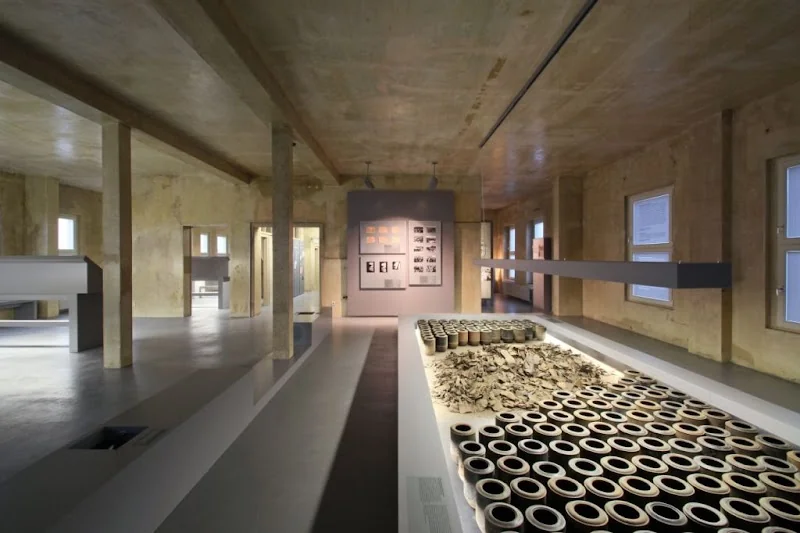
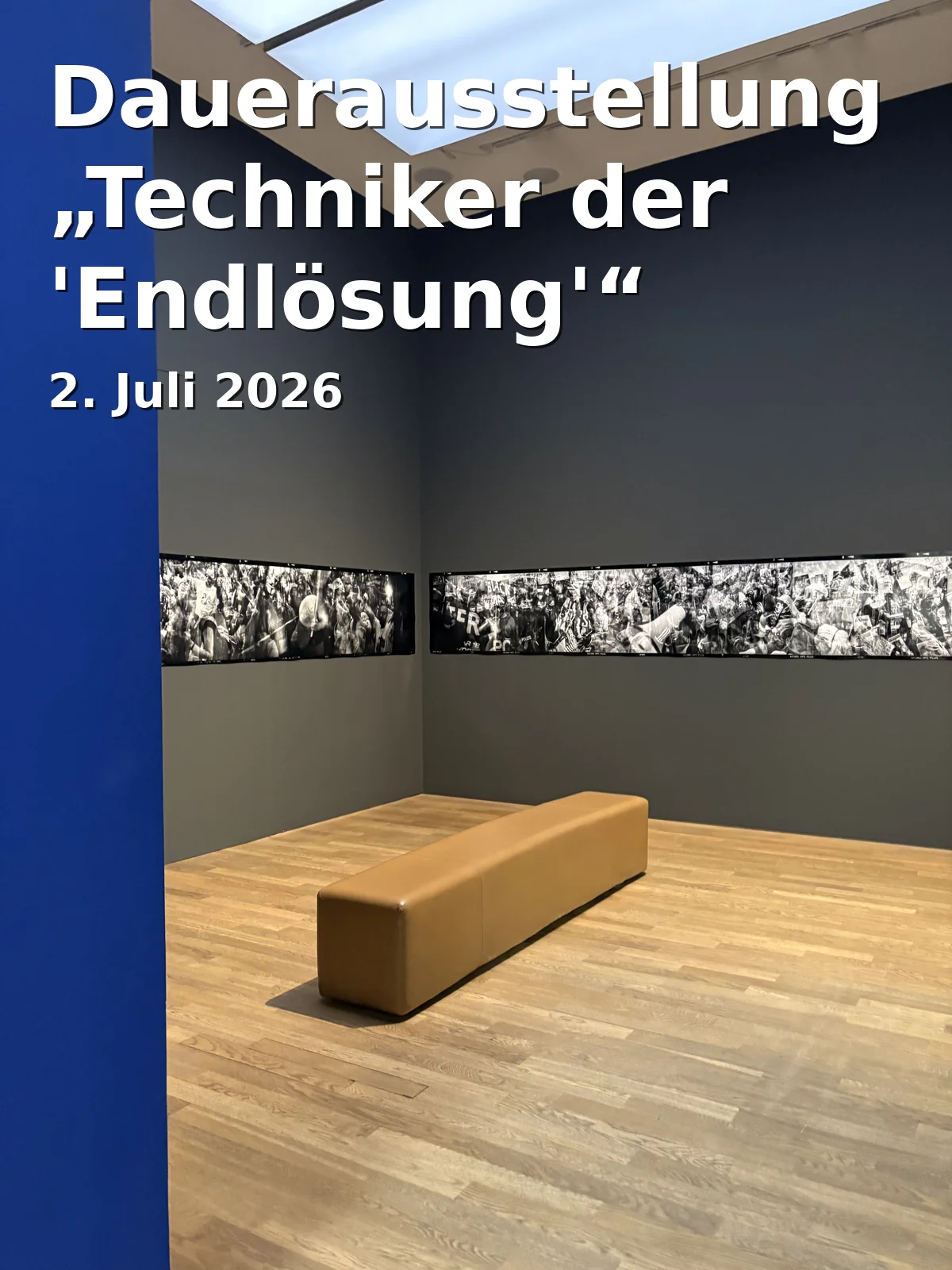
The most important exhibition in the building is titled “Technicians of the 'Final Solution'. Topf & Söhne – The Oven Builders of Auschwitz.” It documents, based on key documents, drawings, reports, and research findings, the company's involvement in the crimes of National Socialism. The official description emphasizes that reports from inmates show what was done to people in Auschwitz and that the post-history of denial, repression, impunity, and later remembrance is also documented. Thus, the exhibition becomes not only a historical inventory but also a confrontation with memory politics and responsibility after 1945. The renewed version in 2026 additionally includes a multimedia level with voices of survivors, making the communication even more immediate. ([topfundsoehne.de](https://www.topfundsoehne.de/ts/de/ausstellungen/dauerausstellungen/techniker_der_endloesung/index.html))
The memorial site also includes the outdoor area with the exhibition “In the Midst of Society. J. A. Topf & Söhne and the Holocaust.” There, information steles mark the history of the company and its production buildings, and large-format photos vividly depict the former industrial facility. The outdoor exhibition is therefore not merely an addition but part of the concept: It shows that the former overall site is no longer fully visible after demolition work, which is why the history must be made readable again through markings, images, and documents. Particularly impressive is the walkable model made of cast iron at a scale of about 1:50, which traces the operation in its extent from 1944/45. It stands in direct relation to the traces of the site and supports didactic concepts in a very illustrative way. ([topfundsoehne.de](https://www.topfundsoehne.de/ts/de/ausstellungen/dauerausstellungen/aussenausstellung/index.html))
The memory does not end here with the past of the company but connects with the question of how contemporary societies deal with history. The memorial site has further permanent exhibitions, including the virtually reconstructed Great Synagogue of Erfurt and the exhibition “Where Are You Taking Us?”. The website also points to changing special exhibitions, including a recent memorial for twenty Jews who collected facts and secured traces under the conditions of ghettos and camps. This makes it clear that the memorial site not only tells the history of a company but opens a larger framework of Jewish history, Holocaust research, and memory culture. Visitors thus experience a place that continuously develops scientifically while remaining clear in its fundamental attitude. ([topfundsoehne.de](https://www.topfundsoehne.de/ts/de/ausstellungen/dauerausstellungen/index.html?utm_source=openai))
Photos, Images, and Reviews of the Memorial Site
Many search queries relate to photos, images, and reviews, and this is easily understandable: A place of this kind wants to be not only understood before the visit but also visually contextualized. The official website fulfills this need with image material from the exhibition, the outdoor area, and the memorial work. In the media library, there are photos, videos, and documentaries that show the site from various perspectives. At the same time, visitor voices from previous years are also documented on the visitor pages. This is important because it provides an impression of how people experience the site: as quiet, intense, historically burdened, and at the same time very precisely didactic. So, those looking for reviews will find not just stars but a place that has been publicly contemplated for years. ([topfundsoehne.de](https://www.topfundsoehne.de/ts/de/ausstellungen/dauerausstellungen/techniker_der_endloesung/index.html))
The visual language of the memorial site is deliberately sober. There is no decorative event staging but documentary views, historical photographs, exhibition views, and views of the grounds. This fits the site's task, as it does not aim to impress like a leisure offering but to inform and provoke. Precisely for this reason, photos here are more than beautiful motifs: They are evidence, orientation aids, and carriers of memory. Those who look at pictures in advance already get an idea of the atmosphere that prevails on the site. The mix of historical administrative building, outdoor exhibition, and documentary elements makes the site visually very clear but emotionally demanding. For many visitors, this combination is precisely the reason why they search for photos before making their way to Sorbenweg. ([topfundsoehne.de](https://www.topfundsoehne.de/ts/de/ausstellungen/dauerausstellungen/aussenausstellung/index.html))
The press has also repeatedly covered the site. On the official pages, press reviews and current contributions are bundled, and the reopening of the renewed permanent exhibition at the beginning of 2026 was documented with speeches, reports, and media accompanying texts. This is helpful for assessing reviews because a memorial site does not only live from personal feelings but also from public debate and professional classification. Therefore, those visiting the site should not only look for the most beautiful photo but also for the context behind it. This is precisely what makes the quality of the documentation: It connects image, text, and historical sources into a complete picture that is neither sensational nor dry but concentrated and responsible. ([topfundsoehne.de](https://www.topfundsoehne.de/ts/de/ausstellungen/dauerausstellungen/techniker_der_endloesung/index.html))
Accessibility, Guided Tours, and Educational Offerings
Topf & Söhne is not only historically significant but also well-organized for accessibility. The visitor information mentions a barrier-free back of the building, a parking space for wheelchair users, paved paths, a ramp, an elevator, a mobile ramp, and a wheelchair-accessible restroom according to DIN on the ground floor. Assistance dogs are also welcome. The site is certified according to the “Travel for All” system, which signals nationally recognized standards for barrier-free offerings. Additional verified information is available for people with cognitive, motor, auditory, or visual impairments. This consistent orientation is not only practical but also content-appropriate: A memorial site that speaks about human dignity must be open to as many people as possible. ([topfundsoehne.de](https://www.topfundsoehne.de/ts/de/service/besucherservice/index.html))
In addition, there is a strong educational profile. The memorial site sees itself as a research-based learning place where exhibition work and scientific research are closely intertwined. The website states that the educational and mediation work is supported by a memorial educator and freelance guides who are intensively trained and further educated. For groups, there are guided tours, seminars, and multi-day educational offerings, and thematic events are also part of the program. Particularly impressive is that the site not only talks about perpetrator history but also documents encounters with survivors of the Holocaust and preserves their perspectives. This way, memory is not only archived but passed on to future generations. ([topfundsoehne.de](https://www.topfundsoehne.de/ts/de/bildung_forschung/index.html))
The thematic depth is also exceptional. The collection of the memorial site grows from objects, documents, photos, and eyewitness reports; it is based on sources from Thuringian, national, and international archives. This means for visitors that the site is not reduced to a single narrative but stands on a broad foundation of research and documentation. Especially those looking for a serious, factually grounded, and respectful engagement with the history of National Socialism will find here a very dense learning place. The combination of access, research, educational work, and memory makes Topf & Söhne one of the most important places of historical-political education in Thuringia and beyond. ([topfundsoehne.de](https://www.topfundsoehne.de/ts/de/bildung_forschung/sammlung/index.html?utm_source=openai))
Why a Visit is Worthwhile Today
A visit to the Memorial Site Topf & Söhne is worthwhile not because it would be easily consumable, but because it is carefully, historically precise, and humanly challenging. Those who enter the site quickly realize that nothing is designed for effect's sake. Everything serves the question of how a company was entangled in the crimes of National Socialism and how this history was repressed, discussed, and ultimately publicly processed after 1945. The location on the former company premises gives the visit a special weight but also a special clarity. You do not just see an exhibition but a place where history actually took place. This makes the visit valuable for adults as well as for teenagers, school classes, or students. ([erfurt.de](https://www.erfurt.de/ef/de/erleben/kunst/museen/128689.html))
Particularly strong is the connection of the original site, current research, and good visitor organization. You can enter for free, arrive barrier-free, rely on clear guidance, and choose between the permanent exhibition, outdoor area, and educational offerings. Additionally, current updates such as the 2026 renewed permanent exhibition with voices of survivors make the site even more immediate. So, those looking for photos, reviews, or practical data quickly get answers. However, those who stay discover a place that is much more than a search result: a quiet yet compelling piece of history that questions the present and makes responsibility not only explainable but also experienceable. ([topfundsoehne.de](https://www.topfundsoehne.de/ts/de/service/besucherservice/index.html))
For visitor planning, it is advisable to allow enough time, as the actual impact of the site arises from the slow reading of the exhibition rooms, from looking at the grounds, and from contemplating the documents. A quick visit is possible but falls short. Those who consciously engage with the site experience a learning space that is neither loud nor didactic but concentrated and respectful. This is precisely what makes the Memorial Site Topf & Söhne an important address in Erfurt: It not only preserves memory but organizes it for the present in such a way that knowledge can become responsibility. ([topfundsoehne.de](https://www.topfundsoehne.de/ts/de/ausstellungen/dauerausstellungen/techniker_der_endloesung/index.html))
Sources:
- Official Website of the Memorial Site Topf & Söhne – Visitor Service ([topfundsoehne.de](https://www.topfundsoehne.de/ts/de/service/besucherservice/index.html))
- Official Website of the Memorial Site Topf & Söhne – History of the Site ([topfundsoehne.de](https://www.topfundsoehne.de/ts/de/ort/chronik/index.html))
- City of Erfurt – Memorial Site Topf & Söhne ([erfurt.de](https://www.erfurt.de/ef/de/erleben/kunst/museen/128689.html))
- Official Website – Permanent Exhibition “Technicians of the 'Final Solution'” ([topfundsoehne.de](https://www.topfundsoehne.de/ts/de/ausstellungen/dauerausstellungen/techniker_der_endloesung/index.html))
- Official Website – Outdoor Exhibition “In the Midst of Society” ([topfundsoehne.de](https://www.topfundsoehne.de/ts/de/ausstellungen/dauerausstellungen/aussenausstellung/index.html))
- Official Website – Education and Research, Collection and Archives ([topfundsoehne.de](https://www.topfundsoehne.de/ts/de/bildung_forschung/index.html))
Show moreShow less
Memorial Site Topf & Söhne | Photos & Reviews
The Memorial Site Topf & Söhne in Erfurt is not a classic excursion destination, but a historical learning and memorial site that shows in a sober manner how closely industrial technology, commercial routine, and Nazi crimes were interconnected. On the former company premises of the Erfurt firm J. A. Topf & Söhne, the site commemorates the involvement of a private company in the Holocaust and the responsibility that arises from it to this day. Its special power lies precisely in this: Visitors do not encounter a museum-like representation of the past here, but an authentic place where history remains visible in the building, the grounds, and the documents themselves. The memorial site is operated by the state capital Erfurt as a history museum and is also a place for reflection, education, and discussion about work, technology, responsibility, and human dignity. ([erfurt.de](https://www.erfurt.de/ef/de/erleben/kunst/museen/128689.html))
The search queries around the name show that many people are primarily looking for photos, reviews, opening hours, location, and the historical background. Therefore, it is worthwhile to consider the site not only as a memorial but also as a well-developed visitor site with clear information. Topf & Söhne is freely accessible, has fixed opening hours, offers a barrier-free infrastructure, and provides extensive educational offerings. At the same time, the core content remains clear: The company supplied cremation ovens for concentration camps from 1939 to 1945 and contributed with ventilation technology for the gas chambers in Auschwitz-Birkenau to the industrial dimension of mass murder. The current memorial site makes exactly this history visible without glossing over it. ([erfurt.de](https://www.erfurt.de/ef/de/erleben/kunst/museen/128689.html))
History and Significance of the Memorial Site Topf & Söhne
The historical significance of the site can only be understood if one takes the history of the company J. A. Topf & Söhne seriously. The official chronicle documents that the company supplied cremation ovens specifically developed for concentration camps to the SS starting in 1939. In 1942, the company even submitted a patent application for a continuously operating cremation oven for mass operation, and in 1943, the large crematoria in the extermination camp Auschwitz-Birkenau were equipped with ovens and ventilation technology from Erfurt. The historical weight of these facts explains why the memorial site did not emerge as an abstract exhibition somewhere in the city but was deliberately established on the former administrative building and company premises. This is not about distance but about proximity: about the place of planning, construction, and administration. ([topfundsoehne.de](https://www.topfundsoehne.de/ts/de/ort/chronik/index.html))
Equally important is the history of the memorial site's establishment itself. As early as 2005, the international traveling exhibition “Technicians of the 'Final Solution'. Topf & Söhne – The Oven Builders of Auschwitz” was opened in Berlin; shortly thereafter, the city of Erfurt agreed to permanently show this exhibition in the former administrative building after its travels. In 2007, the city council unanimously decided to create a memorial site there, and in 2011 it was opened on January 27, the day of remembrance for the victims of National Socialism. This is more than a date: It shows that the city has consciously transformed the historical site into a public learning place. The memorial site is thus not merely a remembrance of the past but a deliberately set place for political and ethical education in the present. ([topfundsoehne.de](https://www.topfundsoehne.de/ts/de/ort/chronik/index.html))
Particularly noteworthy is the classification that the city and the memorial site itself make: It is a historical site where the complicity of the private economy in mass murder is documented at a former company headquarters. This formulation makes it clear why Topf & Söhne receives attention beyond Erfurt. The site is not a museum about a single building, but an exemplary place where the interconnection of industry, administration, and extermination apparatus can be demonstrated. The exhibition and research at the site make it visible that the participants did not only draw, construct, and deliver, but normalized their work in operational routines. Precisely for this reason, the memorial site is a lesson in responsibility in modern organizations, about professional ethics, and about the question of how technical competence can be abused. ([erfurt.de](https://www.erfurt.de/ef/de/erleben/kunst/museen/128689.html))
Opening Hours, Admission, and Visitor Services at Sorbenweg 7
The official service information is very clear for planning visits. The Memorial Site Topf & Söhne is closed on Mondays, but open from Tuesday to Sunday from 10 a.m. to 6 p.m.; this applies on public holidays as well. Admission is free, making the visit low-threshold and particularly attractive for school classes, families, individual visitors, and tour groups. For the Long Night of Museums on May 29, 2026, different times apply; on this day, the museums open only from 6 p.m. Additionally, due to educational use, there may be temporarily restricted opening hours for special exhibitions, which is why the official phone number is provided for inquiries. This practice shows: The site is not a static display but a lively educational space with changing requirements. ([topfundsoehne.de](https://www.topfundsoehne.de/ts/de/service/besucherservice/index.html))
Visitor services also include group registrations and specific contacts for guided tours, seminars, and projects. The official website provides its own forms for school classes and other groups. There is also a visitor regulation on the premises that consolidates rules and information for the stay. The memorial site is thus not only open but also consciously organized. It fits that the website, in addition to classic information, also mentions digital offerings such as an audio guide. For many people, this is important because such a place cannot be grasped in a few minutes but requires time and attention. Those who visit Topf & Söhne do not receive an event backdrop but a carefully curated, calm, and consciously structured engagement with history. ([erfurt-tourismus.de](https://www.erfurt-tourismus.de/sehenswertes/museen-und-ausstellungen/museen/topf-und-soehne/))
Remarkable is also the current development in 2026: The permanent exhibition was renewed and reopened after four months of closure. The official announcement emphasizes that the presentation is now more visitor-oriented, integrates new research findings, and additionally includes the multimedia installation “Voices of the Survivors” with reports from eight Auschwitz survivors. This shows that visitor services not only function organizationally but are also content-wise updated. So, those looking for current information will find here not just mere administration but a place where memory is continuously re-responsibilized and conveyed. This makes the visit still relevant and contemporary today. ([topfundsoehne.de](https://www.topfundsoehne.de/?utm_source=openai))
Directions, Public Transport, and Parking at the Memorial Site Topf & Söhne
Getting to the memorial site is relatively straightforward if you follow the official directions. The address is Sorbenweg 7, 99099 Erfurt. From Erfurt Central Station, the official visitor information recommends bus line 9 towards Daberstedt to the Spielbergtor stop; from there, you walk left along Nonnenrain and reach the site in about four minutes. Another option mentioned on the website is tram lines 3 and 4 to Robert-Koch-Straße, from where the walk takes about 15 minutes. The site is also reachable on foot from the main station in about 15 minutes. This precise route description is helpful as it facilitates orientation on the edge of the city center and makes the visit easy to plan without much effort. ([topfundsoehne.de](https://www.topfundsoehne.de/ts/de/service/besucherservice/index.html))
For those arriving by car, clear directions are also provided: The memorial site is located on the B7 towards Weimar. The visitor information also explicitly mentions that there are parking spaces available. Particularly important is the barrier-related detail that there is a parking space for wheelchair users at the back of the building. Access is possible without steps via paved paths and a ramp. For anyone unsure about the journey, this is a noticeable advantage, as the site remains well-structured despite its special location. Especially at a historical memorial site, a clear arrival situation is significant, as it prevents unnecessary hurdles and creates space for actual contemplation inside. ([topfundsoehne.de](https://www.topfundsoehne.de/ts/de/service/besucherservice/index.html))
The public transport connection is also remarkably good for a suburban location. The distance to public transport is indicated by Erfurt Tourism as 350 meters. This confirms the official route description and underscores that the site is deliberately located in a historically significant yet accessible place. This is an important advantage for school groups, visitors without cars, or people who prefer a quiet journey. The site is not in a tourist island location but embedded in the everyday life of the city. This is where a quiet strength of the site lies: Memory is not experienced off to the side but right in the urban space. Thus, the visit does not feel like an exception after the journey but like a conscious pause in the normal path through the city. ([erfurt-tourismus.de](https://www.erfurt-tourismus.de/sehenswertes/museen-und-ausstellungen/museen/topf-und-soehne/))
Permanent Exhibition, Outdoor Area, and Historical Particularities
The most important exhibition in the building is titled “Technicians of the 'Final Solution'. Topf & Söhne – The Oven Builders of Auschwitz.” It documents, based on key documents, drawings, reports, and research findings, the company's involvement in the crimes of National Socialism. The official description emphasizes that reports from inmates show what was done to people in Auschwitz and that the post-history of denial, repression, impunity, and later remembrance is also documented. Thus, the exhibition becomes not only a historical inventory but also a confrontation with memory politics and responsibility after 1945. The renewed version in 2026 additionally includes a multimedia level with voices of survivors, making the communication even more immediate. ([topfundsoehne.de](https://www.topfundsoehne.de/ts/de/ausstellungen/dauerausstellungen/techniker_der_endloesung/index.html))
The memorial site also includes the outdoor area with the exhibition “In the Midst of Society. J. A. Topf & Söhne and the Holocaust.” There, information steles mark the history of the company and its production buildings, and large-format photos vividly depict the former industrial facility. The outdoor exhibition is therefore not merely an addition but part of the concept: It shows that the former overall site is no longer fully visible after demolition work, which is why the history must be made readable again through markings, images, and documents. Particularly impressive is the walkable model made of cast iron at a scale of about 1:50, which traces the operation in its extent from 1944/45. It stands in direct relation to the traces of the site and supports didactic concepts in a very illustrative way. ([topfundsoehne.de](https://www.topfundsoehne.de/ts/de/ausstellungen/dauerausstellungen/aussenausstellung/index.html))
The memory does not end here with the past of the company but connects with the question of how contemporary societies deal with history. The memorial site has further permanent exhibitions, including the virtually reconstructed Great Synagogue of Erfurt and the exhibition “Where Are You Taking Us?”. The website also points to changing special exhibitions, including a recent memorial for twenty Jews who collected facts and secured traces under the conditions of ghettos and camps. This makes it clear that the memorial site not only tells the history of a company but opens a larger framework of Jewish history, Holocaust research, and memory culture. Visitors thus experience a place that continuously develops scientifically while remaining clear in its fundamental attitude. ([topfundsoehne.de](https://www.topfundsoehne.de/ts/de/ausstellungen/dauerausstellungen/index.html?utm_source=openai))
Photos, Images, and Reviews of the Memorial Site
Many search queries relate to photos, images, and reviews, and this is easily understandable: A place of this kind wants to be not only understood before the visit but also visually contextualized. The official website fulfills this need with image material from the exhibition, the outdoor area, and the memorial work. In the media library, there are photos, videos, and documentaries that show the site from various perspectives. At the same time, visitor voices from previous years are also documented on the visitor pages. This is important because it provides an impression of how people experience the site: as quiet, intense, historically burdened, and at the same time very precisely didactic. So, those looking for reviews will find not just stars but a place that has been publicly contemplated for years. ([topfundsoehne.de](https://www.topfundsoehne.de/ts/de/ausstellungen/dauerausstellungen/techniker_der_endloesung/index.html))
The visual language of the memorial site is deliberately sober. There is no decorative event staging but documentary views, historical photographs, exhibition views, and views of the grounds. This fits the site's task, as it does not aim to impress like a leisure offering but to inform and provoke. Precisely for this reason, photos here are more than beautiful motifs: They are evidence, orientation aids, and carriers of memory. Those who look at pictures in advance already get an idea of the atmosphere that prevails on the site. The mix of historical administrative building, outdoor exhibition, and documentary elements makes the site visually very clear but emotionally demanding. For many visitors, this combination is precisely the reason why they search for photos before making their way to Sorbenweg. ([topfundsoehne.de](https://www.topfundsoehne.de/ts/de/ausstellungen/dauerausstellungen/aussenausstellung/index.html))
The press has also repeatedly covered the site. On the official pages, press reviews and current contributions are bundled, and the reopening of the renewed permanent exhibition at the beginning of 2026 was documented with speeches, reports, and media accompanying texts. This is helpful for assessing reviews because a memorial site does not only live from personal feelings but also from public debate and professional classification. Therefore, those visiting the site should not only look for the most beautiful photo but also for the context behind it. This is precisely what makes the quality of the documentation: It connects image, text, and historical sources into a complete picture that is neither sensational nor dry but concentrated and responsible. ([topfundsoehne.de](https://www.topfundsoehne.de/ts/de/ausstellungen/dauerausstellungen/techniker_der_endloesung/index.html))
Accessibility, Guided Tours, and Educational Offerings
Topf & Söhne is not only historically significant but also well-organized for accessibility. The visitor information mentions a barrier-free back of the building, a parking space for wheelchair users, paved paths, a ramp, an elevator, a mobile ramp, and a wheelchair-accessible restroom according to DIN on the ground floor. Assistance dogs are also welcome. The site is certified according to the “Travel for All” system, which signals nationally recognized standards for barrier-free offerings. Additional verified information is available for people with cognitive, motor, auditory, or visual impairments. This consistent orientation is not only practical but also content-appropriate: A memorial site that speaks about human dignity must be open to as many people as possible. ([topfundsoehne.de](https://www.topfundsoehne.de/ts/de/service/besucherservice/index.html))
In addition, there is a strong educational profile. The memorial site sees itself as a research-based learning place where exhibition work and scientific research are closely intertwined. The website states that the educational and mediation work is supported by a memorial educator and freelance guides who are intensively trained and further educated. For groups, there are guided tours, seminars, and multi-day educational offerings, and thematic events are also part of the program. Particularly impressive is that the site not only talks about perpetrator history but also documents encounters with survivors of the Holocaust and preserves their perspectives. This way, memory is not only archived but passed on to future generations. ([topfundsoehne.de](https://www.topfundsoehne.de/ts/de/bildung_forschung/index.html))
The thematic depth is also exceptional. The collection of the memorial site grows from objects, documents, photos, and eyewitness reports; it is based on sources from Thuringian, national, and international archives. This means for visitors that the site is not reduced to a single narrative but stands on a broad foundation of research and documentation. Especially those looking for a serious, factually grounded, and respectful engagement with the history of National Socialism will find here a very dense learning place. The combination of access, research, educational work, and memory makes Topf & Söhne one of the most important places of historical-political education in Thuringia and beyond. ([topfundsoehne.de](https://www.topfundsoehne.de/ts/de/bildung_forschung/sammlung/index.html?utm_source=openai))
Why a Visit is Worthwhile Today
A visit to the Memorial Site Topf & Söhne is worthwhile not because it would be easily consumable, but because it is carefully, historically precise, and humanly challenging. Those who enter the site quickly realize that nothing is designed for effect's sake. Everything serves the question of how a company was entangled in the crimes of National Socialism and how this history was repressed, discussed, and ultimately publicly processed after 1945. The location on the former company premises gives the visit a special weight but also a special clarity. You do not just see an exhibition but a place where history actually took place. This makes the visit valuable for adults as well as for teenagers, school classes, or students. ([erfurt.de](https://www.erfurt.de/ef/de/erleben/kunst/museen/128689.html))
Particularly strong is the connection of the original site, current research, and good visitor organization. You can enter for free, arrive barrier-free, rely on clear guidance, and choose between the permanent exhibition, outdoor area, and educational offerings. Additionally, current updates such as the 2026 renewed permanent exhibition with voices of survivors make the site even more immediate. So, those looking for photos, reviews, or practical data quickly get answers. However, those who stay discover a place that is much more than a search result: a quiet yet compelling piece of history that questions the present and makes responsibility not only explainable but also experienceable. ([topfundsoehne.de](https://www.topfundsoehne.de/ts/de/service/besucherservice/index.html))
For visitor planning, it is advisable to allow enough time, as the actual impact of the site arises from the slow reading of the exhibition rooms, from looking at the grounds, and from contemplating the documents. A quick visit is possible but falls short. Those who consciously engage with the site experience a learning space that is neither loud nor didactic but concentrated and respectful. This is precisely what makes the Memorial Site Topf & Söhne an important address in Erfurt: It not only preserves memory but organizes it for the present in such a way that knowledge can become responsibility. ([topfundsoehne.de](https://www.topfundsoehne.de/ts/de/ausstellungen/dauerausstellungen/techniker_der_endloesung/index.html))
Sources:
- Official Website of the Memorial Site Topf & Söhne – Visitor Service ([topfundsoehne.de](https://www.topfundsoehne.de/ts/de/service/besucherservice/index.html))
- Official Website of the Memorial Site Topf & Söhne – History of the Site ([topfundsoehne.de](https://www.topfundsoehne.de/ts/de/ort/chronik/index.html))
- City of Erfurt – Memorial Site Topf & Söhne ([erfurt.de](https://www.erfurt.de/ef/de/erleben/kunst/museen/128689.html))
- Official Website – Permanent Exhibition “Technicians of the 'Final Solution'” ([topfundsoehne.de](https://www.topfundsoehne.de/ts/de/ausstellungen/dauerausstellungen/techniker_der_endloesung/index.html))
- Official Website – Outdoor Exhibition “In the Midst of Society” ([topfundsoehne.de](https://www.topfundsoehne.de/ts/de/ausstellungen/dauerausstellungen/aussenausstellung/index.html))
- Official Website – Education and Research, Collection and Archives ([topfundsoehne.de](https://www.topfundsoehne.de/ts/de/bildung_forschung/index.html))
Memorial Site Topf & Söhne | Photos & Reviews
The Memorial Site Topf & Söhne in Erfurt is not a classic excursion destination, but a historical learning and memorial site that shows in a sober manner how closely industrial technology, commercial routine, and Nazi crimes were interconnected. On the former company premises of the Erfurt firm J. A. Topf & Söhne, the site commemorates the involvement of a private company in the Holocaust and the responsibility that arises from it to this day. Its special power lies precisely in this: Visitors do not encounter a museum-like representation of the past here, but an authentic place where history remains visible in the building, the grounds, and the documents themselves. The memorial site is operated by the state capital Erfurt as a history museum and is also a place for reflection, education, and discussion about work, technology, responsibility, and human dignity. ([erfurt.de](https://www.erfurt.de/ef/de/erleben/kunst/museen/128689.html))
The search queries around the name show that many people are primarily looking for photos, reviews, opening hours, location, and the historical background. Therefore, it is worthwhile to consider the site not only as a memorial but also as a well-developed visitor site with clear information. Topf & Söhne is freely accessible, has fixed opening hours, offers a barrier-free infrastructure, and provides extensive educational offerings. At the same time, the core content remains clear: The company supplied cremation ovens for concentration camps from 1939 to 1945 and contributed with ventilation technology for the gas chambers in Auschwitz-Birkenau to the industrial dimension of mass murder. The current memorial site makes exactly this history visible without glossing over it. ([erfurt.de](https://www.erfurt.de/ef/de/erleben/kunst/museen/128689.html))
History and Significance of the Memorial Site Topf & Söhne
The historical significance of the site can only be understood if one takes the history of the company J. A. Topf & Söhne seriously. The official chronicle documents that the company supplied cremation ovens specifically developed for concentration camps to the SS starting in 1939. In 1942, the company even submitted a patent application for a continuously operating cremation oven for mass operation, and in 1943, the large crematoria in the extermination camp Auschwitz-Birkenau were equipped with ovens and ventilation technology from Erfurt. The historical weight of these facts explains why the memorial site did not emerge as an abstract exhibition somewhere in the city but was deliberately established on the former administrative building and company premises. This is not about distance but about proximity: about the place of planning, construction, and administration. ([topfundsoehne.de](https://www.topfundsoehne.de/ts/de/ort/chronik/index.html))
Equally important is the history of the memorial site's establishment itself. As early as 2005, the international traveling exhibition “Technicians of the 'Final Solution'. Topf & Söhne – The Oven Builders of Auschwitz” was opened in Berlin; shortly thereafter, the city of Erfurt agreed to permanently show this exhibition in the former administrative building after its travels. In 2007, the city council unanimously decided to create a memorial site there, and in 2011 it was opened on January 27, the day of remembrance for the victims of National Socialism. This is more than a date: It shows that the city has consciously transformed the historical site into a public learning place. The memorial site is thus not merely a remembrance of the past but a deliberately set place for political and ethical education in the present. ([topfundsoehne.de](https://www.topfundsoehne.de/ts/de/ort/chronik/index.html))
Particularly noteworthy is the classification that the city and the memorial site itself make: It is a historical site where the complicity of the private economy in mass murder is documented at a former company headquarters. This formulation makes it clear why Topf & Söhne receives attention beyond Erfurt. The site is not a museum about a single building, but an exemplary place where the interconnection of industry, administration, and extermination apparatus can be demonstrated. The exhibition and research at the site make it visible that the participants did not only draw, construct, and deliver, but normalized their work in operational routines. Precisely for this reason, the memorial site is a lesson in responsibility in modern organizations, about professional ethics, and about the question of how technical competence can be abused. ([erfurt.de](https://www.erfurt.de/ef/de/erleben/kunst/museen/128689.html))
Opening Hours, Admission, and Visitor Services at Sorbenweg 7
The official service information is very clear for planning visits. The Memorial Site Topf & Söhne is closed on Mondays, but open from Tuesday to Sunday from 10 a.m. to 6 p.m.; this applies on public holidays as well. Admission is free, making the visit low-threshold and particularly attractive for school classes, families, individual visitors, and tour groups. For the Long Night of Museums on May 29, 2026, different times apply; on this day, the museums open only from 6 p.m. Additionally, due to educational use, there may be temporarily restricted opening hours for special exhibitions, which is why the official phone number is provided for inquiries. This practice shows: The site is not a static display but a lively educational space with changing requirements. ([topfundsoehne.de](https://www.topfundsoehne.de/ts/de/service/besucherservice/index.html))
Visitor services also include group registrations and specific contacts for guided tours, seminars, and projects. The official website provides its own forms for school classes and other groups. There is also a visitor regulation on the premises that consolidates rules and information for the stay. The memorial site is thus not only open but also consciously organized. It fits that the website, in addition to classic information, also mentions digital offerings such as an audio guide. For many people, this is important because such a place cannot be grasped in a few minutes but requires time and attention. Those who visit Topf & Söhne do not receive an event backdrop but a carefully curated, calm, and consciously structured engagement with history. ([erfurt-tourismus.de](https://www.erfurt-tourismus.de/sehenswertes/museen-und-ausstellungen/museen/topf-und-soehne/))
Remarkable is also the current development in 2026: The permanent exhibition was renewed and reopened after four months of closure. The official announcement emphasizes that the presentation is now more visitor-oriented, integrates new research findings, and additionally includes the multimedia installation “Voices of the Survivors” with reports from eight Auschwitz survivors. This shows that visitor services not only function organizationally but are also content-wise updated. So, those looking for current information will find here not just mere administration but a place where memory is continuously re-responsibilized and conveyed. This makes the visit still relevant and contemporary today. ([topfundsoehne.de](https://www.topfundsoehne.de/?utm_source=openai))
Directions, Public Transport, and Parking at the Memorial Site Topf & Söhne
Getting to the memorial site is relatively straightforward if you follow the official directions. The address is Sorbenweg 7, 99099 Erfurt. From Erfurt Central Station, the official visitor information recommends bus line 9 towards Daberstedt to the Spielbergtor stop; from there, you walk left along Nonnenrain and reach the site in about four minutes. Another option mentioned on the website is tram lines 3 and 4 to Robert-Koch-Straße, from where the walk takes about 15 minutes. The site is also reachable on foot from the main station in about 15 minutes. This precise route description is helpful as it facilitates orientation on the edge of the city center and makes the visit easy to plan without much effort. ([topfundsoehne.de](https://www.topfundsoehne.de/ts/de/service/besucherservice/index.html))
For those arriving by car, clear directions are also provided: The memorial site is located on the B7 towards Weimar. The visitor information also explicitly mentions that there are parking spaces available. Particularly important is the barrier-related detail that there is a parking space for wheelchair users at the back of the building. Access is possible without steps via paved paths and a ramp. For anyone unsure about the journey, this is a noticeable advantage, as the site remains well-structured despite its special location. Especially at a historical memorial site, a clear arrival situation is significant, as it prevents unnecessary hurdles and creates space for actual contemplation inside. ([topfundsoehne.de](https://www.topfundsoehne.de/ts/de/service/besucherservice/index.html))
The public transport connection is also remarkably good for a suburban location. The distance to public transport is indicated by Erfurt Tourism as 350 meters. This confirms the official route description and underscores that the site is deliberately located in a historically significant yet accessible place. This is an important advantage for school groups, visitors without cars, or people who prefer a quiet journey. The site is not in a tourist island location but embedded in the everyday life of the city. This is where a quiet strength of the site lies: Memory is not experienced off to the side but right in the urban space. Thus, the visit does not feel like an exception after the journey but like a conscious pause in the normal path through the city. ([erfurt-tourismus.de](https://www.erfurt-tourismus.de/sehenswertes/museen-und-ausstellungen/museen/topf-und-soehne/))
Permanent Exhibition, Outdoor Area, and Historical Particularities
The most important exhibition in the building is titled “Technicians of the 'Final Solution'. Topf & Söhne – The Oven Builders of Auschwitz.” It documents, based on key documents, drawings, reports, and research findings, the company's involvement in the crimes of National Socialism. The official description emphasizes that reports from inmates show what was done to people in Auschwitz and that the post-history of denial, repression, impunity, and later remembrance is also documented. Thus, the exhibition becomes not only a historical inventory but also a confrontation with memory politics and responsibility after 1945. The renewed version in 2026 additionally includes a multimedia level with voices of survivors, making the communication even more immediate. ([topfundsoehne.de](https://www.topfundsoehne.de/ts/de/ausstellungen/dauerausstellungen/techniker_der_endloesung/index.html))
The memorial site also includes the outdoor area with the exhibition “In the Midst of Society. J. A. Topf & Söhne and the Holocaust.” There, information steles mark the history of the company and its production buildings, and large-format photos vividly depict the former industrial facility. The outdoor exhibition is therefore not merely an addition but part of the concept: It shows that the former overall site is no longer fully visible after demolition work, which is why the history must be made readable again through markings, images, and documents. Particularly impressive is the walkable model made of cast iron at a scale of about 1:50, which traces the operation in its extent from 1944/45. It stands in direct relation to the traces of the site and supports didactic concepts in a very illustrative way. ([topfundsoehne.de](https://www.topfundsoehne.de/ts/de/ausstellungen/dauerausstellungen/aussenausstellung/index.html))
The memory does not end here with the past of the company but connects with the question of how contemporary societies deal with history. The memorial site has further permanent exhibitions, including the virtually reconstructed Great Synagogue of Erfurt and the exhibition “Where Are You Taking Us?”. The website also points to changing special exhibitions, including a recent memorial for twenty Jews who collected facts and secured traces under the conditions of ghettos and camps. This makes it clear that the memorial site not only tells the history of a company but opens a larger framework of Jewish history, Holocaust research, and memory culture. Visitors thus experience a place that continuously develops scientifically while remaining clear in its fundamental attitude. ([topfundsoehne.de](https://www.topfundsoehne.de/ts/de/ausstellungen/dauerausstellungen/index.html?utm_source=openai))
Photos, Images, and Reviews of the Memorial Site
Many search queries relate to photos, images, and reviews, and this is easily understandable: A place of this kind wants to be not only understood before the visit but also visually contextualized. The official website fulfills this need with image material from the exhibition, the outdoor area, and the memorial work. In the media library, there are photos, videos, and documentaries that show the site from various perspectives. At the same time, visitor voices from previous years are also documented on the visitor pages. This is important because it provides an impression of how people experience the site: as quiet, intense, historically burdened, and at the same time very precisely didactic. So, those looking for reviews will find not just stars but a place that has been publicly contemplated for years. ([topfundsoehne.de](https://www.topfundsoehne.de/ts/de/ausstellungen/dauerausstellungen/techniker_der_endloesung/index.html))
The visual language of the memorial site is deliberately sober. There is no decorative event staging but documentary views, historical photographs, exhibition views, and views of the grounds. This fits the site's task, as it does not aim to impress like a leisure offering but to inform and provoke. Precisely for this reason, photos here are more than beautiful motifs: They are evidence, orientation aids, and carriers of memory. Those who look at pictures in advance already get an idea of the atmosphere that prevails on the site. The mix of historical administrative building, outdoor exhibition, and documentary elements makes the site visually very clear but emotionally demanding. For many visitors, this combination is precisely the reason why they search for photos before making their way to Sorbenweg. ([topfundsoehne.de](https://www.topfundsoehne.de/ts/de/ausstellungen/dauerausstellungen/aussenausstellung/index.html))
The press has also repeatedly covered the site. On the official pages, press reviews and current contributions are bundled, and the reopening of the renewed permanent exhibition at the beginning of 2026 was documented with speeches, reports, and media accompanying texts. This is helpful for assessing reviews because a memorial site does not only live from personal feelings but also from public debate and professional classification. Therefore, those visiting the site should not only look for the most beautiful photo but also for the context behind it. This is precisely what makes the quality of the documentation: It connects image, text, and historical sources into a complete picture that is neither sensational nor dry but concentrated and responsible. ([topfundsoehne.de](https://www.topfundsoehne.de/ts/de/ausstellungen/dauerausstellungen/techniker_der_endloesung/index.html))
Accessibility, Guided Tours, and Educational Offerings
Topf & Söhne is not only historically significant but also well-organized for accessibility. The visitor information mentions a barrier-free back of the building, a parking space for wheelchair users, paved paths, a ramp, an elevator, a mobile ramp, and a wheelchair-accessible restroom according to DIN on the ground floor. Assistance dogs are also welcome. The site is certified according to the “Travel for All” system, which signals nationally recognized standards for barrier-free offerings. Additional verified information is available for people with cognitive, motor, auditory, or visual impairments. This consistent orientation is not only practical but also content-appropriate: A memorial site that speaks about human dignity must be open to as many people as possible. ([topfundsoehne.de](https://www.topfundsoehne.de/ts/de/service/besucherservice/index.html))
In addition, there is a strong educational profile. The memorial site sees itself as a research-based learning place where exhibition work and scientific research are closely intertwined. The website states that the educational and mediation work is supported by a memorial educator and freelance guides who are intensively trained and further educated. For groups, there are guided tours, seminars, and multi-day educational offerings, and thematic events are also part of the program. Particularly impressive is that the site not only talks about perpetrator history but also documents encounters with survivors of the Holocaust and preserves their perspectives. This way, memory is not only archived but passed on to future generations. ([topfundsoehne.de](https://www.topfundsoehne.de/ts/de/bildung_forschung/index.html))
The thematic depth is also exceptional. The collection of the memorial site grows from objects, documents, photos, and eyewitness reports; it is based on sources from Thuringian, national, and international archives. This means for visitors that the site is not reduced to a single narrative but stands on a broad foundation of research and documentation. Especially those looking for a serious, factually grounded, and respectful engagement with the history of National Socialism will find here a very dense learning place. The combination of access, research, educational work, and memory makes Topf & Söhne one of the most important places of historical-political education in Thuringia and beyond. ([topfundsoehne.de](https://www.topfundsoehne.de/ts/de/bildung_forschung/sammlung/index.html?utm_source=openai))
Why a Visit is Worthwhile Today
A visit to the Memorial Site Topf & Söhne is worthwhile not because it would be easily consumable, but because it is carefully, historically precise, and humanly challenging. Those who enter the site quickly realize that nothing is designed for effect's sake. Everything serves the question of how a company was entangled in the crimes of National Socialism and how this history was repressed, discussed, and ultimately publicly processed after 1945. The location on the former company premises gives the visit a special weight but also a special clarity. You do not just see an exhibition but a place where history actually took place. This makes the visit valuable for adults as well as for teenagers, school classes, or students. ([erfurt.de](https://www.erfurt.de/ef/de/erleben/kunst/museen/128689.html))
Particularly strong is the connection of the original site, current research, and good visitor organization. You can enter for free, arrive barrier-free, rely on clear guidance, and choose between the permanent exhibition, outdoor area, and educational offerings. Additionally, current updates such as the 2026 renewed permanent exhibition with voices of survivors make the site even more immediate. So, those looking for photos, reviews, or practical data quickly get answers. However, those who stay discover a place that is much more than a search result: a quiet yet compelling piece of history that questions the present and makes responsibility not only explainable but also experienceable. ([topfundsoehne.de](https://www.topfundsoehne.de/ts/de/service/besucherservice/index.html))
For visitor planning, it is advisable to allow enough time, as the actual impact of the site arises from the slow reading of the exhibition rooms, from looking at the grounds, and from contemplating the documents. A quick visit is possible but falls short. Those who consciously engage with the site experience a learning space that is neither loud nor didactic but concentrated and respectful. This is precisely what makes the Memorial Site Topf & Söhne an important address in Erfurt: It not only preserves memory but organizes it for the present in such a way that knowledge can become responsibility. ([topfundsoehne.de](https://www.topfundsoehne.de/ts/de/ausstellungen/dauerausstellungen/techniker_der_endloesung/index.html))
Sources:
- Official Website of the Memorial Site Topf & Söhne – Visitor Service ([topfundsoehne.de](https://www.topfundsoehne.de/ts/de/service/besucherservice/index.html))
- Official Website of the Memorial Site Topf & Söhne – History of the Site ([topfundsoehne.de](https://www.topfundsoehne.de/ts/de/ort/chronik/index.html))
- City of Erfurt – Memorial Site Topf & Söhne ([erfurt.de](https://www.erfurt.de/ef/de/erleben/kunst/museen/128689.html))
- Official Website – Permanent Exhibition “Technicians of the 'Final Solution'” ([topfundsoehne.de](https://www.topfundsoehne.de/ts/de/ausstellungen/dauerausstellungen/techniker_der_endloesung/index.html))
- Official Website – Outdoor Exhibition “In the Midst of Society” ([topfundsoehne.de](https://www.topfundsoehne.de/ts/de/ausstellungen/dauerausstellungen/aussenausstellung/index.html))
- Official Website – Education and Research, Collection and Archives ([topfundsoehne.de](https://www.topfundsoehne.de/ts/de/bildung_forschung/index.html))
Frequently Asked Questions
Reviews
R. Witteveen
31. December 2023
Very impressive museum. Definitely not a 'fun' visit, but you will leave lost for words. Don't expect a lot of artifacts, but there's plenty to see and read. Most texts are also in English, but unfortunately the temporary exhibitions are German only. Free entrance.
Bjørn
11. September 2024
Feels difficult to say I "liked" the place as it tells a horrible story. That aside it's an important site to visit and the exhibitions are good and educational.
Stass Basankovich
20. January 2024
Informative museum about WW2.
Paulina Fuentes
27. December 2020
A good memorial to visit, the main exhibition is in German and English, the temporary ones (at least the ones I saw) only in German. Staff is very kind. It was a really heart touching and moving experience that makes you connect with your most humanitarian feelings.
Radu Pastiu
11. January 2026
Quite an experience. It definitely leaves a mark.