
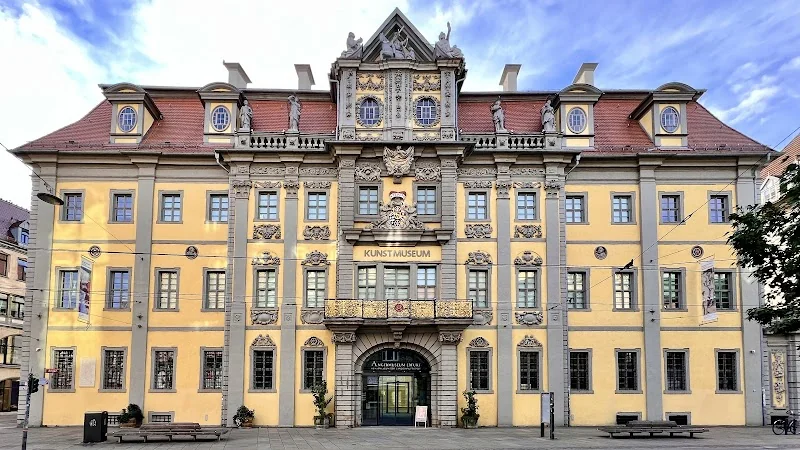
Anger 18, Erfurt-Altstadt
Anger 18, 99084 Erfurt, Germany
Angermuseum Erfurt | Opening Hours & Exhibitions
The Angermuseum Erfurt is one of the most distinctive art museums in Thuringia, connecting the baroque city palace on Anger with a collection that ranges from medieval art to drawings and graphics, as well as modern and contemporary positions. Visitors to the museum not only experience changing exhibitions but also a place where Erfurt's art history, urban identity, and museum communication closely intertwine. The current collection presentation “Goldlack and Cacti” showcases art from 1700 to the present, while other projects like the participatory Graphic Lab and an extensive Eva Bruszis exhibition already open the view towards 2026. This blend of tradition and reinvention makes the Angermuseum attractive for art enthusiasts, families, strollers, and spontaneous visitors alike. ([kunstmuseen.erfurt.de](https://kunstmuseen.erfurt.de/angermuseum))
Opening Hours, Admission Prices, and Services at Angermuseum Erfurt
For planning a visit, the visitor information of the Angermuseum is particularly clear: The museum opens Tuesday to Sunday from 10 AM to 6 PM and is also accessible on public holidays. This makes it suitable for both a longer cultural stroll on weekends and a targeted museum visit during the week. Admission is consciously kept low at 6.00 euros for adults and 4.00 euros reduced, and those looking for a particularly inexpensive date should mark the first Tuesday of the month on their calendar, as the municipal museums are open free of charge then. The service is also transparent for groups: For registered guided tours, the fees are 40.00 euros for up to 60 minutes and 60.00 euros for up to 90 minutes, each plus admission. The combination of reliable opening hours, fair prices, and a central location makes the Angermuseum a very planable destination for individual visitors, school classes, travel groups, and art lovers who wish to organize their stay in Erfurt flexibly. The address Anger 18 is located in the heart of the old town, making it ideal for combining with further city sightseeing. ([kunstmuseen.erfurt.de](https://kunstmuseen.erfurt.de/angermuseum))
The content-related visitor structure also speaks for a varied stay. For example, those searching for the keyword “angermuseum erfurt opening hours” often want to know not only the pure times but also the best visiting logic: in the morning, the museum is usually pleasantly quiet, in the afternoon, changing guided tours and mediation formats enliven the visit, and on free days, collections and special exhibitions can be experienced without time pressure. The museum is not just a bad weather destination but an urban cultural house that can be well combined with a stroll through the pedestrian zone or a coffee in the vicinity. For many guests, this good accessibility is a practical advantage, as the Angermuseum is not secluded on the outskirts but located in the historical center of Erfurt. The visitor information also provides a clear infrastructure for different needs, allowing one to get an idea of access, orientation, and support in advance. So, anyone planning a culture-rich day in Erfurt has a reliable focal point in the Angermuseum, making both spontaneous visits and structured tours possible. ([kunstmuseen.erfurt.de](https://kunstmuseen.erfurt.de/km/de/service/besucher_service/index.html))
Current Exhibitions: Goldlack and Cacti, Graphic Lab, and Eva Bruszis
The Angermuseum is particularly exciting for current exhibitions in 2026, as the museum does not commit to a single blockbuster title but dynamically develops its collection. The collection presentation “Goldlack and Cacti. Breakthroughs, Upheavals, and Art in Erfurt. Collection presentation from 1700 to the present” has been running since September 14, 2025, and is designed as a long-term presentation until December 31, 2030. It replaces the former painting gallery on the first floor and significantly broadens the perspective: alongside paintings, sculptures, graphics, and applied arts objects are interconnected, allowing various materials, techniques, and forms of expression to enter a shared narrative space. The presentation includes nine thematic areas and works by 110 artists from three centuries. This makes it interesting not only for museum fans but also for visitors who wish to trace Erfurt's cultural development over longer periods. At the same time, the title refers to Otto Schön's painting “Goldlack mit Kakteen,” thereby consciously making the connection between the art historical canon and local pictorial history visible. ([kunstmuseen.erfurt.de](https://kunstmuseen.erfurt.de/km/de/service/aktuelles/ausstellungen/2025/152168.html?utm_source=openai))
The outlook for 2026 shows how consistently the Angermuseum continues its own profiling. From May 17, 2026, the participatory Graphic Lab will open, which aims to scientifically explore, digitize, and publicly communicate the significant graphic collection of Friedrich Nerly. This will create a space where visitors, as well as school and student groups, can gain insights behind the scenes of museum work. Restorers and the museum photographer will also work on-site, ensuring that the mediation approach remains concrete, allowing direct insights into documentation, preservation, and research. Additionally, from August 23, 2026, the first extensive museum exhibition on Eva Bruszis will follow, titled “Just Be Brave! Eva Bruszis – Paths and Worlds in Graphics,” showcasing her printmaking work. Therefore, those searching for “angermuseum erfurt current exhibition” or “angermuseum erfurt events” will find not just a single show but a vibrant exhibition program with a clear chronological structure. The Angermuseum thus remains a place where collection, research, and present do not stand side by side but interconnect. ([kunstmuseen.erfurt.de](https://kunstmuseen.erfurt.de/km/de/service/aktuelles/meldungen/2025/ef_153197.html))
History of the Angermuseum and Baroque Architecture at Anger
The architectural origin of the Angermuseum shapes its character to this day. The building originated as a former Kurmainz packing and weighing house from the early 18th century; the baroque structure with its richly decorated façade is among the most beautiful buildings in Erfurt's old town and is also described by the Erfurt tourism site as one of the most attractive secular buildings of the Baroque period in Central Germany. This architectural quality is not just a backdrop for the art but an essential part of the experience: The path through the museum leads through rooms that breathe history themselves and tell the transition between urban representation, administration, and cultural use. In 1886, after the donation of the artistic estate of Friedrich Nerly by his son, a painting gallery was initially opened here. Over time, this early collection developed into a culturally complex structure that later also promoted the establishment of the city museum, the Thuringian museum of folklore, and the natural history museum. Thus, visiting the Angermuseum means not only entering an art house but also the origin of an entire museum network in Erfurt. ([kunstmuseen.erfurt.de](https://kunstmuseen.erfurt.de/angermuseum))
This historically grown structure explains why the Angermuseum today appeals to so many different target groups. The house did not emerge as a static depot but from a vibrant collection tradition that has been reinterpreted repeatedly since the 19th century. The baroque city palace at Anger provides the suitable framework, as it is both representative and central. It is evident that art is not presented in a neutral white cube here but in rooms that carry history themselves. This enhances the impression of continuity: medieval panels, graphic sheets, expressionist murals, and contemporary collection presentations encounter each other in an architectural framework that was already designed for public and urban significance from its inception. For SEO interests around “angermuseum erfurt history” or “angermuseum erfurt exhibition,” this is the core: The museum is historically rooted but never museumically frozen. It connects founding myths, collection heritage, and current mediation in a single place. ([kunstmuseen.erfurt.de](https://kunstmuseen.erfurt.de/angermuseum))
Middle Ages and Early Modern Period: the Artistically Most Significant Department
The artistically most significant department of the Angermuseum is, according to the museum's website, the collection of medieval art. Here lie the true treasures of the house: works from the heyday of Erfurt's art development in the second half of the 14th century, the four panels of the Augustinian altar, sandstone sculptures from the workshop of the Master of the Severisarkophag, and the Hirschmadonna, along with works of the Soft Style, sandstone Madonnas, and panel paintings from Erfurt churches. This is not a random assembly but a concentrated overview of the religious imagery of a city that was much more than a regional place in the Middle Ages. Additionally, the Angermuseum, as a historical gem, also preserves the medieval furnishings of the old town hall, including life-sized set shields with city coats of arms and round images with sayings, monthly representations, prophets, and evangelists. Such objects make the social and political dimension of art visible: It is not only about aesthetics but about civic self-awareness, liturgical practice, and symbolic order. ([kunstmuseen.erfurt.de](https://kunstmuseen.erfurt.de/km/de/angermuseum/sammlungen/mittelalter/index.html))
Even for visitors searching for “angermuseum erfurt heisig” or other more modern keywords, looking back at the early collections is worthwhile because the museum always explains its modernity from a historical foundation. In the medieval department, at the end of the Middle Ages, works from the Cranach period are displayed, including the painting of the creation story attributed to Hans Baldung-Grien. Particularly impressive is how the museum explains the Protestant imagery, for example, at the motif of the Man of Sorrows, which emerged in numerous variants in the Cranach workshop around 1530. This also helps visitors without an art historical background to not only see the works but understand them. The department is thus much more than a chronicle of old objects: it shows how religious, urban, and artistic developments converged in Erfurt and which imagery continued to resonate into the Reformation period. Anyone wishing to understand the Angermuseum as the art museum of the state capital should start right here, as the medieval collection forms the foundation upon which all later presentations build. ([kunstmuseen.erfurt.de](https://kunstmuseen.erfurt.de/km/de/angermuseum/sammlungen/mittelalter/index.html))
Graphic Collection, Collection Breadth, and the Heckel Room
The graphic collection is the most extensive collection of the Angermuseum, with more than 30,000 works. Its focus is on hand drawings and printmaking works from the 19th and 20th centuries, as well as contemporary visual arts. At the same time, it reflects the collection history of the house very accurately: since its opening in 1886, Erfurt has focused on German art between Romanticism and Expressionism, from 1949 to 1990 on art in the GDR, and since the beginning of the 21st century, the view has increasingly opened up to artistic photography. The collection is particularly strong in works by Friedrich Nerly, whose estate founded the museum. More than 700 watercolors and drawings, almost exclusively created in Italy, still form the most important body of work of an artist in the Angermuseum. This is complemented by topographical collections related to Erfurt and Thuringia, as well as the large donation from Rudolf and Ilse Franke with 14,000 works, which came to the museum in 2004 as one of the largest private collections in the GDR. This results in a profile that connects local art history, East Germany, and international perspectives. ([kunstmuseen.erfurt.de](https://kunstmuseen.erfurt.de/km/de/angermuseum/sammlungen/grafische_sammlung/index.html))
Particularly influential for the perception of the house is also the Heckel Room. The Angermuseum houses the only preserved murals by the Brücke expressionist Erich Heckel, which he created between 1922 and 1924. The works are executed in secco technique and are still endangered today, making restoration and technical preservation a permanent task. An information terminal in the entrance hall explains the creation, significance, and state of preservation of the room in both German and English, helping to make this rare work of German expressionist history understandable. Especially since there are hardly any murals by expressionist artists left, the Heckel Room holds an extraordinary rank. The Angermuseum thus not only displays paintings on the walls but also preserves wall art as a work of art. Therefore, those searching for “angermuseum erfurt exhibition,” “angermuseum exhibition,” or “angermuseum erfurt art break” will quickly encounter a house with astonishing content breadth: from the graphic collection to Nerly to a unique expressionist room. This diversity is a strong unique selling point and an important reason for the high relevance of the museum in the regional cultural offering. ([kunstmuseen.erfurt.de](https://kunstmuseen.erfurt.de/km/de/service/aktuelles/meldungen/2024/ef_148493.html))
Art Break, Tours, and Events at Angermuseum
The Angermuseum is not only a place for viewing but also for mediation. A particularly popular format is the free Art Break at noon, which takes place every Wednesday at 1 PM. In 15 minutes, a work from the collections or special exhibitions is presented, allowing visitors to be introduced to art in a content-specific, precise, and low-threshold manner without much time expenditure. This format fits perfectly with search queries around “angermuseum art break” and “angermuseum erfurt art break,” as it meets the need for a short but substantial encounter with art. Additionally, the museum regularly offers tours, work discussions, and special formats. In spring 2025, for example, public tours were organized for the Nerly exhibition, and the museum calendar for 2026 shows again how closely exhibition and mediation are intertwined with the Graphic Lab or later the Bruszis exhibition. The house thus addresses not only a specialist audience but also people who wish to gradually approach art through conversations, insights, and short formats. ([kunstmuseen.erfurt.de](https://kunstmuseen.erfurt.de/km/de/service/aktuelles/veranstaltungen/2026/141001.html))
Families and younger visitor groups are also taken into account. For parents and people with babies, there is a monthly guided tour format that serves as an inspiring break through collections and special exhibitions. At the same time, the courtyard of the Angermuseum plays an additional role in summer: A summer café was announced for the months of May to September 2025, and in July and August, the Erfurt Theater Summer e.V. uses the courtyard for its summer theater. This turns the museum into an open cultural space that functions beyond the classic exhibition rooms. Such formats are particularly important when one wants to meaningfully represent the keywords “angermuseum erfurt events” or even “angermuseum erfurt theater”: it does not refer to its own theater institution but to a museum that creates a vibrant cultural stage with summer events, tours, and collaborations. Visitors thus experience a house that does not isolate its art but embeds it in an urban experience space. This makes the Angermuseum attractive for both locals and guests seeking more than just a quiet exhibition. ([kunstmuseen.erfurt.de](https://kunstmuseen.erfurt.de/km/de/service/aktuelles/veranstaltungen/2026/153037.html?utm_source=openai))
Access, Location, and Barrier-Free Visit at Anger
The location of the Angermuseum is very convenient for visitors. The house is located at Anger 18 in the Erfurt old town, right in the middle of a pedestrian zone. Public bus and tram stops are directly at Anger, about 50 meters from the entrance, making arrival without a car particularly easy. However, for those arriving by car, public disabled parking spaces are available in the Forum 1 parking garage, approximately 300 meters away. Inside the museum, there are well-paved and sufficiently wide corridors; the narrowest point is mentioned as the Junkersandzimmer with a width of 85 centimeters, although staff will show alternatives if needed. Assistance dogs are allowed, and during tours, exhibits can be touched. Guided tours with sign language interpreters are also possible upon prior request. Furthermore, the Angermuseum is certified according to the “Travel for All” labeling system, which further confirms the barrier-oriented orientation of the house. For all those searching for “angermuseum erfurt opening hours” or “angermuseum erfurt director,” this practical information is important as it shows that the museum is not only strong in content but also accessible organizationally. ([kunstmuseen.erfurt.de](https://kunstmuseen.erfurt.de/km/de/service/besucher_service/index.html))
The combination of a central location, good accessibility, and barrier-conscious infrastructure makes the Angermuseum a museum for many everyday situations: for a short art visit during lunch break, for a half-day vacation in the city, or for a planned family outing. The pedestrian zone provides a quiet environment without direct car traffic, while the proximity to Anger and public transport significantly eases access. This is particularly relevant for Erfurt, as the museum is not only a destination for specialists but also a cultural focal point in the urban center. Those wishing to inform themselves in advance will find not only the official address but also clear indications of service and orientation. This creates a very inviting overall picture: The Angermuseum is easily accessible, historically significant, content-wise versatile, and prepared for different visitor needs. This is exactly what makes it a location that convinces in search queries regarding opening hours, admission, access, events, and exhibitions alike. ([kunstmuseen.erfurt.de](https://kunstmuseen.erfurt.de/km/de/service/besucher_service/index.html))
Sources:
- Kunstmuseen Erfurt - Angermuseum
- Kunstmuseen Erfurt - Visitor Service
- Kunstmuseen Erfurt - Collection Medieval and Early Modern Period
- Kunstmuseen Erfurt - Graphic Collection
- Kunstmuseen Erfurt - Information Terminal for the Heckel Room at Angermuseum
- Kunstmuseen Erfurt - Goldlack and Cacti
- Kunstmuseen Erfurt - New Exhibitions of the Municipal Museums and Galleries in 2026
- Erfurt Tourism - Angermuseum Erfurt
Show moreShow less
Angermuseum Erfurt | Opening Hours & Exhibitions
The Angermuseum Erfurt is one of the most distinctive art museums in Thuringia, connecting the baroque city palace on Anger with a collection that ranges from medieval art to drawings and graphics, as well as modern and contemporary positions. Visitors to the museum not only experience changing exhibitions but also a place where Erfurt's art history, urban identity, and museum communication closely intertwine. The current collection presentation “Goldlack and Cacti” showcases art from 1700 to the present, while other projects like the participatory Graphic Lab and an extensive Eva Bruszis exhibition already open the view towards 2026. This blend of tradition and reinvention makes the Angermuseum attractive for art enthusiasts, families, strollers, and spontaneous visitors alike. ([kunstmuseen.erfurt.de](https://kunstmuseen.erfurt.de/angermuseum))
Opening Hours, Admission Prices, and Services at Angermuseum Erfurt
For planning a visit, the visitor information of the Angermuseum is particularly clear: The museum opens Tuesday to Sunday from 10 AM to 6 PM and is also accessible on public holidays. This makes it suitable for both a longer cultural stroll on weekends and a targeted museum visit during the week. Admission is consciously kept low at 6.00 euros for adults and 4.00 euros reduced, and those looking for a particularly inexpensive date should mark the first Tuesday of the month on their calendar, as the municipal museums are open free of charge then. The service is also transparent for groups: For registered guided tours, the fees are 40.00 euros for up to 60 minutes and 60.00 euros for up to 90 minutes, each plus admission. The combination of reliable opening hours, fair prices, and a central location makes the Angermuseum a very planable destination for individual visitors, school classes, travel groups, and art lovers who wish to organize their stay in Erfurt flexibly. The address Anger 18 is located in the heart of the old town, making it ideal for combining with further city sightseeing. ([kunstmuseen.erfurt.de](https://kunstmuseen.erfurt.de/angermuseum))
The content-related visitor structure also speaks for a varied stay. For example, those searching for the keyword “angermuseum erfurt opening hours” often want to know not only the pure times but also the best visiting logic: in the morning, the museum is usually pleasantly quiet, in the afternoon, changing guided tours and mediation formats enliven the visit, and on free days, collections and special exhibitions can be experienced without time pressure. The museum is not just a bad weather destination but an urban cultural house that can be well combined with a stroll through the pedestrian zone or a coffee in the vicinity. For many guests, this good accessibility is a practical advantage, as the Angermuseum is not secluded on the outskirts but located in the historical center of Erfurt. The visitor information also provides a clear infrastructure for different needs, allowing one to get an idea of access, orientation, and support in advance. So, anyone planning a culture-rich day in Erfurt has a reliable focal point in the Angermuseum, making both spontaneous visits and structured tours possible. ([kunstmuseen.erfurt.de](https://kunstmuseen.erfurt.de/km/de/service/besucher_service/index.html))
Current Exhibitions: Goldlack and Cacti, Graphic Lab, and Eva Bruszis
The Angermuseum is particularly exciting for current exhibitions in 2026, as the museum does not commit to a single blockbuster title but dynamically develops its collection. The collection presentation “Goldlack and Cacti. Breakthroughs, Upheavals, and Art in Erfurt. Collection presentation from 1700 to the present” has been running since September 14, 2025, and is designed as a long-term presentation until December 31, 2030. It replaces the former painting gallery on the first floor and significantly broadens the perspective: alongside paintings, sculptures, graphics, and applied arts objects are interconnected, allowing various materials, techniques, and forms of expression to enter a shared narrative space. The presentation includes nine thematic areas and works by 110 artists from three centuries. This makes it interesting not only for museum fans but also for visitors who wish to trace Erfurt's cultural development over longer periods. At the same time, the title refers to Otto Schön's painting “Goldlack mit Kakteen,” thereby consciously making the connection between the art historical canon and local pictorial history visible. ([kunstmuseen.erfurt.de](https://kunstmuseen.erfurt.de/km/de/service/aktuelles/ausstellungen/2025/152168.html?utm_source=openai))
The outlook for 2026 shows how consistently the Angermuseum continues its own profiling. From May 17, 2026, the participatory Graphic Lab will open, which aims to scientifically explore, digitize, and publicly communicate the significant graphic collection of Friedrich Nerly. This will create a space where visitors, as well as school and student groups, can gain insights behind the scenes of museum work. Restorers and the museum photographer will also work on-site, ensuring that the mediation approach remains concrete, allowing direct insights into documentation, preservation, and research. Additionally, from August 23, 2026, the first extensive museum exhibition on Eva Bruszis will follow, titled “Just Be Brave! Eva Bruszis – Paths and Worlds in Graphics,” showcasing her printmaking work. Therefore, those searching for “angermuseum erfurt current exhibition” or “angermuseum erfurt events” will find not just a single show but a vibrant exhibition program with a clear chronological structure. The Angermuseum thus remains a place where collection, research, and present do not stand side by side but interconnect. ([kunstmuseen.erfurt.de](https://kunstmuseen.erfurt.de/km/de/service/aktuelles/meldungen/2025/ef_153197.html))
History of the Angermuseum and Baroque Architecture at Anger
The architectural origin of the Angermuseum shapes its character to this day. The building originated as a former Kurmainz packing and weighing house from the early 18th century; the baroque structure with its richly decorated façade is among the most beautiful buildings in Erfurt's old town and is also described by the Erfurt tourism site as one of the most attractive secular buildings of the Baroque period in Central Germany. This architectural quality is not just a backdrop for the art but an essential part of the experience: The path through the museum leads through rooms that breathe history themselves and tell the transition between urban representation, administration, and cultural use. In 1886, after the donation of the artistic estate of Friedrich Nerly by his son, a painting gallery was initially opened here. Over time, this early collection developed into a culturally complex structure that later also promoted the establishment of the city museum, the Thuringian museum of folklore, and the natural history museum. Thus, visiting the Angermuseum means not only entering an art house but also the origin of an entire museum network in Erfurt. ([kunstmuseen.erfurt.de](https://kunstmuseen.erfurt.de/angermuseum))
This historically grown structure explains why the Angermuseum today appeals to so many different target groups. The house did not emerge as a static depot but from a vibrant collection tradition that has been reinterpreted repeatedly since the 19th century. The baroque city palace at Anger provides the suitable framework, as it is both representative and central. It is evident that art is not presented in a neutral white cube here but in rooms that carry history themselves. This enhances the impression of continuity: medieval panels, graphic sheets, expressionist murals, and contemporary collection presentations encounter each other in an architectural framework that was already designed for public and urban significance from its inception. For SEO interests around “angermuseum erfurt history” or “angermuseum erfurt exhibition,” this is the core: The museum is historically rooted but never museumically frozen. It connects founding myths, collection heritage, and current mediation in a single place. ([kunstmuseen.erfurt.de](https://kunstmuseen.erfurt.de/angermuseum))
Middle Ages and Early Modern Period: the Artistically Most Significant Department
The artistically most significant department of the Angermuseum is, according to the museum's website, the collection of medieval art. Here lie the true treasures of the house: works from the heyday of Erfurt's art development in the second half of the 14th century, the four panels of the Augustinian altar, sandstone sculptures from the workshop of the Master of the Severisarkophag, and the Hirschmadonna, along with works of the Soft Style, sandstone Madonnas, and panel paintings from Erfurt churches. This is not a random assembly but a concentrated overview of the religious imagery of a city that was much more than a regional place in the Middle Ages. Additionally, the Angermuseum, as a historical gem, also preserves the medieval furnishings of the old town hall, including life-sized set shields with city coats of arms and round images with sayings, monthly representations, prophets, and evangelists. Such objects make the social and political dimension of art visible: It is not only about aesthetics but about civic self-awareness, liturgical practice, and symbolic order. ([kunstmuseen.erfurt.de](https://kunstmuseen.erfurt.de/km/de/angermuseum/sammlungen/mittelalter/index.html))
Even for visitors searching for “angermuseum erfurt heisig” or other more modern keywords, looking back at the early collections is worthwhile because the museum always explains its modernity from a historical foundation. In the medieval department, at the end of the Middle Ages, works from the Cranach period are displayed, including the painting of the creation story attributed to Hans Baldung-Grien. Particularly impressive is how the museum explains the Protestant imagery, for example, at the motif of the Man of Sorrows, which emerged in numerous variants in the Cranach workshop around 1530. This also helps visitors without an art historical background to not only see the works but understand them. The department is thus much more than a chronicle of old objects: it shows how religious, urban, and artistic developments converged in Erfurt and which imagery continued to resonate into the Reformation period. Anyone wishing to understand the Angermuseum as the art museum of the state capital should start right here, as the medieval collection forms the foundation upon which all later presentations build. ([kunstmuseen.erfurt.de](https://kunstmuseen.erfurt.de/km/de/angermuseum/sammlungen/mittelalter/index.html))
Graphic Collection, Collection Breadth, and the Heckel Room
The graphic collection is the most extensive collection of the Angermuseum, with more than 30,000 works. Its focus is on hand drawings and printmaking works from the 19th and 20th centuries, as well as contemporary visual arts. At the same time, it reflects the collection history of the house very accurately: since its opening in 1886, Erfurt has focused on German art between Romanticism and Expressionism, from 1949 to 1990 on art in the GDR, and since the beginning of the 21st century, the view has increasingly opened up to artistic photography. The collection is particularly strong in works by Friedrich Nerly, whose estate founded the museum. More than 700 watercolors and drawings, almost exclusively created in Italy, still form the most important body of work of an artist in the Angermuseum. This is complemented by topographical collections related to Erfurt and Thuringia, as well as the large donation from Rudolf and Ilse Franke with 14,000 works, which came to the museum in 2004 as one of the largest private collections in the GDR. This results in a profile that connects local art history, East Germany, and international perspectives. ([kunstmuseen.erfurt.de](https://kunstmuseen.erfurt.de/km/de/angermuseum/sammlungen/grafische_sammlung/index.html))
Particularly influential for the perception of the house is also the Heckel Room. The Angermuseum houses the only preserved murals by the Brücke expressionist Erich Heckel, which he created between 1922 and 1924. The works are executed in secco technique and are still endangered today, making restoration and technical preservation a permanent task. An information terminal in the entrance hall explains the creation, significance, and state of preservation of the room in both German and English, helping to make this rare work of German expressionist history understandable. Especially since there are hardly any murals by expressionist artists left, the Heckel Room holds an extraordinary rank. The Angermuseum thus not only displays paintings on the walls but also preserves wall art as a work of art. Therefore, those searching for “angermuseum erfurt exhibition,” “angermuseum exhibition,” or “angermuseum erfurt art break” will quickly encounter a house with astonishing content breadth: from the graphic collection to Nerly to a unique expressionist room. This diversity is a strong unique selling point and an important reason for the high relevance of the museum in the regional cultural offering. ([kunstmuseen.erfurt.de](https://kunstmuseen.erfurt.de/km/de/service/aktuelles/meldungen/2024/ef_148493.html))
Art Break, Tours, and Events at Angermuseum
The Angermuseum is not only a place for viewing but also for mediation. A particularly popular format is the free Art Break at noon, which takes place every Wednesday at 1 PM. In 15 minutes, a work from the collections or special exhibitions is presented, allowing visitors to be introduced to art in a content-specific, precise, and low-threshold manner without much time expenditure. This format fits perfectly with search queries around “angermuseum art break” and “angermuseum erfurt art break,” as it meets the need for a short but substantial encounter with art. Additionally, the museum regularly offers tours, work discussions, and special formats. In spring 2025, for example, public tours were organized for the Nerly exhibition, and the museum calendar for 2026 shows again how closely exhibition and mediation are intertwined with the Graphic Lab or later the Bruszis exhibition. The house thus addresses not only a specialist audience but also people who wish to gradually approach art through conversations, insights, and short formats. ([kunstmuseen.erfurt.de](https://kunstmuseen.erfurt.de/km/de/service/aktuelles/veranstaltungen/2026/141001.html))
Families and younger visitor groups are also taken into account. For parents and people with babies, there is a monthly guided tour format that serves as an inspiring break through collections and special exhibitions. At the same time, the courtyard of the Angermuseum plays an additional role in summer: A summer café was announced for the months of May to September 2025, and in July and August, the Erfurt Theater Summer e.V. uses the courtyard for its summer theater. This turns the museum into an open cultural space that functions beyond the classic exhibition rooms. Such formats are particularly important when one wants to meaningfully represent the keywords “angermuseum erfurt events” or even “angermuseum erfurt theater”: it does not refer to its own theater institution but to a museum that creates a vibrant cultural stage with summer events, tours, and collaborations. Visitors thus experience a house that does not isolate its art but embeds it in an urban experience space. This makes the Angermuseum attractive for both locals and guests seeking more than just a quiet exhibition. ([kunstmuseen.erfurt.de](https://kunstmuseen.erfurt.de/km/de/service/aktuelles/veranstaltungen/2026/153037.html?utm_source=openai))
Access, Location, and Barrier-Free Visit at Anger
The location of the Angermuseum is very convenient for visitors. The house is located at Anger 18 in the Erfurt old town, right in the middle of a pedestrian zone. Public bus and tram stops are directly at Anger, about 50 meters from the entrance, making arrival without a car particularly easy. However, for those arriving by car, public disabled parking spaces are available in the Forum 1 parking garage, approximately 300 meters away. Inside the museum, there are well-paved and sufficiently wide corridors; the narrowest point is mentioned as the Junkersandzimmer with a width of 85 centimeters, although staff will show alternatives if needed. Assistance dogs are allowed, and during tours, exhibits can be touched. Guided tours with sign language interpreters are also possible upon prior request. Furthermore, the Angermuseum is certified according to the “Travel for All” labeling system, which further confirms the barrier-oriented orientation of the house. For all those searching for “angermuseum erfurt opening hours” or “angermuseum erfurt director,” this practical information is important as it shows that the museum is not only strong in content but also accessible organizationally. ([kunstmuseen.erfurt.de](https://kunstmuseen.erfurt.de/km/de/service/besucher_service/index.html))
The combination of a central location, good accessibility, and barrier-conscious infrastructure makes the Angermuseum a museum for many everyday situations: for a short art visit during lunch break, for a half-day vacation in the city, or for a planned family outing. The pedestrian zone provides a quiet environment without direct car traffic, while the proximity to Anger and public transport significantly eases access. This is particularly relevant for Erfurt, as the museum is not only a destination for specialists but also a cultural focal point in the urban center. Those wishing to inform themselves in advance will find not only the official address but also clear indications of service and orientation. This creates a very inviting overall picture: The Angermuseum is easily accessible, historically significant, content-wise versatile, and prepared for different visitor needs. This is exactly what makes it a location that convinces in search queries regarding opening hours, admission, access, events, and exhibitions alike. ([kunstmuseen.erfurt.de](https://kunstmuseen.erfurt.de/km/de/service/besucher_service/index.html))
Sources:
- Kunstmuseen Erfurt - Angermuseum
- Kunstmuseen Erfurt - Visitor Service
- Kunstmuseen Erfurt - Collection Medieval and Early Modern Period
- Kunstmuseen Erfurt - Graphic Collection
- Kunstmuseen Erfurt - Information Terminal for the Heckel Room at Angermuseum
- Kunstmuseen Erfurt - Goldlack and Cacti
- Kunstmuseen Erfurt - New Exhibitions of the Municipal Museums and Galleries in 2026
- Erfurt Tourism - Angermuseum Erfurt
Angermuseum Erfurt | Opening Hours & Exhibitions
The Angermuseum Erfurt is one of the most distinctive art museums in Thuringia, connecting the baroque city palace on Anger with a collection that ranges from medieval art to drawings and graphics, as well as modern and contemporary positions. Visitors to the museum not only experience changing exhibitions but also a place where Erfurt's art history, urban identity, and museum communication closely intertwine. The current collection presentation “Goldlack and Cacti” showcases art from 1700 to the present, while other projects like the participatory Graphic Lab and an extensive Eva Bruszis exhibition already open the view towards 2026. This blend of tradition and reinvention makes the Angermuseum attractive for art enthusiasts, families, strollers, and spontaneous visitors alike. ([kunstmuseen.erfurt.de](https://kunstmuseen.erfurt.de/angermuseum))
Opening Hours, Admission Prices, and Services at Angermuseum Erfurt
For planning a visit, the visitor information of the Angermuseum is particularly clear: The museum opens Tuesday to Sunday from 10 AM to 6 PM and is also accessible on public holidays. This makes it suitable for both a longer cultural stroll on weekends and a targeted museum visit during the week. Admission is consciously kept low at 6.00 euros for adults and 4.00 euros reduced, and those looking for a particularly inexpensive date should mark the first Tuesday of the month on their calendar, as the municipal museums are open free of charge then. The service is also transparent for groups: For registered guided tours, the fees are 40.00 euros for up to 60 minutes and 60.00 euros for up to 90 minutes, each plus admission. The combination of reliable opening hours, fair prices, and a central location makes the Angermuseum a very planable destination for individual visitors, school classes, travel groups, and art lovers who wish to organize their stay in Erfurt flexibly. The address Anger 18 is located in the heart of the old town, making it ideal for combining with further city sightseeing. ([kunstmuseen.erfurt.de](https://kunstmuseen.erfurt.de/angermuseum))
The content-related visitor structure also speaks for a varied stay. For example, those searching for the keyword “angermuseum erfurt opening hours” often want to know not only the pure times but also the best visiting logic: in the morning, the museum is usually pleasantly quiet, in the afternoon, changing guided tours and mediation formats enliven the visit, and on free days, collections and special exhibitions can be experienced without time pressure. The museum is not just a bad weather destination but an urban cultural house that can be well combined with a stroll through the pedestrian zone or a coffee in the vicinity. For many guests, this good accessibility is a practical advantage, as the Angermuseum is not secluded on the outskirts but located in the historical center of Erfurt. The visitor information also provides a clear infrastructure for different needs, allowing one to get an idea of access, orientation, and support in advance. So, anyone planning a culture-rich day in Erfurt has a reliable focal point in the Angermuseum, making both spontaneous visits and structured tours possible. ([kunstmuseen.erfurt.de](https://kunstmuseen.erfurt.de/km/de/service/besucher_service/index.html))
Current Exhibitions: Goldlack and Cacti, Graphic Lab, and Eva Bruszis
The Angermuseum is particularly exciting for current exhibitions in 2026, as the museum does not commit to a single blockbuster title but dynamically develops its collection. The collection presentation “Goldlack and Cacti. Breakthroughs, Upheavals, and Art in Erfurt. Collection presentation from 1700 to the present” has been running since September 14, 2025, and is designed as a long-term presentation until December 31, 2030. It replaces the former painting gallery on the first floor and significantly broadens the perspective: alongside paintings, sculptures, graphics, and applied arts objects are interconnected, allowing various materials, techniques, and forms of expression to enter a shared narrative space. The presentation includes nine thematic areas and works by 110 artists from three centuries. This makes it interesting not only for museum fans but also for visitors who wish to trace Erfurt's cultural development over longer periods. At the same time, the title refers to Otto Schön's painting “Goldlack mit Kakteen,” thereby consciously making the connection between the art historical canon and local pictorial history visible. ([kunstmuseen.erfurt.de](https://kunstmuseen.erfurt.de/km/de/service/aktuelles/ausstellungen/2025/152168.html?utm_source=openai))
The outlook for 2026 shows how consistently the Angermuseum continues its own profiling. From May 17, 2026, the participatory Graphic Lab will open, which aims to scientifically explore, digitize, and publicly communicate the significant graphic collection of Friedrich Nerly. This will create a space where visitors, as well as school and student groups, can gain insights behind the scenes of museum work. Restorers and the museum photographer will also work on-site, ensuring that the mediation approach remains concrete, allowing direct insights into documentation, preservation, and research. Additionally, from August 23, 2026, the first extensive museum exhibition on Eva Bruszis will follow, titled “Just Be Brave! Eva Bruszis – Paths and Worlds in Graphics,” showcasing her printmaking work. Therefore, those searching for “angermuseum erfurt current exhibition” or “angermuseum erfurt events” will find not just a single show but a vibrant exhibition program with a clear chronological structure. The Angermuseum thus remains a place where collection, research, and present do not stand side by side but interconnect. ([kunstmuseen.erfurt.de](https://kunstmuseen.erfurt.de/km/de/service/aktuelles/meldungen/2025/ef_153197.html))
History of the Angermuseum and Baroque Architecture at Anger
The architectural origin of the Angermuseum shapes its character to this day. The building originated as a former Kurmainz packing and weighing house from the early 18th century; the baroque structure with its richly decorated façade is among the most beautiful buildings in Erfurt's old town and is also described by the Erfurt tourism site as one of the most attractive secular buildings of the Baroque period in Central Germany. This architectural quality is not just a backdrop for the art but an essential part of the experience: The path through the museum leads through rooms that breathe history themselves and tell the transition between urban representation, administration, and cultural use. In 1886, after the donation of the artistic estate of Friedrich Nerly by his son, a painting gallery was initially opened here. Over time, this early collection developed into a culturally complex structure that later also promoted the establishment of the city museum, the Thuringian museum of folklore, and the natural history museum. Thus, visiting the Angermuseum means not only entering an art house but also the origin of an entire museum network in Erfurt. ([kunstmuseen.erfurt.de](https://kunstmuseen.erfurt.de/angermuseum))
This historically grown structure explains why the Angermuseum today appeals to so many different target groups. The house did not emerge as a static depot but from a vibrant collection tradition that has been reinterpreted repeatedly since the 19th century. The baroque city palace at Anger provides the suitable framework, as it is both representative and central. It is evident that art is not presented in a neutral white cube here but in rooms that carry history themselves. This enhances the impression of continuity: medieval panels, graphic sheets, expressionist murals, and contemporary collection presentations encounter each other in an architectural framework that was already designed for public and urban significance from its inception. For SEO interests around “angermuseum erfurt history” or “angermuseum erfurt exhibition,” this is the core: The museum is historically rooted but never museumically frozen. It connects founding myths, collection heritage, and current mediation in a single place. ([kunstmuseen.erfurt.de](https://kunstmuseen.erfurt.de/angermuseum))
Middle Ages and Early Modern Period: the Artistically Most Significant Department
The artistically most significant department of the Angermuseum is, according to the museum's website, the collection of medieval art. Here lie the true treasures of the house: works from the heyday of Erfurt's art development in the second half of the 14th century, the four panels of the Augustinian altar, sandstone sculptures from the workshop of the Master of the Severisarkophag, and the Hirschmadonna, along with works of the Soft Style, sandstone Madonnas, and panel paintings from Erfurt churches. This is not a random assembly but a concentrated overview of the religious imagery of a city that was much more than a regional place in the Middle Ages. Additionally, the Angermuseum, as a historical gem, also preserves the medieval furnishings of the old town hall, including life-sized set shields with city coats of arms and round images with sayings, monthly representations, prophets, and evangelists. Such objects make the social and political dimension of art visible: It is not only about aesthetics but about civic self-awareness, liturgical practice, and symbolic order. ([kunstmuseen.erfurt.de](https://kunstmuseen.erfurt.de/km/de/angermuseum/sammlungen/mittelalter/index.html))
Even for visitors searching for “angermuseum erfurt heisig” or other more modern keywords, looking back at the early collections is worthwhile because the museum always explains its modernity from a historical foundation. In the medieval department, at the end of the Middle Ages, works from the Cranach period are displayed, including the painting of the creation story attributed to Hans Baldung-Grien. Particularly impressive is how the museum explains the Protestant imagery, for example, at the motif of the Man of Sorrows, which emerged in numerous variants in the Cranach workshop around 1530. This also helps visitors without an art historical background to not only see the works but understand them. The department is thus much more than a chronicle of old objects: it shows how religious, urban, and artistic developments converged in Erfurt and which imagery continued to resonate into the Reformation period. Anyone wishing to understand the Angermuseum as the art museum of the state capital should start right here, as the medieval collection forms the foundation upon which all later presentations build. ([kunstmuseen.erfurt.de](https://kunstmuseen.erfurt.de/km/de/angermuseum/sammlungen/mittelalter/index.html))
Graphic Collection, Collection Breadth, and the Heckel Room
The graphic collection is the most extensive collection of the Angermuseum, with more than 30,000 works. Its focus is on hand drawings and printmaking works from the 19th and 20th centuries, as well as contemporary visual arts. At the same time, it reflects the collection history of the house very accurately: since its opening in 1886, Erfurt has focused on German art between Romanticism and Expressionism, from 1949 to 1990 on art in the GDR, and since the beginning of the 21st century, the view has increasingly opened up to artistic photography. The collection is particularly strong in works by Friedrich Nerly, whose estate founded the museum. More than 700 watercolors and drawings, almost exclusively created in Italy, still form the most important body of work of an artist in the Angermuseum. This is complemented by topographical collections related to Erfurt and Thuringia, as well as the large donation from Rudolf and Ilse Franke with 14,000 works, which came to the museum in 2004 as one of the largest private collections in the GDR. This results in a profile that connects local art history, East Germany, and international perspectives. ([kunstmuseen.erfurt.de](https://kunstmuseen.erfurt.de/km/de/angermuseum/sammlungen/grafische_sammlung/index.html))
Particularly influential for the perception of the house is also the Heckel Room. The Angermuseum houses the only preserved murals by the Brücke expressionist Erich Heckel, which he created between 1922 and 1924. The works are executed in secco technique and are still endangered today, making restoration and technical preservation a permanent task. An information terminal in the entrance hall explains the creation, significance, and state of preservation of the room in both German and English, helping to make this rare work of German expressionist history understandable. Especially since there are hardly any murals by expressionist artists left, the Heckel Room holds an extraordinary rank. The Angermuseum thus not only displays paintings on the walls but also preserves wall art as a work of art. Therefore, those searching for “angermuseum erfurt exhibition,” “angermuseum exhibition,” or “angermuseum erfurt art break” will quickly encounter a house with astonishing content breadth: from the graphic collection to Nerly to a unique expressionist room. This diversity is a strong unique selling point and an important reason for the high relevance of the museum in the regional cultural offering. ([kunstmuseen.erfurt.de](https://kunstmuseen.erfurt.de/km/de/service/aktuelles/meldungen/2024/ef_148493.html))
Art Break, Tours, and Events at Angermuseum
The Angermuseum is not only a place for viewing but also for mediation. A particularly popular format is the free Art Break at noon, which takes place every Wednesday at 1 PM. In 15 minutes, a work from the collections or special exhibitions is presented, allowing visitors to be introduced to art in a content-specific, precise, and low-threshold manner without much time expenditure. This format fits perfectly with search queries around “angermuseum art break” and “angermuseum erfurt art break,” as it meets the need for a short but substantial encounter with art. Additionally, the museum regularly offers tours, work discussions, and special formats. In spring 2025, for example, public tours were organized for the Nerly exhibition, and the museum calendar for 2026 shows again how closely exhibition and mediation are intertwined with the Graphic Lab or later the Bruszis exhibition. The house thus addresses not only a specialist audience but also people who wish to gradually approach art through conversations, insights, and short formats. ([kunstmuseen.erfurt.de](https://kunstmuseen.erfurt.de/km/de/service/aktuelles/veranstaltungen/2026/141001.html))
Families and younger visitor groups are also taken into account. For parents and people with babies, there is a monthly guided tour format that serves as an inspiring break through collections and special exhibitions. At the same time, the courtyard of the Angermuseum plays an additional role in summer: A summer café was announced for the months of May to September 2025, and in July and August, the Erfurt Theater Summer e.V. uses the courtyard for its summer theater. This turns the museum into an open cultural space that functions beyond the classic exhibition rooms. Such formats are particularly important when one wants to meaningfully represent the keywords “angermuseum erfurt events” or even “angermuseum erfurt theater”: it does not refer to its own theater institution but to a museum that creates a vibrant cultural stage with summer events, tours, and collaborations. Visitors thus experience a house that does not isolate its art but embeds it in an urban experience space. This makes the Angermuseum attractive for both locals and guests seeking more than just a quiet exhibition. ([kunstmuseen.erfurt.de](https://kunstmuseen.erfurt.de/km/de/service/aktuelles/veranstaltungen/2026/153037.html?utm_source=openai))
Access, Location, and Barrier-Free Visit at Anger
The location of the Angermuseum is very convenient for visitors. The house is located at Anger 18 in the Erfurt old town, right in the middle of a pedestrian zone. Public bus and tram stops are directly at Anger, about 50 meters from the entrance, making arrival without a car particularly easy. However, for those arriving by car, public disabled parking spaces are available in the Forum 1 parking garage, approximately 300 meters away. Inside the museum, there are well-paved and sufficiently wide corridors; the narrowest point is mentioned as the Junkersandzimmer with a width of 85 centimeters, although staff will show alternatives if needed. Assistance dogs are allowed, and during tours, exhibits can be touched. Guided tours with sign language interpreters are also possible upon prior request. Furthermore, the Angermuseum is certified according to the “Travel for All” labeling system, which further confirms the barrier-oriented orientation of the house. For all those searching for “angermuseum erfurt opening hours” or “angermuseum erfurt director,” this practical information is important as it shows that the museum is not only strong in content but also accessible organizationally. ([kunstmuseen.erfurt.de](https://kunstmuseen.erfurt.de/km/de/service/besucher_service/index.html))
The combination of a central location, good accessibility, and barrier-conscious infrastructure makes the Angermuseum a museum for many everyday situations: for a short art visit during lunch break, for a half-day vacation in the city, or for a planned family outing. The pedestrian zone provides a quiet environment without direct car traffic, while the proximity to Anger and public transport significantly eases access. This is particularly relevant for Erfurt, as the museum is not only a destination for specialists but also a cultural focal point in the urban center. Those wishing to inform themselves in advance will find not only the official address but also clear indications of service and orientation. This creates a very inviting overall picture: The Angermuseum is easily accessible, historically significant, content-wise versatile, and prepared for different visitor needs. This is exactly what makes it a location that convinces in search queries regarding opening hours, admission, access, events, and exhibitions alike. ([kunstmuseen.erfurt.de](https://kunstmuseen.erfurt.de/km/de/service/besucher_service/index.html))
Sources:
- Kunstmuseen Erfurt - Angermuseum
- Kunstmuseen Erfurt - Visitor Service
- Kunstmuseen Erfurt - Collection Medieval and Early Modern Period
- Kunstmuseen Erfurt - Graphic Collection
- Kunstmuseen Erfurt - Information Terminal for the Heckel Room at Angermuseum
- Kunstmuseen Erfurt - Goldlack and Cacti
- Kunstmuseen Erfurt - New Exhibitions of the Municipal Museums and Galleries in 2026
- Erfurt Tourism - Angermuseum Erfurt
Upcoming Events
No events found
Frequently Asked Questions
Reviews
Johannes Krause
4. January 2026
The museum was a pleasant surprise. It looks newly renovated, high-quality, and offers a good selection of art. The exhibitions vary greatly, ranging from porcelain to medieval art to 19th-century German artists. We enjoyed the exhibition.
David de Witt
30. December 2025
With a major and long-overdue exhibition on Bernhard Heisig, the chief proponent of the Leipzig School and most prominent artist of the GDR, as well as a re-installation of the permanent collection, this museum, well-located and housed in a spectacular building, has gained a new élan. A very enjoyable visit!
Nina Hartmann
2. December 2025
The collection is diverse and thoughtfully arranged, so every hallway has something that captures your attention—from classical paintings to modern installations that make you pause and reflect. The atmosphere is calm yet inspiring. It’s an ideal place for a relaxing stroll through art that truly stays with you.
J.
6. July 2024
Special exhibition of artwork from Heinz Zander were very nice. There were also free of charge exhibition of architects on the ground level that also worth a visit!
Laura Peters
4. August 2023
I was introduced to Erfurt’s Angermuseum because I saw the wonderful production of The Hunchback of Notre Dame in its courtyard theater. I returned with a friend to see the excellent exhibition of De Ploeg - a group of Dutch authors that came together in the 1920s. This exhibition was excellent. I wandered into the museum’s main painting gallery and found the groupings by old masters and 20th/21st century artists a bit jarring. I will have to explore this museum more next time I visit Erfurt.