
Yoko Ono
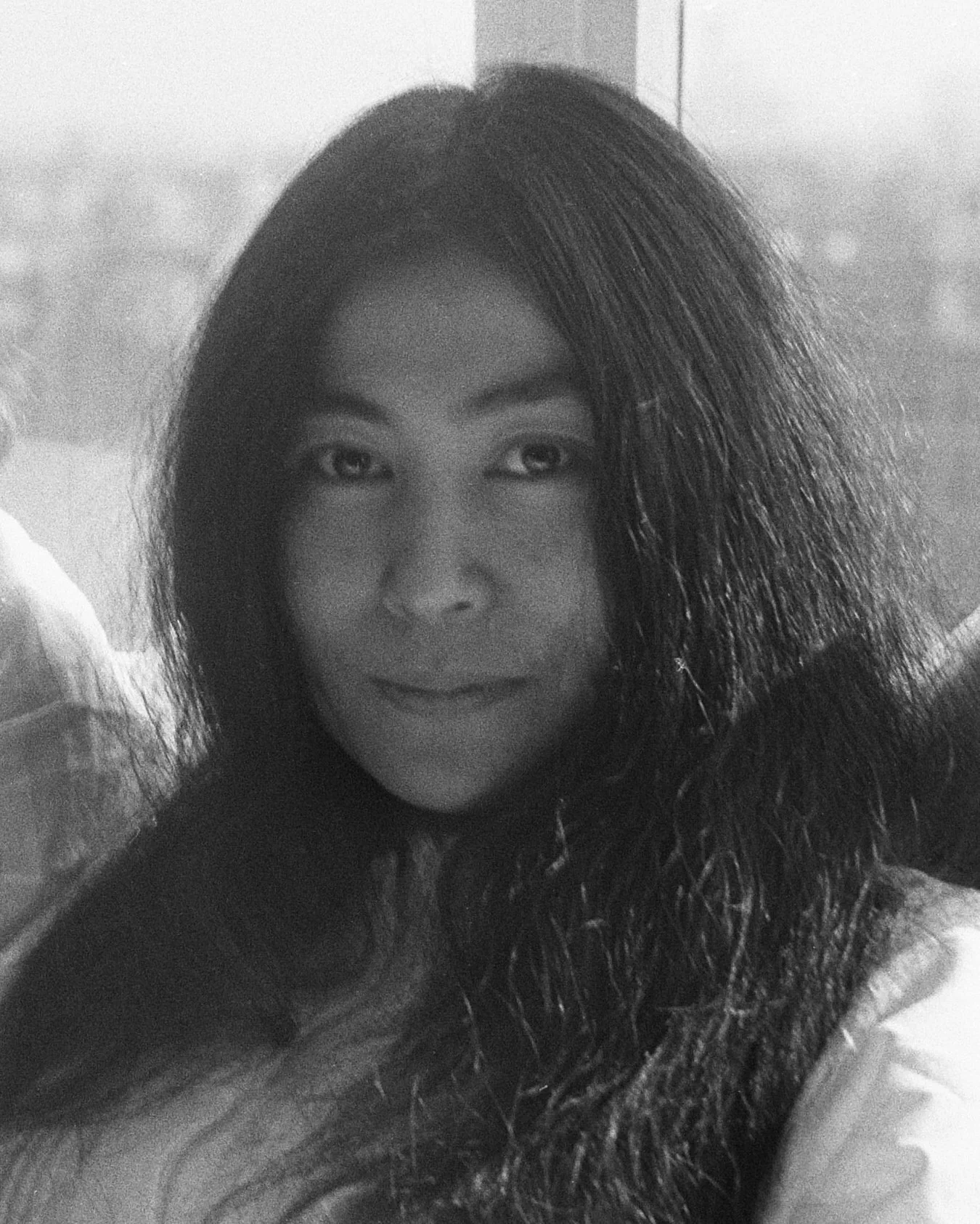
Image from Wikipedia
Image from Wikipedia
Yoko Ono – the Radical Visionary between Fluxus, Avant-Garde, and Musical Liberation
An artist who continues to redefine art, sound, and attitude to this day
Yoko Ono is one of those exceptional figures in cultural history whose work cannot be confined to a single discipline. As a Japanese-American artist, filmmaker, experimental composer, singer, and activist, she has shaped the international avant-garde since the early 1960s with a radically open view of art, participation, and peace. Born in 1933 in Tokyo, she developed an artistic language early on that inseparably connects music, performance, conceptual art, and political message. ([imaginepeace.com](https://www.imaginepeace.com/about))
From Tokyo to New York: The Early Years of a Conceptual Avant-Gardist
Yoko Ono grew up in an environment marked by education, cultural tension, and historical upheavals. Her education took her first to Gakushuin University in Tokyo and later to Sarah Lawrence College in New York, where she studied writing and music. The official biography from IMAGINE PEACE describes her as the first woman admitted to the philosophy program at Gakushuin University; at the same time, the New York art scene opened up a space for a language that transcended traditional forms. ([imaginepeace.com](https://www.imaginepeace.com/about))
Even before her marriage to John Lennon, Ono was a recognized, independent voice in artistic circles. In 1961, she had her first solo exhibition at George Maciunas’ AG Gallery in New York, where she displayed Instruction Paintings like Painting to Be Stepped On, in which the audience became part of the work. This early phase illustrates how consistently Ono dissolved the boundaries between object, action, and viewer, thereby becoming a key figure of Fluxus. ([imaginepeace.com](https://www.imaginepeace.com/about))
Fluxus, Performance, and the Art of Participation
Ono developed her work from the idea that art must be experienced, thought, and acted upon, rather than merely observed. Works such as Cut Piece, performed in 1964 in Kyoto and Tokyo, are considered milestones of performance art: the artist gave spectators an active, disturbing role, placing power, vulnerability, and social responsibility at the center. Her book Grapefruit, self-published in 1964, also became a foundation of conceptual art, as it formed an open artwork from instructions, ideas, and linguistic constructs. ([imaginepeace.com](https://www.imaginepeace.com/about))
This work continued in New York, Tokyo, and later London. Ono experimented with film, sound, and spatial installations, collaborated with John Cage and other influential avant-garde figures, and developed an aesthetic in which language, voice, and silence became equal materials. The British Guardian described her Fluxus works in 2024 as playful and poetic, while other critiques highlighted the exhibition power and provocative directness of her work. ([imaginepeace.com](https://www.imaginepeace.com/about))
The Path into Music: From Experiment to Distinct Rock Icon
Yoko Ono is not merely an artist who also made music; she is a musician who understands sound as an extension of her art. With John Lennon and the Plastic Ono Band, her vocal experiments, expressive screams, and unbridled improvisational spirit became part of a larger musical concept. The official IMAGINE PEACE website documents her discography from early collaborations starting in 1968 to later solo and collaborative projects; it also shows how consistently Ono evolved her music over the decades. ([imaginepeace.com](https://www.imaginepeace.com/))
Her debut Yoko Ono/Plastic Ono Band was released in 1970 and marked a radical step: raw, improvised rock moments, expressive vocal lines, and a deliberately unpolished sound. Britannica emphasizes that with this, Ono began a music career in which her ululating voice, influenced by Kabuki and Alban Berg, became her signature. The fact that this material was not pleasing but rather risky and uncompromising is central to her artistic significance. ([britannica.com](https://www.britannica.com/biography/Yoko-Ono?utm_source=openai))
Discography, Chart Successes, and the Surprising Breadth of Her Catalog
The discography of Yoko Ono is far more extensive than the public stereotype suggests. According to the English discography overview, she has released 14 studio albums, eight collaboration albums, and 40 singles as lead artist; in addition to this, there are significant releases with John Lennon and the Plastic Ono Band. Important milestones include Fly (1971), Approximately Infinite Universe (1973), Season of Glass (1981), Blueprint for a Sunrise (2001), Yes, I’m a Witch (2007), Between My Head and the Sky (2014), and Warzone (2018). ([en.wikipedia.org](https://en.wikipedia.org/wiki/Yoko_Ono_discography?utm_source=openai))
Ono has also made her mark commercially, especially in the dance genre. MusicVF notes that she achieved a total of 15 top-10 placements in the US dance charts, including 13 number-one hits; she also charted in the UK and US pop charts. This makes her an artist with a very special but real pop relevance: not as a mainstream icon in the classical sense, but as a boundary pusher, whose material continually found new audiences in clubs, remixes, and reinterpretations. ([musicvf.com](https://www.musicvf.com/Yoko%2BOno.songs?utm_source=openai))
Critical Reception: Between Misunderstanding, Recognition, and Late Respect
The reception of Yoko Ono has been accompanied by projections over the decades, but music and art criticism has increasingly articulated her standing. The Quietus retrospectively described the work of the Plastic Ono Band as characterized by "singular genius" and emphasized that much of this energy can be attributed to Ono. The exhibition Music of the Mind at Tate Modern in 2024 also sparked extensive accolades, as it presented Ono not as a marginal figure but as a central architect of conceptual and participatory art. ([thequietus.com](https://thequietus.com/quietus-reviews/plastic-ono-band-ultimate-collection-review/?utm_source=openai))
The quality of her catalog becomes especially evident when one takes the artistic form seriously: her voice, her arrangement of silence and noise, her tendency towards open structures, and her pleasure in breaking with pop conventions. AllMusic categorizes the music of the Plastic Ono Band in experimental and experimental-rock contexts, while the official website traces her releases from early avant-garde to later collaborations. Ono thus embodies an attitude where popularity was never the actual goal, but rather expression, risk, and consequence. ([allmusic.com](https://www.allmusic.com/album/yoko-ono-plastic-ono-band-mw0000026229?utm_source=openai))
Cultural Influence: Peace, Activism, and the Power of Ideas
Yoko Ono is also significant because she always understood art as a social practice. Her peace work, her actions such as the Bed-Ins, her later peace projects, and the IMAGINE PEACE TOWER erected in 2007 on Videy near Reykjavik combine music, performance, and political thought into a lasting message. The IMAGINE PEACE biography also notes numerous awards, including two Grammy Awards, two JUNO Awards, a Primetime Emmy, a Producers Guild of America Award, and the Golden Lion for her lifetime achievement. ([imaginepeace.com](https://www.imaginepeace.com/about))
Her influence extends far beyond the Beatles' story. Ono has inspired generations of female performance artists, sound artists, experimental musicians, and conceptual artists because she has shown that art does not have to be polite, complete, or pleasing to be effective. Her work has remained present in museums, festivals, pop discourses, and political memory, particularly because it combines persistence with radicalism. ([imaginepeace.com](https://www.imaginepeace.com/about))
Current Projects and New Visibility in 2026
In 2026, Yoko Ono remains artistically active. The official IMAGINE PEACE website announces the exhibition Yoko Ono: Music of the Mind at The Broad in Los Angeles from May 23 to October 11, 2026, and it also refers to a 45th-anniversary edition of Season of Glass. Other current updates on the official site range from new museum exhibitions to film and video projects, as well as the ongoing maintenance of her visual and musical archive. ([imaginepeace.com](https://www.imaginepeace.com/?utm_source=openai))
This relevance is more than mere nostalgia. It shows that Ono remains historically significant, and her ideas continue to be translated into new contexts: through exhibitions, reissues, digital presence, and new curatorial formats. This makes her exciting for both music lovers and art audiences alike, as her work gains additional depth with each encounter. ([imaginepeace.com](https://www.imaginepeace.com/?utm_source=openai))
Conclusion: Why Yoko Ono Remains Indispensable to This Day
Yoko Ono is one of the few artists whose work genuinely connects multiple epochs: post-war period, avant-garde, beat era, conceptual art, feminism, peace movement, and experimental pop music. Her music career is not a sideline to her artistic life but a central domain of expression, where voice, body, idea, and attitude come together. Anyone who views Ono merely as a historical accompanying figure underestimates the autonomy and impact of her entire body of work. ([imaginepeace.com](https://www.imaginepeace.com/about))
Her stage presence and radical form language continue to make her fascinating today. Yoko Ono invites us not only to consume art but to think along, to experience, and to co-create. Those who experience her exhibitions, films, or musical works live encounter an artist who has not only accompanied the 20th and 21st centuries but has also decisively shaped them. ([imaginepeace.com](https://www.imaginepeace.com/about))
Official Channels of Yoko Ono:
- Instagram: https://www.instagram.com/yokoono/
- Facebook: https://www.facebook.com/YokoOno/
- YouTube: https://www.youtube.com/@YokoOno
- Spotify: No official profile found
- TikTok: No official profile found
Sources:
- IMAGINE PEACE – Official Website of Yoko Ono
- IMAGINE PEACE – About / Short Biography
- IMAGINE PEACE – Links / Official Channels
- Britannica – Yoko Ono Biography
- Wikipedia – Yoko Ono
- Wikipedia – Yoko Ono Discography
- MusicVF – Yoko Ono Top Songs / Chart Singles
- NotCommon – Yoko Ono’s Verified Official Links
- X / Twitter – Yoko Ono Official Account
- Wikipedia: Image and text source
Upcoming Events
So Close to the Sky. Clouds in Art