
Kat Menschik
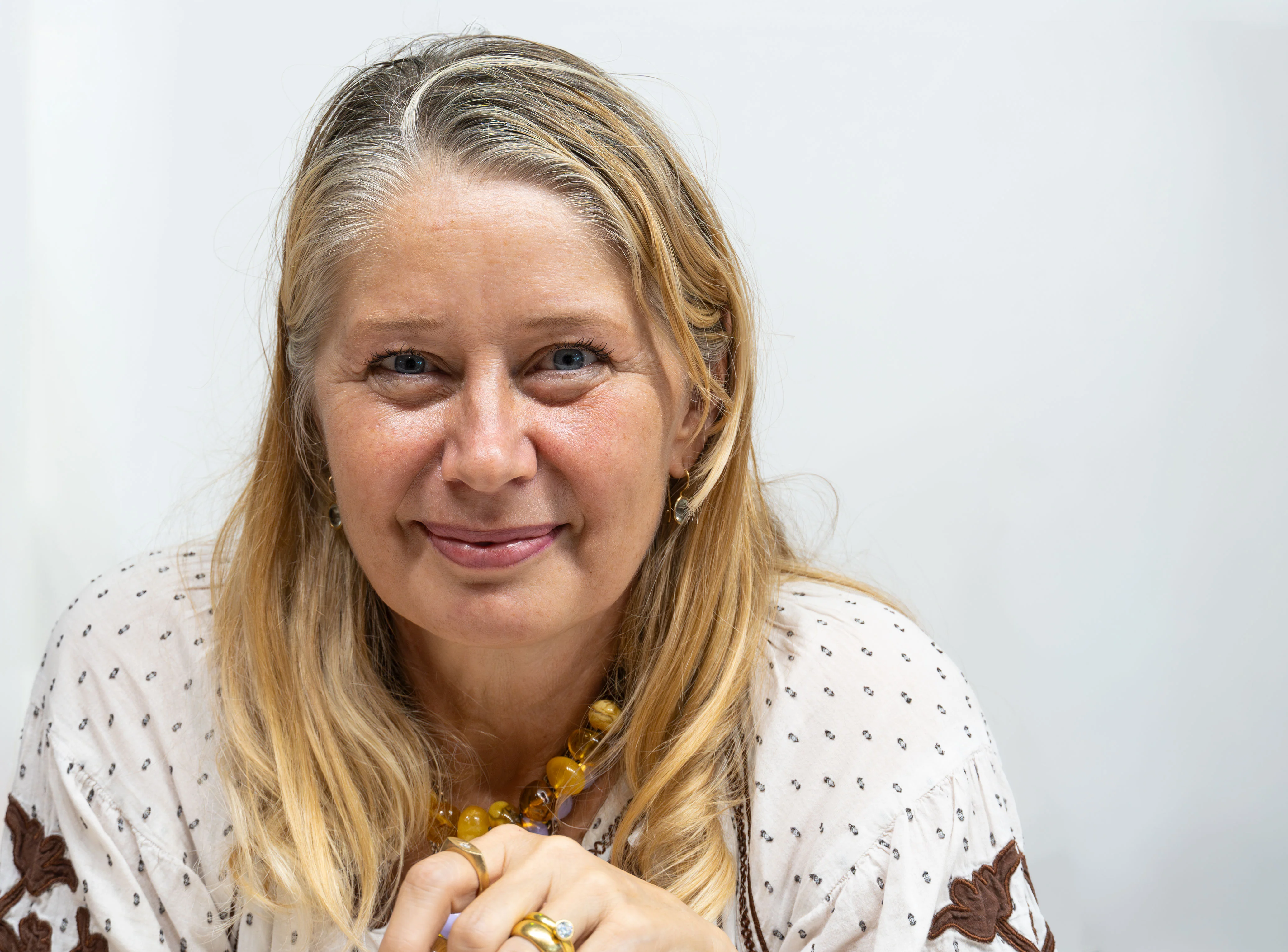
Image from Wikipedia
Image from Wikipedia
Kat Menschik – Illustration as a Narrative Art Form
Kat Menschik: One of the Most Distinctive Voices in the German Illustration and Comic Scene
Kat Menschik, born on April 6, 1968, in Luckenwalde, is one of the defining German illustrators and artists of her generation. Her career began in the 1990s within the independent comic and magazine world but quickly developed into a unique artistic style that blends graphic design, literary illustration, and newspaper-style visual language. What makes her work so remarkable is the combination of narrative precision, formal clarity, and a keen sense for literary atmospheres. ([de.wikipedia.org](https://de.wikipedia.org/wiki/Kat_Menschik))
Biographical Roots and Education
Raised in East Berlin, Kat Menschik grew up in an environment where graphic design and visual arts were already part of her home life; her father, Rainer Menschik, was a graphic designer and calligrapher. After a period as a window dresser, she studied communication design at the Berlin University of the Arts from 1992 to 1999, graduating as a master student. A year abroad at the École des Arts Décoratifs in Paris from 1995 to 1996 deepened her perspective on international visual cultures and supported her early entrenchment in the comic and illustration milieu. ([de.wikipedia.org](https://de.wikipedia.org/wiki/Kat_Menschik))
During her years of training, she also worked in publishing and collaboratively: In Paris, she co-published the comic magazine Spunk with fellow students, and after her return, she founded the comic publisher Millionen with Jan Hülpüsch, where she published the A. O. C. edition. This early engagement reflects an artist who not only creates images but also opens spaces for other illustrators and graphic artists. The commitment to work away from the mainstream continues throughout her later work. ([de.wikipedia.org](https://de.wikipedia.org/wiki/Kat_Menschik))
Entering the Public Eye: Comics, Literary Supplements, and Serialized Stories
Her professional career gained momentum in the 1990s when she became co-editor of Spunk and the A. O. C. edition. Since 1999, Menschik has also worked as a comic artist, writing the serialized story Weltempfänger for the Berlin supplement of the Frankfurter Allgemeine Zeitung. This positioned her early on in the intersection of pop culture, graphic art, and quality journalism. ([de.wikipedia.org](https://de.wikipedia.org/wiki/Kat_Menschik))
In 2000, another biographical turning point occurred: Menschik became a mother to a daughter. At the same time, her work for the cultural section of the Frankfurter Allgemeine Sonntagszeitung intensified, for which she continues to illustrate regularly. Later commissions for other German magazines like Stern and Brigitte added to her portfolio. This continuity in print made her a fixture in German cultural journalism, where her images are read as independent commentaries. ([de.wikipedia.org](https://de.wikipedia.org/wiki/Kat_Menschik))
From Literary Illustration to Her Own Visual Cosmos
Over time, the focus of her work shifted significantly toward book illustration. An early and important milestone was the reissue of Enn Vetemaas's Die Nixen von Estland, published in 2002 and included in Hans Magnus Enzensberger's series Andere Bibliothek. The reactions to these drawings were multifaceted: while the artistic quality was praised, discussions also emerged regarding their resemblance to Anke Feuchtenberger's work. This debate highlights the distinctiveness of Menschik's visual language, which never appears smooth or decorative but always remains a consciously crafted artistic statement. ([de.wikipedia.org](https://de.wikipedia.org/wiki/Kat_Menschik))
Some of her most notable works include illustrations for Haruki Murakami's Sleep and The Bakery Attacks, as well as books with Mark Benecke, including Kat Menschik's and Diplomas Biologist Doctor Rerum Medicinalium Mark Benecke's Illustrated Animal Life. The selection of these titles displays a remarkable spectrum: literary fantasy, surreal observations of everyday life, and thematically focused knowledge transfer in natural history. Menschik translates such texts not only into images but into visual narrative rhythms. ([de.wikipedia.org](https://de.wikipedia.org/wiki/Kat_Menschik))
Serial Book Projects and Curated Visual Worlds
Since 2016, Menschik has been designing her own book series, including adaptations and illustrated editions of Shakespeare's Romeo and Juliet, Kafka's A Country Doctor, Volker Kutscher's Moabit, and E. A. Poe's Uncanny Tales. This series work is an important part of her artistic development as it creates the impression of a cohesive body of work. Instead of just illustrating individual commissions, she designs entire visual spaces that are recognizable. ([bgagency.it](https://www.bgagency.it/images/pdf/editoria-tedesca/KiWi_2024_Fall.pdf))
This approach is particularly evident in her later publications. The self-published book Der goldene Grubber as well as the titles Essen, essen and Tomaten demonstrate that Menschik also takes on the roles of author and curator of her visual world. Her books resemble artful portfolios of an artist who thinks of illustration as a narrative and collectible form. This creates recognizability and a strong position in the realm of German book art. ([de.wikipedia.org](https://de.wikipedia.org/wiki/Kat_Menschik))
Style, Technique, and Artistic Handwriting
Menschik's visual language is characterized by clarity, intuition, and often a delicate tension between line and field. Her works for newspapers and books showcase a masterful control of composition and atmosphere: figures, objects, and spaces appear not as mere illustrations but as consolidated scenes. In literary illustration particularly, she employs a tone that balances precision with poetic openness. ([de.wikipedia.org](https://de.wikipedia.org/wiki/Kat_Menschik))
Another characteristic is her interest in narrative niches: literary classics, quirky natural history, East German biographies, urban scenes, and artfully fractured everyday motifs. This choice of themes imbues her work with cultural depth. Her illustrations function as visual essays that not only adorn but also interpret. As a result, she has established herself as an illustrator with unmistakable authority. ([de.wikipedia.org](https://de.wikipedia.org/wiki/Kat_Menschik))
Acknowledgment, Reception, and Cultural Influence
For her illustrations, Kat Menschik received the Troisdorfer Picture Book Prize in 2007. Additionally, her work has consistently been recognized in critiques as distinctively high-quality; this applies to both her early book illustrations and later projects that are increasingly described as total works of art. A contribution to book culture highlighted that her meticulously designed books are present in well-curated bookstores and that the project with Mark Benecke reached bestseller status. ([de.wikipedia.org](https://de.wikipedia.org/wiki/Kat_Menschik))
Her cultural significance lies in the connection between high culture and proximity to pop, literature and comic aesthetics, and the cultural section and independent author position. Kat Menschik has not merely accompanied the German illustration scene but has helped shape it by establishing images as an equivalent narrative instance alongside text. This defining aspect contributes to the lasting impact of her career, which has developed over decades: continuously, with a strong sense of style, and unmistakably. ([de.wikipedia.org](https://de.wikipedia.org/wiki/Kat_Menschik))
Recent Work and Ongoing Presence
Kat Menschik remains present in the latest publishing previews. The fall and spring program for 2024/2025 indicates new and ongoing projects, demonstrating that her work continues to be at the center of the literary illustration market. The fact that she collaborates with authors from various fields underscores her status as a sought-after visual artist, whose style is instantly recognizable in both the book trade and the press. ([bgagency.it](https://www.bgagency.it/images/pdf/editoria-tedesca/KiWi_2024_Fall.pdf))
Conclusion: Why Kat Menschik Remains Fascinating
Kat Menschik combines artistic consistency with journalistic presence, thus earning her place in the German-language cultural canon. Her illustrations are precise, literarily sensitive, and visually unmistakable; that is exactly why they resonate far beyond individual book projects. Anyone wanting to understand how powerful illustration can be today as an independent art form should not only read her works but also experience them in person. ([de.wikipedia.org](https://de.wikipedia.org/wiki/Kat_Menschik))
Official Channels of Kat Menschik:
- Instagram: https://www.instagram.com/katmenschik/
- Facebook: no official profile found
- YouTube: no official profile found
- Spotify: no official profile found
- TikTok: no official profile found