
Elisabeth Selbert
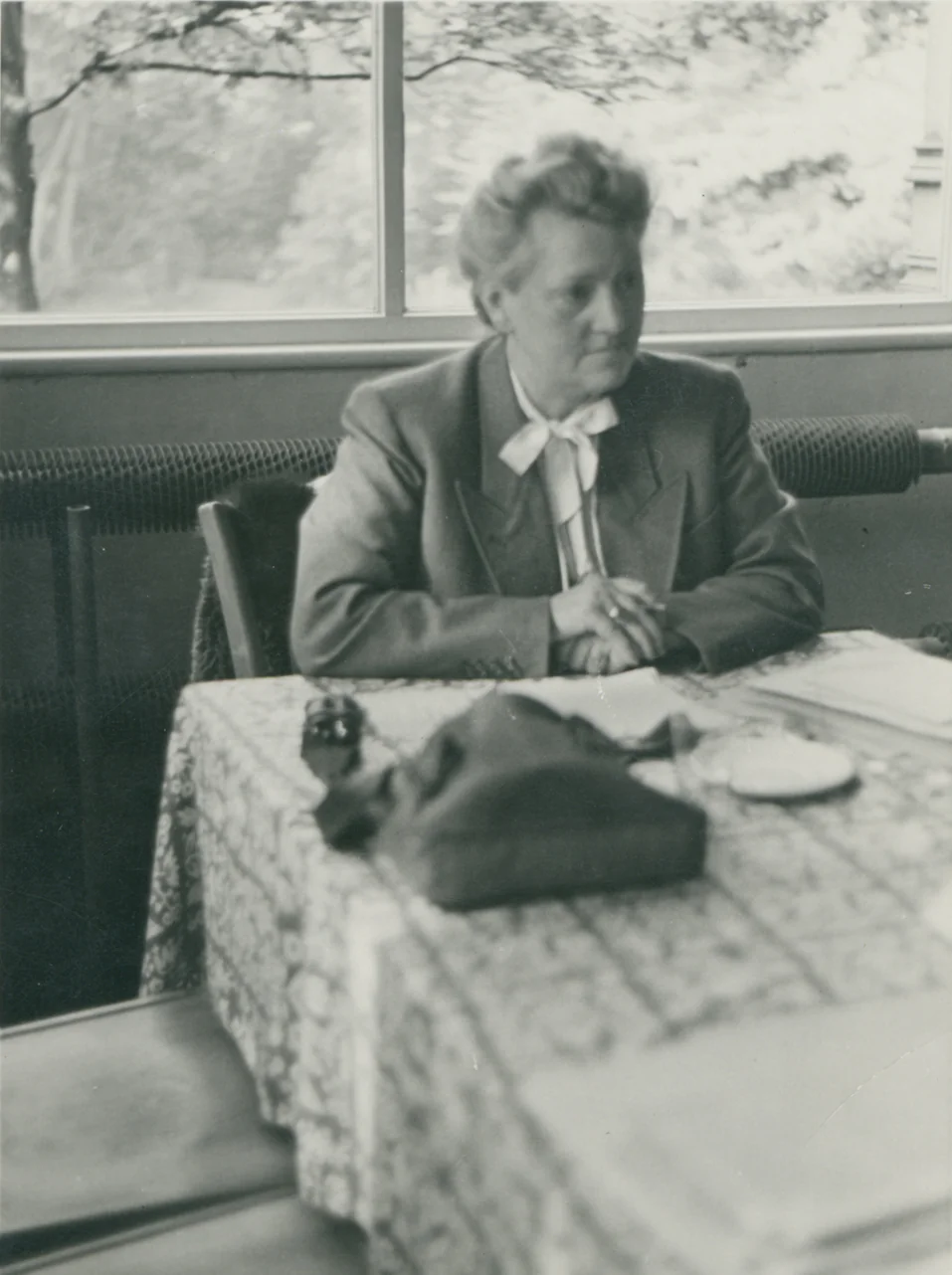
Image from Wikipedia
Image from Wikipedia
Elisabeth Selbert: The Unwavering Force Behind the Phrase "Men and Women Are Equal"
A jurist, politician, and constitutional architect who profoundly influenced German history
Elisabeth Selbert was not an artist in the musical sense, but one of the most significant German jurists and politicians of the 20th century. Her name represents a historic turning point: As a member of the SPD in the Parliamentary Council in 1948/49, she played a decisive role in the inclusion of gender equality in the Basic Law. Martha Elisabeth Rohde was born on September 22, 1896, in Kassel; she passed away there on June 9, 1986. ([bundestag.de](https://www.bundestag.de/parlament/geschichte/75jahre/koepfe/selbert-956228?utm_source=openai))
Biographical Roots: Background, Education, and the Path to Law
Selbert grew up in Kassel as the daughter of a Christian family and belonged to a generation for whom academic education for women was still not a given. She first obtained her secondary education as an external candidate, worked as a civil servant trainee at the postal service in 1914, and eventually studied law in Marburg and Göttingen. Her education took place at a time when women were still significantly underrepresented at universities. ([bpb.de](https://www.bpb.de/shop/zeitschriften/apuz/26035/die-rechtsprechung-des-bundesverfassungs-gerichts-zur-garantierten-gleichberechtigung/?utm_source=openai))
This early confrontation with societal limitations shaped her later attitude. Selbert embodied a legal generation that understood law not just as the administration of order, but as a means of social change. It was in this combination of professional discipline and political instinct that the particular strength of her later work lay. ([bpb.de](https://www.bpb.de/shop/zeitschriften/apuz/26035/die-rechtsprechung-des-bundesverfassungs-gerichts-zur-garantierten-gleichberechtigung/?utm_source=openai))
Political Career: From State Parliament to Parliamentary Council
After World War II, Selbert's political career gained momentum. She was a member of the Hessian State Parliament from 1946 to 1958 and became a member of the Parliamentary Council in 1948/49, which drafted the Basic Law. The German Bundestag and the Federal Agency for Civic Education explicitly list her as one of the four "Mothers of the Basic Law". ([bundestag.de](https://www.bundestag.de/parlament/geschichte/75jahre/koepfe/selbert-956228?utm_source=openai))
Her name is inextricably linked to the famous equality article. After several failed votes, she succeeded in pushing through the phrase “Men and women are equal,” contributing to its incorporation in Article 3, Paragraph 2 of the Basic Law. The political impact of this achievement extended far beyond the constitutional text and influenced the development of German family and equality law for decades. ([bundestag.de](https://www.bundestag.de/parlament/geschichte/75jahre/koepfe/selbert-956228?utm_source=openai))
The Breakthrough in the Constitutional Struggle
Selbert's breakthrough did not come from a single parliamentary appearance but from the strategic combination of legal precision and public pressure. When her proposal initially faced resistance, she brought the topic into the public arena; waves of support from women’s organizations and political allies added strength to her cause. The Federal Agency for Civic Education describes this effort as pivotal for the implementation of the principle of equality. ([bpb.de](https://www.bpb.de/themen/nachkriegszeit/grundgesetz-und-parlamentarischer-rat/39018/die-arbeit-im-parlamentarischen-rat-unstrittige-und-strittige-punkte/?utm_source=openai))
In doing so, Selbert became a key figure in the history of German democracy. The Bundestag continues to honor her as a formative personality, and even the naming of the Elisabeth Selbert House in the Berlin government district reflects the institutional significance that her work now holds. Her achievement is not only embodied in a phrase but in the constitutional reality that emerged from it. ([bundestag.de](https://www.bundestag.de/parlament/geschichte/75jahre/koepfe/selbert-956228?utm_source=openai))
Legal Attitude and Political Profile
As a jurist, Selbert thought in structures, not merely in symbols. She worked with the aim of framing equality in a legally unassailable manner so that it would not merely remain a political statement. This combination of legal dogmatic precision and societal foresight made her influence so lasting. ([bpb.de](https://www.bpb.de/shop/zeitschriften/apuz/26035/die-rechtsprechung-des-bundesverfassungs-gerichts-zur-garantierten-gleichberechtigung/?utm_source=openai))
Her political profile was closely tied to Social Democracy. In the sources, she appears as an SPD politician who asserted herself in the Parliamentary Council under difficult majority conditions. The fact that she did not give up, but instead sharpened the debate publicly, stands out as one of the most impressive moments of her career. ([bundestag.de](https://www.bundestag.de/parlament/geschichte/75jahre/koepfe/selbert-956228?utm_source=openai))
Impact History: Equality as a Cultural and Legal Standard
Selbert’s influence extends deep into the social development of the Federal Republic. The equality article in the Basic Law was later concretized and deepened through the Equal Rights Act of 1957 and other reforms in marriage and family law. The Bundestag reminds us that the emancipation demanded by Selbert had not yet been fully realized with the first Equal Rights Act, illustrating the long-term nature of her political idea. ([bundestag.de](https://www.bundestag.de/dokumente/textarchiv/2022/kw17-kalenderblatt-gleichberechtigungsgesetz-504286?utm_source=openai))
The culture of remembrance also honors her in noteworthy breadth. Squares and buildings bear her name, and numerous public places refer to her historical significance. This presence in public space demonstrates that Selbert is not only part of constitutional history but also part of the collective memory of the Federal Republic. ([de.wikipedia.org](https://de.wikipedia.org/wiki/Elisabeth_Selbert?utm_source=openai))
Current Relevance and Public Memory
The engagement with Elisabeth Selbert remains relevant because her central demand continues to resonate politically and socially today. In 2024, the Bundestag once again commemorated the "Mothers of the Basic Law" and highlighted their role in the constitution's formation. Such references show that Selbert’s work has not become merely historical, but continues to serve as a benchmark for democratic participation. ([bundestag.de](https://www.bundestag.de/parlament/praesidium/reden/2024/20240316-997712?utm_source=openai))
In the digital and journalistic space, there are numerous biographical representations that emphasize her significance as a jurist, democrat, and pioneer of equality. Particularly, official and educational sources present a consistent picture: Selbert was a determined constitutional actor whose impact is reflected in legislation, institutions, and public memorials. ([webarchiv.bundestag.de](https://webarchiv.bundestag.de/archive/2010/0203/kulturundgeschichte/ausstellungen/wege/bio_zeug2.html?utm_source=openai))
Conclusion: Why Elisabeth Selbert Remains Fascinating Today
Elisabeth Selbert is captivating because she combined legal excellence with political determination and thus effected a change of historic proportions. She did not merely talk about equality but wrote it into the constitution, laying the groundwork for subsequent reforms. Anyone wishing to understand the development of modern German democracy cannot overlook her. ([bundestag.de](https://www.bundestag.de/parlament/geschichte/75jahre/koepfe/selbert-956228?utm_source=openai))
Her legacy continues to resonate in law, politics, and culture of remembrance. Elisabeth Selbert stands for courage, perseverance, and constitutional clarity — a personality whose story should not only be known but continually re-read. ([bundestag.de](https://www.bundestag.de/dokumente/textarchiv/2024/kw33-buesten-1014030?utm_source=openai))
Official Channels of Elisabeth Selbert:
- Instagram: No official profile found
- Facebook: No official profile found
- YouTube: No official profile found
- Spotify: No official profile found
- TikTok: No official profile found
Sources:
- German Bundestag – Elisabeth Selbert
- Federal Agency for Civic Education – Elisabeth Selbert (SPD)
- Federal Agency for Civic Education – History of Fundamental Rights
- Federal Agency for Civic Education – The Struggle for Equality in Both German States
- German Bundestag – The Mothers of the Basic Law
- Wikipedia: Elisabeth Selbert