
Caravan (Jazzstandard)
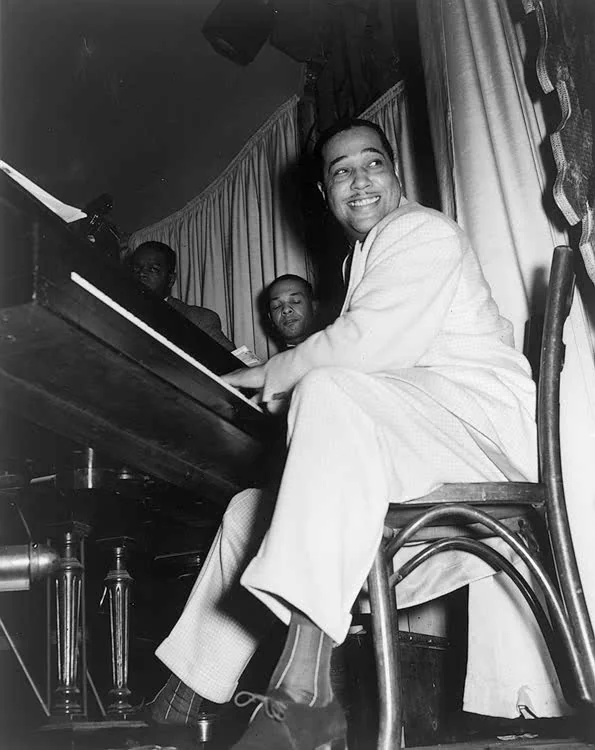
Image from Wikipedia
Image from Wikipedia
Caravan – the jazzy classic of exoticism, swing, and timeless elegance
A jazz standard that has shaped the repertoire since 1936
Caravan is not an artist name, but one of the most influential jazz standards of the Swing Era. The composition emerged in 1936 from the creative collaboration of Juan Tizol and Duke Ellington; Irving Mills contributed the lyrics, which, however, are sung significantly less frequently than the instrumental version even today. The first recordings made it clear that this was not just any dance piece, but a theme with a distinct identity, dramatic tension, and an unmistakable sound language. ([en.wikipedia.org](https://en.wikipedia.org/wiki/Caravan_%28Juan_Tizol_and_Duke_Ellington_song%29))
The creation: Juan Tizol, Duke Ellington, and a new soundscape
The origin of Caravan lies within the Ellington band itself. Juan Tizol, the Puerto Rican valve trombonist, brought a motif in 1936 that Duke Ellington transformed into a fully developed composition and orchestral statement. The Smithsonian describes how Ellington embraced the idea, further developed the opening bars, and shaped the music to evoke both a distant, "exotic" atmosphere and Tizol's Latin American roots. This historical significance of the piece lies in Ellington's ability to unify individual band personalities into a larger style. ([americanhistory.si.edu](https://americanhistory.si.edu/documentsgallery/exhibitions/ellington_strayhorn_4.html))
The distribution of roles is also central to understanding the standard. Tizol was seen in Ellington's orchestra more as a musician with precise technique and robust sound than as an improvising soloist, while Ellington shaped the instrumentation and orchestral drama. This partnership made Caravan a piece that functions not only as a melody but also as an arrangement architecture. The Philharmonie de Paris identifies the standard as: composed in 1936, first recording date on December 19, 1936, key of F minor, and a 64-bar AABA structure. ([pad.philharmoniedeparis.fr](https://pad.philharmoniedeparis.fr/0758115-standards-caravan.aspx?_lg=fr-FR))
The first recordings and the swift journey to standard status
The first version was created in 1936 in Hollywood as an instrumental recording by Barney Bigard and His Jazzopators. The Wikipedia entry and the Smithsonian documentation classify this version as an early, historically significant rendition; Ellington himself recorded the piece in 1937 with his big band, and it was this version that became the most well-known interpretation. The transition from a small ensemble to the large orchestral form demonstrates how much Caravan thrives on timbre, register, and rhythmic tension. ([en.wikipedia.org](https://en.wikipedia.org/wiki/Caravan_%28Juan_Tizol_and_Duke_Ellington_song%29))
AllMusic emphasizes that the “exotic” sound arises primarily from Tizol's contribution and Ellington's arrangement. The early character of the recording is slow, dark, and deliberately shaded; the music has the feel of a night piece with a rolling pulse rather than that of a mere show number. This blend of groove, elegance, and controlled seduction quickly made the title appealing to other jazz musicians. Early recordings and broadcasts followed from Benny Goodman, Bunny Berigan, Charlie Barnet, and many other artists. ([allmusic.com](https://www.allmusic.com/song/caravan-mt0011050655))
Musical structure: modal color, rhythm, and orchestral sophistication
Caravan thrives on a striking melodic line that moves almost serpentine, and on a rhythmic attitude that creates a near-eastern percussive climate. The jazz standards compendium describes Ellington's arrangement as the very heart of the piece: minor coloration, "Middle Eastern beat," and an atmosphere that evokes images of tents, deserts, and nocturnal movement. At the same time, Irving Mills' lyrics give the piece a romantic perspective, connecting the exotic sound with intimate storytelling. ([jazzstandards.com](https://www.jazzstandards.com/compositions-0/caravan.htm))
For musicians and listeners, the fascination also lies in the craftsmanship of the arrangement. Ellington often wrote for specific band members, and the Smithsonian source points to scores where individual musicians' voices are named. This makes Caravan a teaching piece in big band architecture: the trumpets provide accents, the saxophones color the line, the trombones add weight and character, and Sonny Greer's percussion anchors the dramatic opening. This interplay explains why the piece remains present in schools, ensembles, and professional programs to this day. ([americanhistory.si.edu](https://americanhistory.si.edu/documentsgallery/exhibitions/ellington_strayhorn_4.html))
Discography, reference recordings, and critical reception
The discography of Caravan is extensive, but some recordings stand out as references. JazzStandards cites the original recording as the starting point for any engagement with the title and highlights Freddie Hubbard's version with Art Blakey in the early 1960s as particularly influential; Wynton Marsalis' recording from 1986 is also described as a version with significant impact on later generations. This shows a core characteristic of the standard: each generation reinterprets Caravan without losing the identity of the piece. ([jazzstandards.com](https://www.jazzstandards.com/compositions-0/caravan.htm))
The critical reception connects music history with the cultural history of jazz. The Smithsonian describes the 1937 big band version as the best-known and portrays the music as a glimpse into an imagined distance while also expressing Tizol's Latin American influences. The piece thus became a bridge title between swing, orchestral modernity, and transcultural fantasy. As a jazz standard, Caravan is now featured in an enormous number of recordings; the Wikipedia page notes that as of 2024, it is one of the most covered pieces in music history, with over 500 published versions. ([americanhistory.si.edu](https://americanhistory.si.edu/documentsgallery/exhibitions/ellington_strayhorn_4.html))
The cultural influence: from Ellington's band to the canon of the Great American Songbook
Caravan has long since transcended the confines of the Ellington cosmos. The Smithsonian documents interpretations by Ella Fitzgerald, Nat King Cole, Chet Atkins, the Carpenters, the Ventures, Les Paul, Bobby Darin, Phish, as well as Latin jazz artists like Candido, Tito Puente, and Pérez Prado. This diversity shows that the standard has not only survived in jazz but has also remained appealing in pop, Latin music, and crossover formats. The title has also been featured in films and television productions, further expanding its cultural reach. ([americanhistory.si.edu](https://americanhistory.si.edu/documentsgallery/exhibitions/ellington_strayhorn_4.html))
Historically, the piece is significant because it illustrates Ellington's open attitude towards stylistic blends. The Smithsonian analysis describes Caravan as one of the first conscious efforts by the orchestra to incorporate influences from other cultures into their own sound. Thus, the composition represents not only swing elegance but also the early globality of jazz: an American piece with Caribbean, Latin American, and imaginary Oriental resonances. It is precisely this multi-layered nature that keeps the standard alive. ([americanhistory.si.edu](https://americanhistory.si.edu/documentsgallery/exhibitions/ellington_strayhorn_4.html))
Why Caravan continues to captivate today
The greatness of Caravan lies in its balance of precision and adventure. The piece is instantly recognizable but never static; it bears the hallmark of two exceptional musicians and a band that functioned like a laboratory for new sound ideas. Those who wish to hear jazz history, orchestral sophistication, and rhythmic tension in a single standard will find here a central document of the 20th century. Especially in live performance, this piece reveals its full power, as dynamics, timbre, and tension have an even more immediate effect in space. ([allmusic.com](https://www.allmusic.com/song/caravan-mt0011050655))
For listeners, Caravan remains a must-have piece in the jazz canon: a classic that has inspired generations of soloists, arrangers, and big bands. Its history tells of Juan Tizol’s inventiveness, Duke Ellington’s sense for orchestral colors, and of a composition that creates an entire world from a few motifs. Those who wish to understand the magic of this standard should listen to it in as many versions as possible – and, if possible, experience it where jazz lives most strongly: on stage. ([en.wikipedia.org](https://en.wikipedia.org/wiki/Caravan_%28Juan_Tizol_and_Duke_Ellington_song%29))
Official channels of Caravan (Jazz standard):
- Instagram: No official profile found
- Facebook: No official profile found
- YouTube: No official profile found
- Spotify: No official profile found
- TikTok: No official profile found