
Anna Löwenstein
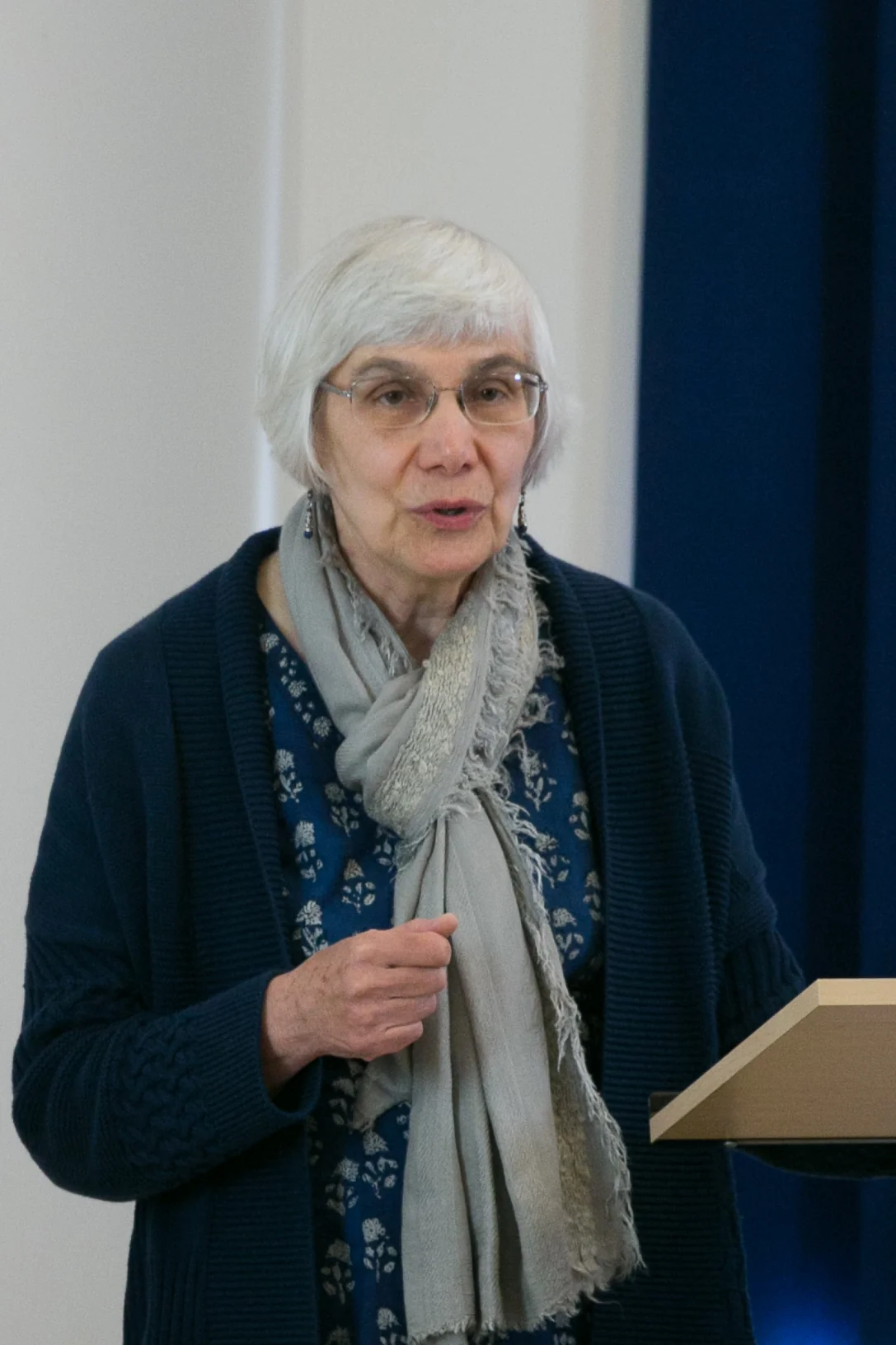
Image from Wikipedia
Image from Wikipedia
Anna Löwenstein: Esperantist storyteller, editor, and language activist with literary authority
A formative voice in international Esperanto literature
Anna Löwenstein, born in 1951 in the United Kingdom, is one of the most prominent British voices in the Esperanto movement. She is an editor, writer, teacher, and long-time activist, whose work extends far beyond mere language maintenance. Particularly her historical novels and editorial work have established her as a significant figure in international Esperanto culture. ([akademio-de-esperanto.org](https://www.akademio-de-esperanto.org/akademio/index.php?title=Anna_L%C3%B6wenstein))
Her profile combines literary storytelling with institutional experience: she worked from 1977 to 1981 at the headquarters of the World Esperanto Association, founded and edited the feminist magazine Sekso kaj Egaleco, and managed the easy-to-read column of Kontakto. These positions illustrate an author who not only uses language but also shapes it as a cultural tool. ([akademio-de-esperanto.org](https://www.akademio-de-esperanto.org/akademio/index.php?title=Anna_L%C3%B6wenstein))
Biographical roots and the early journey to language
According to available sources, Löwenstein discovered Esperanto at the age of 13 through a book from the library and taught herself the language. This early linguistic initiative is central to her later career as it directly led to a lifelong engagement with writing, teaching, and editorial work within the Esperanto community. Her biographical path is thus closely tied to a language community that not only accompanied her but was also actively shaped by her. ([annalowenstein.wixsite.com](https://annalowenstein.wixsite.com/home))
Her familial and cultural background also points to a distinctly artistic socialization: her father was the actor Heinz Bernard. Later, she lived with the Esperantist Renato Corsetti, a former president of the World Esperanto Association. This connection between family, culture, and movement shaped the approach with which she combines literature, teaching, and language policy. ([en.wikipedia.org](https://en.wikipedia.org/wiki/Anna_L%C3%B6wenstein))
Career in the Esperanto movement: Editing, teaching, and activism
Löwenstein's professional career began not on a stage, but within the editorial and organizational infrastructure of the international Esperanto world. In Rotterdam, she worked for the headquarters of UEA and was responsible for the yearbook, among other tasks. Later, she became a member of the UEA Women's Commission and a formative force in publishing projects that made the movement more visible both internally and externally. ([akademio-de-esperanto.org](https://www.akademio-de-esperanto.org/akademio/index.php?title=Anna_L%C3%B6wenstein))
Especially important is her role as a co-designer of modern learning formats. According to her official website, she is part of the team behind the English-Esperanto course in the language learning app Duolingo and the author of La teorio Nakamura, a story that served as the basis for an Esperanto course on lernu!. In 2019, she was also named "Esperantist of the Year," primarily due to her work on the website uea.facila, which offers easy news in Esperanto. ([annalowenstein.wixsite.com](https://annalowenstein.wixsite.com/home))
Literary breakthrough: Novels with historical access
Her most well-known work is La Ŝtona Urbo / The Stone City, a historical novel that was first published in English and Esperanto in 1999 and later translated into French and Hungarian. The book arose from her fascination with ancient Rome, triggered by an early visit to Italy and the overwhelming effect of the Pantheon. From this experience developed a narrative perspective on history, architecture, and cultural foreignness. ([akademio-de-esperanto.org](https://www.akademio-de-esperanto.org/akademio/index.php?title=Anna_L%C3%B6wenstein))
In an interview, Löwenstein explained that her novels often originate first in English, although the Esperanto version has found greater resonance in the publication context. This points to an interesting dual literary identity: she writes with an eye on international readability, while also relying on the internal logic of an artistic language that allows her narrative precision and stylistic condensation. ([esfconnected.org](https://esfconnected.org/2022/06/06/interview-anna-lowenstein/))
Development of works: From The Stone City to La memoraĵoj de Julia Agripina
After her debut novel, Löwenstein continued the ancient historical line. Morto de artisto was published in 2008 in Esperanto; her third novel La memoraĵoj de Julia Agripina was published in 2021 and received the award Laŭro de la Akademio in 2023. The Academy honors works that are artistically significant, linguistically exemplary, and culturally enriching. ([akademio-de-esperanto.org](https://www.akademio-de-esperanto.org/akademio/index.php?title=Anna_L%C3%B6wenstein))
In a 2022 conversation about this novel, she explained that her interest in Agrippina arose from her work on Death of an Artist, which centers on Nero. Her approach to historical female figures is both analytical and narrative: she connects political perspectives, narrative voices, and historical gaps into a literary space where power, gender, and memory are newly interpreted. ([esfconnected.org](https://esfconnected.org/2022/06/06/interview-anna-lowenstein/))
Style, language, and narrative signature
Löwenstein's style appears classic, controlled, and didactically precise based on sources. She herself speaks of careful translation work, aiming to preserve the mood and thought processes of the original as accurately as possible, even when individual words must be changed. This attitude explains why her texts remain appealing to both advanced speakers and learners of Esperanto. ([esfconnected.org](https://esfconnected.org/2022/06/06/interview-anna-lowenstein/))
Her work on learning materials also follows a clear compositional principle: she consciously separates writing and revising, as simultaneous editing blocks the creative flow. This reveals an author who does not romanticize language but understands it as a craft structure. Exactly this blend of discipline, cultural knowledge, and linguistic sensitivity gives her work authority. ([esfconnected.org](https://esfconnected.org/2022/06/06/interview-anna-lowenstein/))
Cultural influence, reception, and international impact
Löwenstein's significance lies not only in the number of her books but also in her role in the cultural infrastructure of Esperanto. Her novels have been translated into several languages, her learning texts have entered digital language projects, and her editorial work has influenced the perception of Esperanto as a living literary language. The Academy's award and her election as Esperantist of the Year also mark this impact institutionally. ([annalowenstein.wixsite.com](https://annalowenstein.wixsite.com/home))
Particularly revealing is how consistently her work bridges literature, language pedagogy, and movement politics. She wrote not only for an audience but also built communication spaces: magazines, learning platforms, easy-language news, and curated texts for an international language audience. This triad of writing, mediating, and organizing makes her cultural influence lasting. ([annalowenstein.wixsite.com](https://annalowenstein.wixsite.com/home))
Current projects and recent publications
Among the most recent documented developments is the Portuguese edition of La memoraĵoj de Julia Agripina, which was presented in June 2025. Already in May 2024, The Stone City was published in Portuguese, following editions in English, Esperanto, French, and Hungarian. These translations show that Löwenstein's work continues to circulate internationally and reach new readerships. ([annalowenstein.wixsite.com](https://annalowenstein.wixsite.com/home))
The official website also mentions ongoing work on Esperanto learning and information projects as well as the presence of conversations and interviews from past years. However, there is currently no album or tour program, as Anna Löwenstein is not a musician but a writer and Esperantist. For a cultural-historical positioning, this clarity is significant: her work achieves impact not through charts but through language, education, and literature. ([annalowenstein.wixsite.com](https://annalowenstein.wixsite.com/home))
Voices of fans
This section is omitted as no verified official social media channels for Anna Löwenstein were found. Therefore, there are no reliable fan quotes from officially identified platforms. ([annalowenstein.wixsite.com](https://annalowenstein.wixsite.com/home?utm_source=openai))
Conclusion: Why Anna Löwenstein remains interesting
Anna Löwenstein is intriguing because she merges literature, language activism, and cultural education into a distinctive profile. Her novels connect historical research with narrative discipline, while her editorial work makes Esperanto visible as a modern, productive cultural language. Those interested in international literature, language history, and the creative power of minority cultures will find here an author of exceptional depth. ([annalowenstein.wixsite.com](https://annalowenstein.wixsite.com/home))
It is precisely her mixture of intellectual precision and cultural passion that makes her work permanently relevant. Anna Löwenstein is not read like a fleeting trend but like an author whose books and projects take the idea of a cosmopolitan, open literary tradition seriously. Those who experience her work live in lectures, readings, or Esperanto events encounter a convincing voice with substance and international resonance. ([annalowenstein.wixsite.com](https://annalowenstein.wixsite.com/home))
Official channels of Anna Löwenstein:
- Instagram: no official profile found
- Facebook: no official profile found
- YouTube: no official profile found
- Spotify: no official profile found
- TikTok: no official profile found