Skateparks, Street Art & Urban Culture in Erfurt
Skateparks, Street Art & Urban Culture in Erfurt: What Awaits You in the Coming Months
Are you planning your next trip to Erfurt or looking for new after-school spots? This guide looks ahead: to the next season's highlights, typical community formats, possible developments, and a route that will let you combine skateboarding and street art in a meaningful way in the future.
Spot Check for Your Next Session
If you want to skate in Erfurt in the next few weeks or months, it's worth thinking of the city as a network of easily accessible meeting points. For your planning, three things are especially important: good accessibility (public transport/bike), different levels of difficulty, and an environment where you can stand, watch, and exchange ideas between runs.
Nordpark: If You’re Planning a Long Session with Lots of Lines
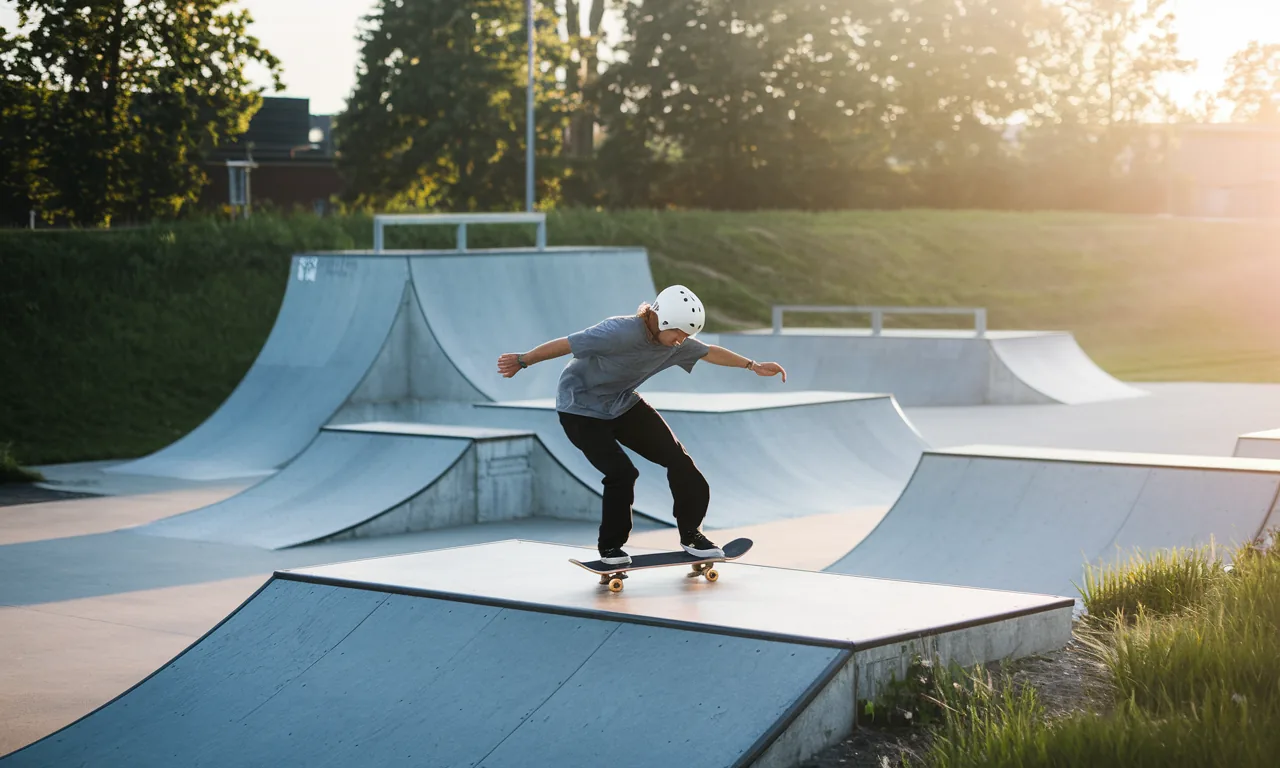
For future weekend sessions, the area around Nordpark is especially suitable if you want to ride varied lines and be out with a larger group at the same time. Experience from the scene shows: In good weather, such parks quickly become social hubs – ideal if you want to meet someone, film, or build new tricks together (e.g., with a set warm-up and repeatable lines).
- Suitable for: longer sessions, groups, video/photo runs
- Planning tip: For focused practice, come in the morning or on weekdays; hotspots often get busier in the late afternoon.
Domizil (Thomas-Mann-Schule/Hanseplatz): If You Want to Focus on Street Style & Technique
For the next phase, where you’re focusing more on technical tricks (curbs, edges, short approaches), a street-oriented setup is especially suitable. Such spots are generally good for repeatable trick attempts because distances are compact and you get into a rhythm faster.
- Suitable for: flat/street tricks, targeted technique training, short after-work sessions
- Planning tip: If you’re new to the spot, take the first 10 minutes for a “read the park” lap: ride the lines, check bottlenecks, make eye contact with other riders.
Johannesfeld & Südpark: If You Want Low-Threshold Sessions and to Build Routine
For the coming months, more compact facilities are especially practical if you want to build regularity: 30–60 minutes after school/work, a clear practice plan, little travel overhead. Especially if you’re (re)starting, manageable spots often work better than large parks because you get repetitions faster and are less likely to get “lost.”
- Suitable for: beginners, family time, consistent training, “micro-sessions”
- Planning tip: Set a clear mini-goal for each visit (e.g., 20 clean ollies, 10 safe drop-ins, 5 runs without stopping).
Street Art Routes You Can Try Next
Erfurt can now be experienced well as a “roll route”: You connect skate spots with street art stations, without it becoming a fixed tourist checklist. It’s important to treat street art as a living, changing culture: What you see today may be painted over, added to, or replaced in a few weeks.
North Routes: Legal Spaces & Changing Walls
If you want to see street art specifically soon, legal or clearly tolerated spaces for visitors are the best choice: You get high-quality pieces, less potential for conflict, and often an environment where conversations also arise (e.g., if someone is working or photographing).
Train Station and City Loop: Small Discoveries Instead of “Spot Hunting”
For your next city rounds, it’s worth looking at smaller formats: paste-ups, stencils, sticker layers, and temporary installations. These forms often appear where many people pass by. If you’re skating, remember: better to observe than touch, don’t push into areas “for the photo” that block others.
Which Community Formats You Should Plan for Soon
The probably best experiences in the coming season don’t arise from individual spots, but from formats that take place regularly or are organized spontaneously. If you’re new to the scene, these formats especially help you settle in.
Open Sessions & “Best Trick” Evenings
In the next warm months, open sessions are the lowest-threshold entry opportunity. A typical flow: warm-up, free runs, short challenges (e.g., “best line”) – without competition pressure. If you join in, pay attention to the unwritten rules: don’t snake (cut someone’s line), respect the spot, take your trash with you.
Beginner Workshops (Skate) and Style Workshops (Urban Art)
If you attend a workshop in the coming weeks, you’ll benefit most with a clear goal:
- Skate: safe falling, braking/stopping, first drop-in, basics on curbs
- Urban Art: sketch → color areas → outlines, material knowledge, handling surfaces and environment
For current dates, the official city channels and local clubs/initiatives are the most reliable sources (see references).
Family-Friendly Afternoons
If you’re planning with children or beginners, the coming months are ideal for building fixed routines: short units, full protective gear, clear agreements (e.g., “one person rides, one person watches”). This ensures safety and makes spots usable for everyone.
Where the Urban Scene Is Likely Headed
For the near future, three trends can be observed that can directly influence your planning:
- More Mixed Use: Spots are increasingly seen as meeting points (sports, culture, social encounters). For you, this means: more audience, but also more opportunities to connect.
- More Focus on Participation: With new or revised facilities, participation (e.g., youth formats, neighborhood involvement) is a realistic way to bring in needs. If you want to have a say, stay involved early and orient yourself to official participation formats.
- Quality Instead of Just “More Space”: In practice, what counts is whether a spot serves different skill levels, has safe entry and exit points, and offers quality of stay. These criteria will become more important in discussions and planning than just square footage.
If you want to get involved in the coming months, the best strategy is: be on site regularly, give objective feedback (what exactly is missing/what works), and consider the benefit for different groups (beginners, advanced, families, neighborhood).
Safety, Consideration & Legal Framework (for Upcoming Activities)
To keep spots open, usable, and low-conflict in the future, a shared minimum standard helps:
- Protective Gear: Helmets are especially useful for beginners, children, and ramp riding; wrist/knee/elbow pads reduce typical fall injuries.
- Spot Etiquette: Respect order, make eye contact, “one in / one out,” and in crowded situations, keep runs shorter.
- Cleanliness: Trash, bottles, caps, and tape don’t belong on the surface – this is also a safety factor.
- Street Art with Responsibility: Before taking action, inform yourself about legally usable surfaces and local rules. Legality not only protects you, but also maintains acceptance for urban culture as a whole.
Note: This article is a guide for planning future activities and does not replace local rules, house regulations, or official notices.